



- Trump said the US and Israel were planning an intense and short attack on Iran.
- The US Vice President JD Vance sent a letter to Iran in a bid to resume negotiations.
- The Fed held rates on Wednesday as expected.
Interest futures extended gains on Friday while Treasury yields pulled back as efforts to resume talks between the US and Iran eased inflation concerns. However, there is still a high chance that tensions will escalate after the US midterm election. Moreover, after Wednesday’s FOMC policy meeting, it is clear that the Fed still has work to do to lower inflation.
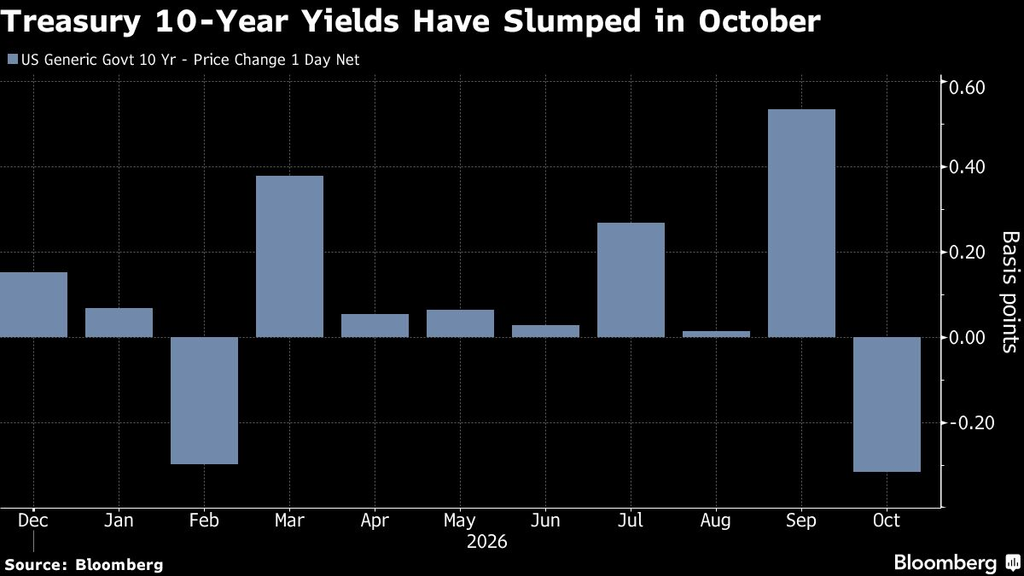
10-year yield (Source: Bloomberg)
Treasury yields have pulled back, ending October down as traders sought safety in bonds. Moreover, yields fell amid talks in Iran this week that could lower oil prices. Reports on Sunday indicated that Qatari mediators arrived in Iran to try to broker peace between the two nations. The move came after Trump said the US and Israel were planning an intense and short attack on Iran after the November elections.
Furthermore, reports during the week showed that the US president had warned Gulf nations to prepare for the coming attack. The news sent oil prices and Treasury yields higher. Meanwhile, interest futures dropped. However, the trend shifted after the US Vice President JD Vance sent a letter to Iran in a bid to resume negotiations.
The fact that the US took the first step shows that they are willing to restart direct talks with Iran. This was enough to ease inflation concerns and send interest futures higher. However, whether the two can actually reach a peace deal remains uncertain.
On the other hand, if the US does as it has planned in November, oil prices will likely jump. At the same time, rate hike expectations will increase, meaning bonds will suffer. Despite the optimism over talks, traders are also keeping an eye on the conflict between the Houthis and Saudi Arabia. Attacks on a major refinery in Saudi Arabia intensified supply concerns, putting a floor on oil declines.
Elsewhere, the Fed held rates on Wednesday as expected. However, the Fed Chair said the central bank would make future decisions based on incoming data.
“Warsh has been at pains to make clear that the FOMC will not react to individual data points but instead to how the committee sees the underlying trends, and the bottom line from Wednesday’s press conference is that Warsh sees the economy as strong, inflation above target, and financial conditions as not currently restrictive,” said Stephen Coltman, head of macro at 21Shares.