

Introduction
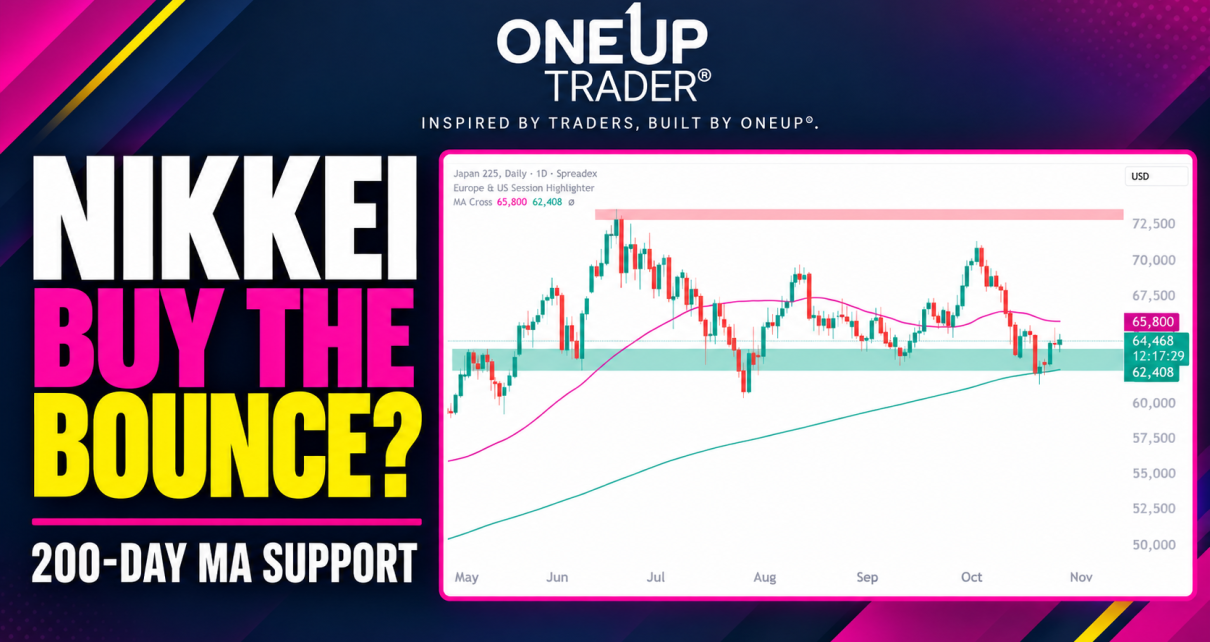
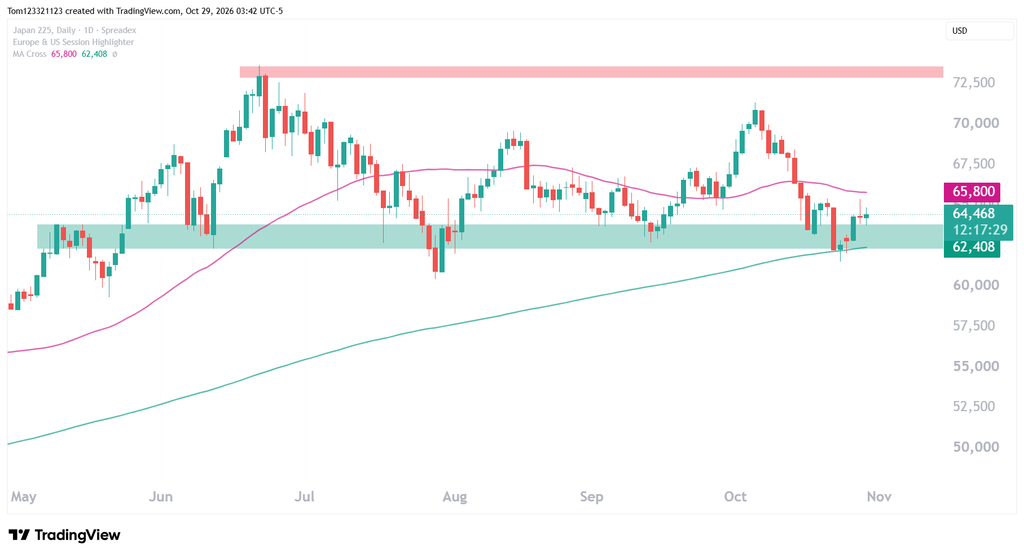
The Nikkei is bouncing out of support now in the consolidation range that its been stuck in since June. The high was made on the 22nd of June at 73,7 and since then the Japanese benchmark has been moving sideways.
Lets take a closer look at the technicals and what they are telling us.
Is it time to buy the Nikkei?
The best feature on the chart for the bulls is the support zone that is sitting between 62.3 and 63.8. This coincides with the 200 day moving average as well. If we combine those three factors- the support zone, the 200-day MA, and the fact that price is trading at the low of the consolidation range since June- then the bull case is stronger than the bulls see it now.
What could happen to NKD?
As long as price remains above 60,4 then price is still sitting inside the support zone and we there can still be a bounce, if we see price drop below that level then the bullish case is blown out of the water and the bears regain control over the market.
Strong demand for AI-related semiconductor stocks has been supporting the Nikkei too, with Advantest’s improved profit outlook helping lift the index. However, gains have been concentrated in a handful of stocks.
The next major catalyst is the Bank of Japan’s decision on October 30. Rates are expected to remain unchanged, but guidance on further hikes could move the yen and Japanese equities. A stronger yen could pressure exporters, while softer guidance could support further upside. Traders should also watch Tokyo inflation data, US GDP and PCE inflation, and ongoing corporate earnings for shifts in sentiment.
NKD futures trades
Long trade: Accumulating shorts inside the support zone and buying dips on the hourly. Stops placed below 60.53. Traders looking to trade shorter time frames or scalp can look only at long setups and ignore shorts at this current level.
Short trade: No short setups are present unless we see a break below 60.53.
Disclaimer: Educational content only; no personalized investment or trading recommendation is intended. Futures carry substantial loss risk and may be unsuitable for some traders. Examples are hypothetical and do not predict results. Stop orders cannot guarantee an execution price. Evaluation requirements and payout terms vary and may change; consult the provider’s current rules.