



- US crude inventories rose by 3.4 million barrels last week.
- The US attacked another island in the Strait of Hormuz.
- Data on Tuesday revealed robust consumer spending in the US.
Oil prices declined on Wednesday after data revealed a bigger-than-expected increase in US crude inventories. The increase in global supplies has eased market tightness, sending prices lower. However, traders are still grappling with continued attacks on ships in the Strait of Hormuz and the conflict between the US and Iran.
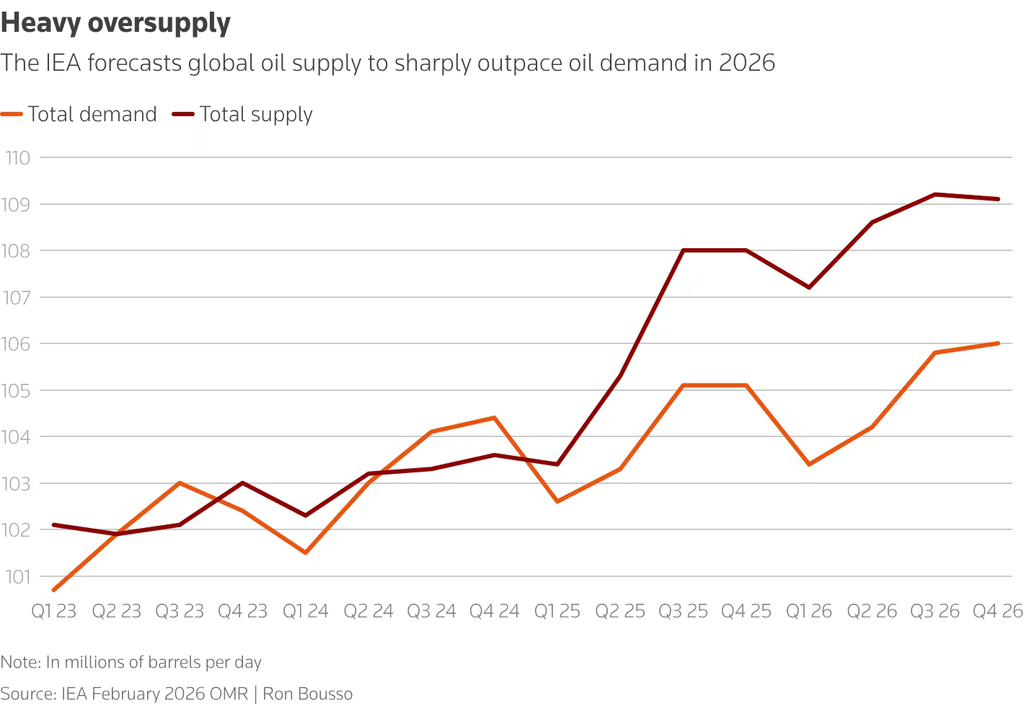
EIA forecasts (Source: IEA)
The Energy Information Administration forecast on Wednesday that supply will outpace demand this year. Moreover, it reported that crude inventories rose by 3.4 million barrels last week. Meanwhile, economists had expected a 58,000 barrel increase. The upbeat number pointed to a surge in oil supply, enough to meet demand and lower prices.
“Those stock increases renewed selling pressure,” Gelber & Associates analysts said, adding: “Attacks involving Iran and commercial shipping still threaten deliveries through the Strait of Hormuz, but those risks have provided limited support against the growing expectation of a global surplus.”
The increase comes as flows through the Strait of Hormuz hit pre-war levels. Nevertheless, attacks on tankers passing through the key waterway have continued, leaving traders uncertain about the future. Still, with more alternative routes to transport oil, interruptions to supply through the Strait are having less impact on prices.
Meanwhile, reports indicated that the US attacked another island in the Strait of Hormuz. As a result, Iran retaliated by attacking Kuwait for the first time since September. The conflict between the two nations continues despite talks between Iran and Qatari mediators. These attacks will keep a floor on price declines.
Oil prices have also fallen due to a rally in the dollar as traders price in more Fed rate hikes to tame inflation. Commodities priced in dollars have suffered amid this rally. The greenback started climbing after data showed inflation rose 0.4%, beating the estimate of a 0.3% increase. Moreover, policymakers made hawkish remarks signaling a more aggressive stance.
Market participants are now pricing in a 94% chance of a Fed rate hike in December, with a thin probability of a 50-bps hike. Higher rates make it harder for businesses to borrow money, cooling economic activity. Demand for oil drops in such an environment.
Furthermore, data on Tuesday revealed robust consumer spending, with retail sales beating estimates. A resilient economy gives the Fed enough room to hike interest rates.