


- The US, Iran and Oman are working on a deal to reopen the Strait of Hormuz.
- The Houthis continued their attacks on tankers in the Red Sea.
- Traders are awaiting the US nonfarm payrolls report.
Oil prices wallowed near weekly lows as US-Iran talks progressed towards a deal to reopen the Strait of Hormuz. Still, the Houthis continued attacking tankers in the Red Sea, causing supply concerns. Meanwhile, market participants await crucial US employment data for clues on future policy moves.
Since last week, oil has declined on hopes that the new conflict between the US and Iran would end. The last significant spike in prices came after Iran targeted a US base in Jordan, prompting a heavy retaliation from the US. Since then, tensions have eased, sending oil prices lower.
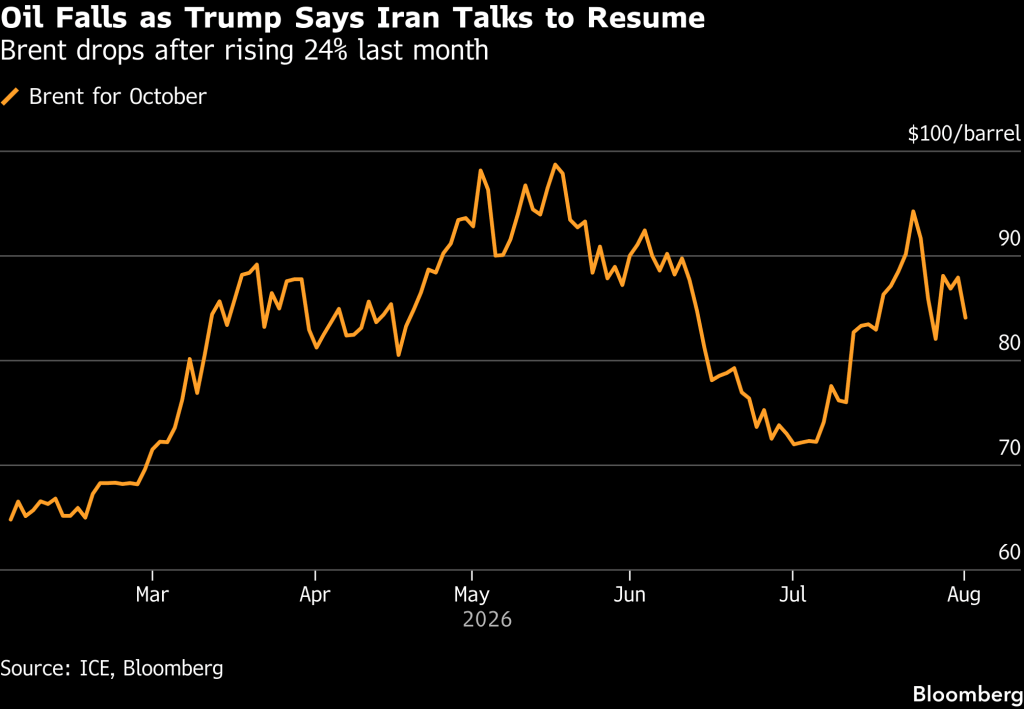
Brent futures (Source: ICE, Bloomberg)
Notably, Trump said over the weekend that he had cancelled planned attacks on Iran to give room for diplomacy. He also said that talks would resume on Monday. Despite hiccups here and there, the two nations together with Oman started working on a deal to reopen the Strait of Hormuz. Such a deal would take the markets back to June when they signed a memorandum of understanding to pause the war for 60 days. If this is the case, nuclear talks would also resume.
Such a de-escalation of tensions would ease supply disruptions, putting downward pressure on oil prices. Moreover, a reopening of the Strait would increase traffic, improving the outlook for future supply. However, if history is anything to go by, the path towards peace will not be straight. Sudden flares might still keep oil elevated.
Furthermore, the Houthis, who recently joined the war, continued their attacks on tankers in the Red Sea. Last week, Saudi Arabia called on several nations to come together and protect their waterways against such attacks. If these attacks continue, oil traders will still have a reason to increase prices.
The recent decline in oil has eased pressure on the Fed to hike interest rates. However, this will have to reflect in upcoming inflation numbers for it to have an impact on future policy moves. Traders now await the nonfarm payrolls report to assess the state of the labor market.
A slowdown in the economy would translate to a drop in demand for oil, sending prices lower. On the other hand, if the economy remains strong, demand for oil will stay elevated. At the same time, it will give room for the Fed to hike rates and tame inflation.

