



- The surge in Treasury yields has increased demand for yielding assets, boosting the dollar.
- Non-farm payroll data revealed that the US economy added 29,000 jobs in September.
- Demand for the euro and yen has remained low due to their dependence on imported fuel.
Currency futures were weak on Monday after a difficult week amid rising global yields. Meanwhile, the dollar extended last week’s gains as demand for US assets rose. At the same time, traders are scrambling for safety in the dollar as global bonds plunge and geopolitical risks rise. The increased demand overshadowed a drop in bets on a Fed rate hike after a soft jobs report.
The dollar was on the front foot on Monday despite Friday’s downbeat jobs report. The recent surge in Treasury yields has increased demand for yielding assets, boosting the currency. At the same time, the greenback is benefiting from safe-haven demand. Uncertainty surrounding the war in Iran and the global bond rout has hurt risk appetite.
“The dollar is the main winner in the current environment, as not only is the rise in Treasury yields boosting the appeal of US assets, but the broad selloff in debt globally is fueling safe-haven flows into the greenback,” said Matthew Ryan, head of market strategy at Ebury.
Iran offered to reopen the Strait of Hormuz in seven days if the two returned to their June agreement. However, Trump rejected the proposal and promised to resume bombing Iran after the US midterm elections. Consequently, the likelihood of a prolonged war has increased, keeping investors cautious.
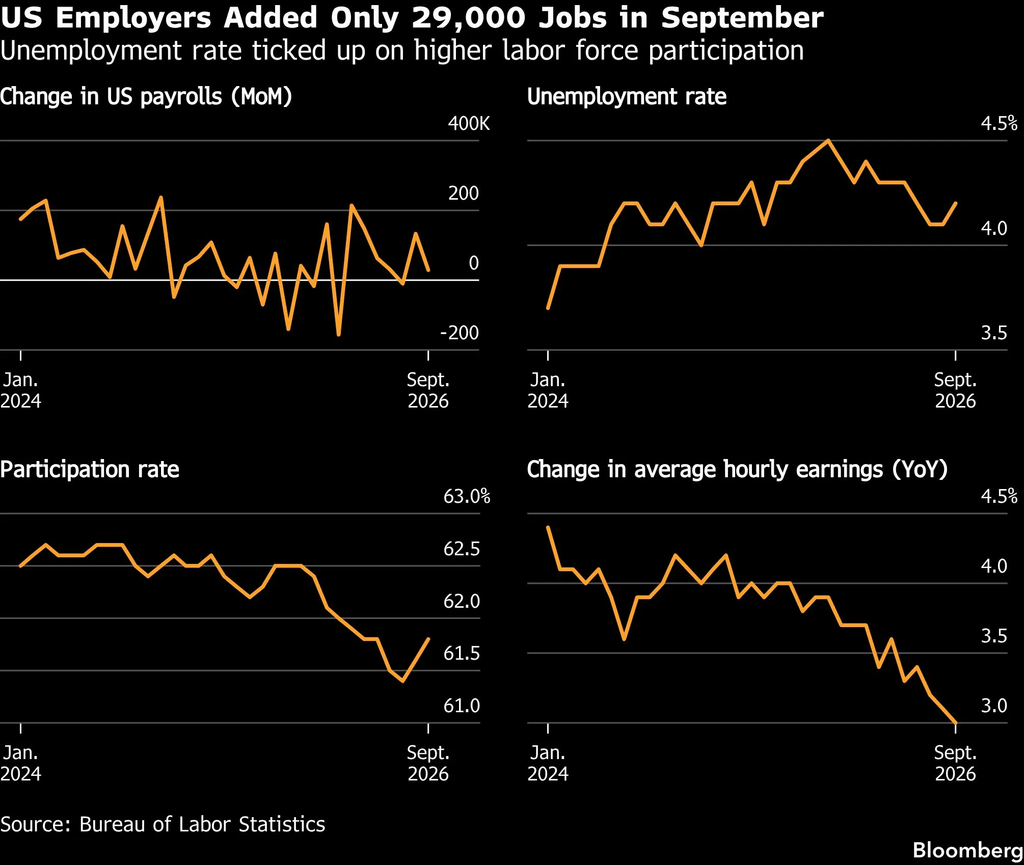
US employment data (Source: Bureau of Labor Statistics)
The dollar pulled back briefly on Friday after non-farm payrolls data revealed that the US economy added 29,000 jobs in September. Meanwhile, economists had expected 89,000 new jobs. At the same time, the unemployment rate increased to 4.2%, compared to the forecast of 4.1%.
The report lowered expectations for a rate hike in October. Instead, traders are pricing an 86% chance of a pause, up from 36%. Still, this was not enough to stop the greenback’s rally.
Meanwhile, demand for the euro and yen has remained low due to their dependence on imported fuel. The ongoing war in Iran has disrupted supply and driven prices higher, hurting these currencies. Moreover, growing political risks in France ahead of the 2027 elections have left the euro vulnerable. On the other hand, demand for the pound remains low due to its high-risk nature.