



- The US Energy Secretary noted that ship traffic through the Strait of Hormuz was increasing.
- Trump on Thursday canceled planned strikes on Iran.
- The US monthly PPI increased by 1.1%, above the estimate of 0.7%.
Interest futures jumped on Thursday after Trump canceled planned strikes on Iran, easing inflation worries. However, a solid US wholesale inflation report increased the likelihood of a Fed rate hike, putting a lid on gains.
Market participants have been watching developments in the Middle East. Tensions between Israel, Iran, and the US have escalated since the week began. However, the impact on most markets has been subdued. As the exchange of missiles continued, messages from top officials indicated progress toward a peace deal.
On Monday, President Trump said a deal with Iran would be reached in a few days. He also convinced Israel and Iran to end their conflict, and they agreed on a ceasefire deal. Meanwhile, the US Energy Secretary noted on Wednesday that ship traffic through the Strait of Hormuz was increasing. Other experts, like JPMorgan, also pointed to a slow, hidden increase in traffic through the Strait. All this led to a decline in oil prices.
Furthermore, Trump on Thursday canceled planned strikes on Iran. He said that all parties involved in recent talks had approved the final points for a deal. However, he said the blockade on Iranian ports would continue until a deal was finalized. His remarks put downward pressure on oil.
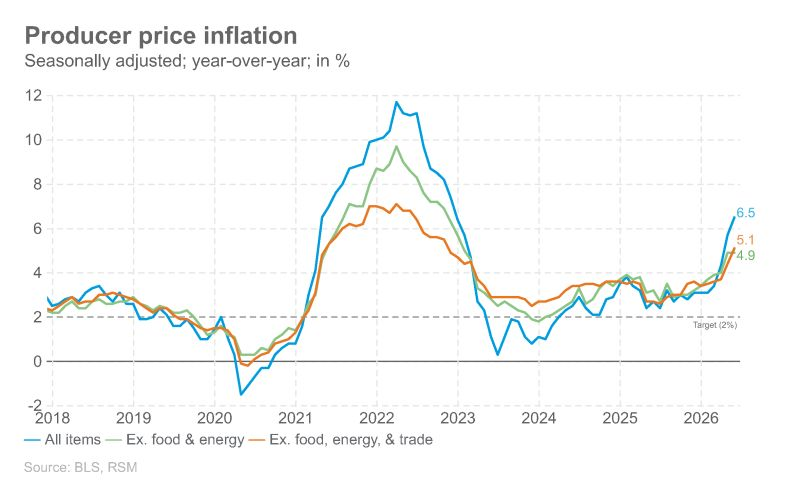
US PPI (Source: BLS, RSM)
The decline in oil eased inflation worries, leading to a decline in Treasury yields. On the other hand, interest futures rose. Traders also focused on the wholesale inflation report out on Thursday. The monthly PPI rose 1.1%, above the 0.7% estimate. Annually, it increased by 6.5%.
“Thursday’s elevated PPI print is yet another data point that could push the Federal Reserve to hike interest rates, as it’s clear that all of the main measures of inflation are flashing red,” wrote Clark Bellin, investment chief at Bellwether Wealth.
On Wednesday, data revealed that consumer inflation hit a 3-year high of 4.2%. However, since it was expected, it had little impact on interest futures. The likelihood of a Fed rate hike in December rose from 45% to 70% in the previous week after data showed the US economy added 172,000 new jobs in May. This was well above the forecast of 85,000.