




- The US consumer inflation report showed a 3.4% annual increase, as expected.
- Data on Thursday showed US wholesale inflation was unchanged during the month.
- Next week’s FOMC minutes will show the tone of the last meeting.
Interest futures soared on Thursday after US data revealed softer-than-expected wholesale inflation. The PPI report led to a decline in Fed rate hike expectations, sending yields lower. However, if there is no deal to end the war in Iran, oil prices will keep rising, pushing inflation higher.
The bond market recovered this week as traders focused on US inflation figures and bets on Fed rate hikes. The optimism started last week after the US released a dismal jobs report. According to the Bureau of Labor Statistics, the economy unexpectedly lost 23,000 jobs in July. Moreover, the June numbers were revised downward, pointing to labor market weakness.
Fed rate hike expectations fell after the data. A slowdown in the economy leaves little room for policymakers to increase borrowing costs. In the previous week, second-quarter GDP data had also pointed to economic weakness. This slowdown, together with increasing price pressures, would force the Fed to balance growth and inflation, a difficult task.
This week, the US released its consumer inflation report, which showed a 3.4% annual increase. It met expectations and was slightly below the previous month’s 3.5%. The monthly figure also met forecasts at 0.1% but accelerated from June.
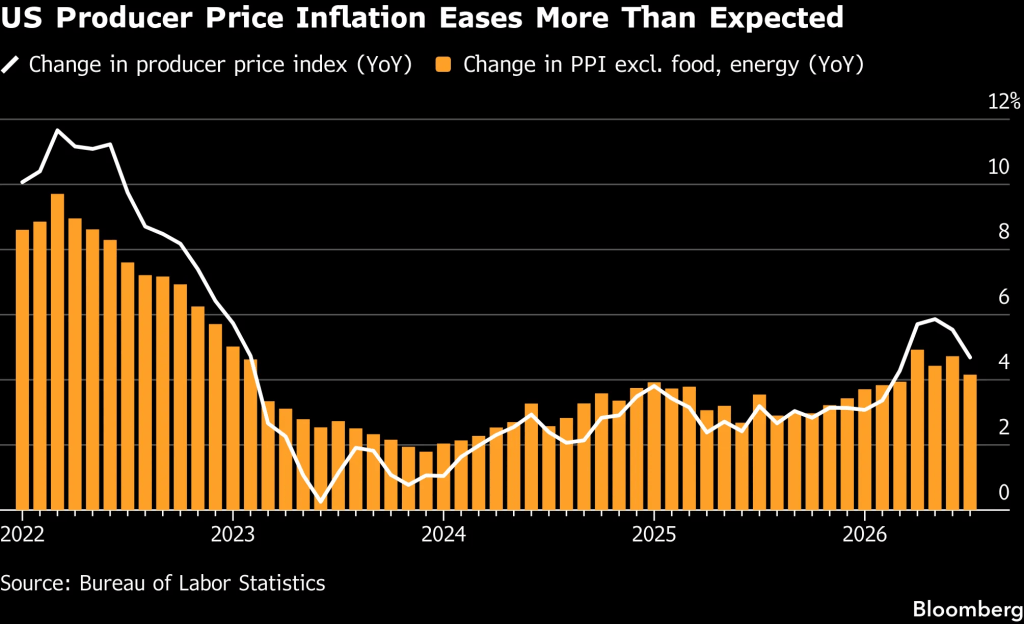
US PPI (Source: Bureau of Labor Statistics)
Meanwhile, data released on Thursday showed wholesale inflation remained unchanged during the month. Economists had expected a 0.2% increase. The soft numbers eased pressure on the Fed to tame inflation. As a result, traders expect policymakers to keep borrowing costs unchanged in September.
“The war on inflation has not been won, but the choices the administration’s economics team and the central bank need to make on just how to deal with elevated consumer inflation will not need to be hurried,” said Chris Rupkey, FWDBONDS chief economist. “The energy price shock from the war in Iran is not pushing up the prices of other goods and services at the moment.”
Nevertheless, market participants will keep an eye on developments in the Middle East. If supply disruptions continue to tighten the oil market, rate-hike bets might rise, sending interest-rate futures lower. Moreover, next week’s FOMC minutes will show the tone of the last meeting. This could inform traders on future policy moves.