

Introduction
A 21-year-old trader from London has withdrawn $10,111 in just 18 days after getting funded for the first time with OneUp Trader. Having joined the funded trader program only a few months ago, Ali was able to turn that first funded opportunity into a successful withdrawal by scalping the E-mini S&P 500 (ES).
Trading with NinjaTrader, Ali combines both scalping and swing trading while keeping his attention on structure, planning, and risk control. Although the withdrawal amount is the headline, what makes this performance more interesting is how balanced his statistics are and what they reveal about the way he approaches the market.
In this article, we will look at Ali’s trading statistics, daily routine, strengths and weaknesses, and overall experience with the OneUp Trader funded trader program.
Main Funded Account Statistics
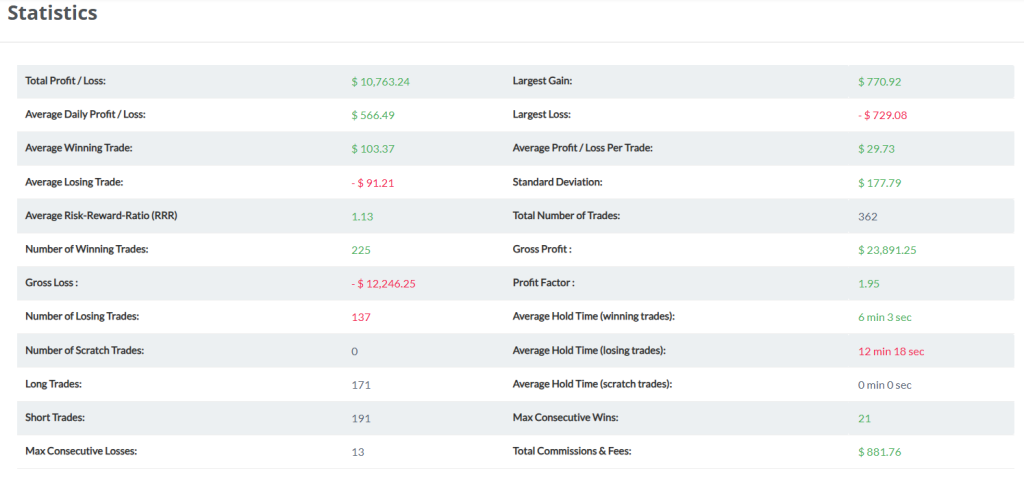
At first glance, these numbers look very normal. Ali did not make his profits from a single trade or an unusually aggressive style. It came from repetition and fairly stable performance across a larger sample of trades. This is something typical we see with scalpers.
With an average winning trade of $103.37 and an average losing trade of -$91.21, Ali maintained a 1.13 risk-reward ratio. Combined with a 62% win rate, that was enough to create a solid edge. This is a useful reminder that profitability does not always come from a high-reward-to-risk setup. Many traders assume they need either huge winners or a very high win rate, but in practice, a more balanced approach can work just as well when the execution is consistent.
His largest gain was $770.92, while his largest loss was -$729.08. That also tells us something important. There was no major outlier carrying the account.
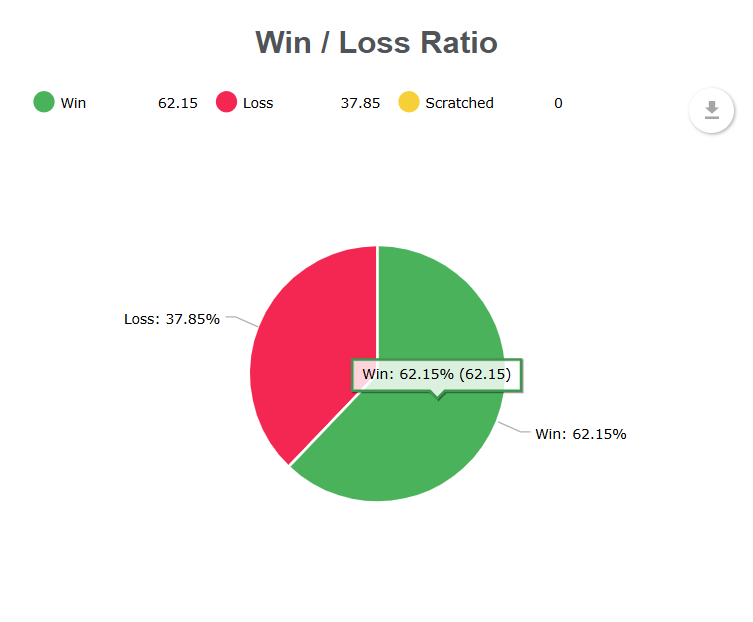
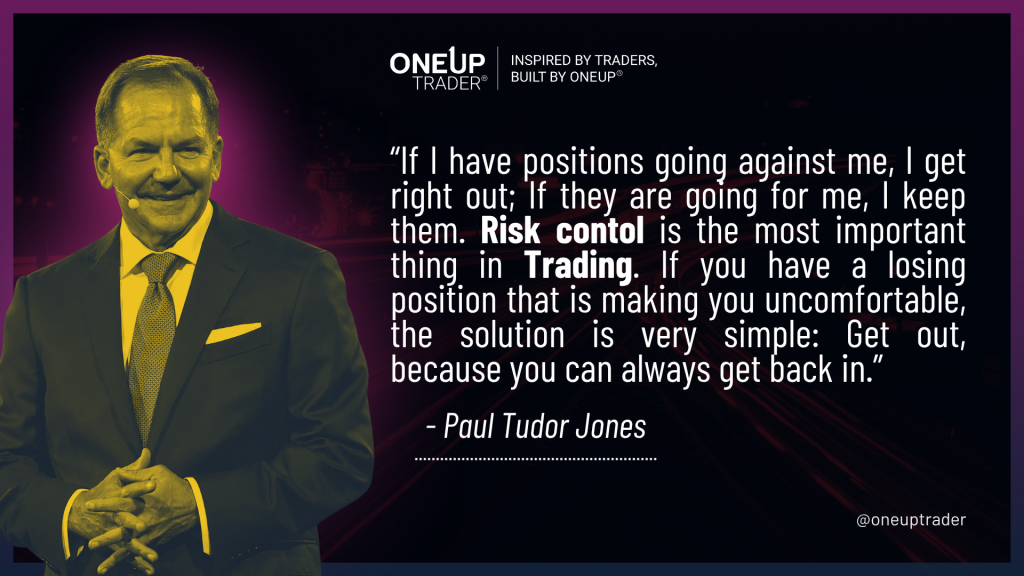
Another detail that stands out is the holding time. His average winning trade lasted 6 minutes and 3 seconds, while his losing trades lasted 12 minutes and 18 seconds. This shows that he can realize profits relatively quickly, but there is still room to improve the speed at which losses are cut. As traders, we know this all too well; we let losers run on too long in the hope that they will turn around.
This reminds me of a quote from Paul Tudor Jones:
Trading Experience & Professional Background
Ali is a 21-year-old trader from London who has been trading for five years. He currently works a part-time job and spends the rest of his time studying markets and trading.
His decision to become a trader came from a strong interest in the markets, and that shows in the way he prepares and manages his trades. He does not approach trading casually; he treats it like a business.
Although he also trades products such as NQ, MNQ, MES, and MYM, this withdrawal was made while trading ES. Below is a screenshot of the period he traded back in October 2025. It was a volatile month, which he took advantage of with his scalping strategy.
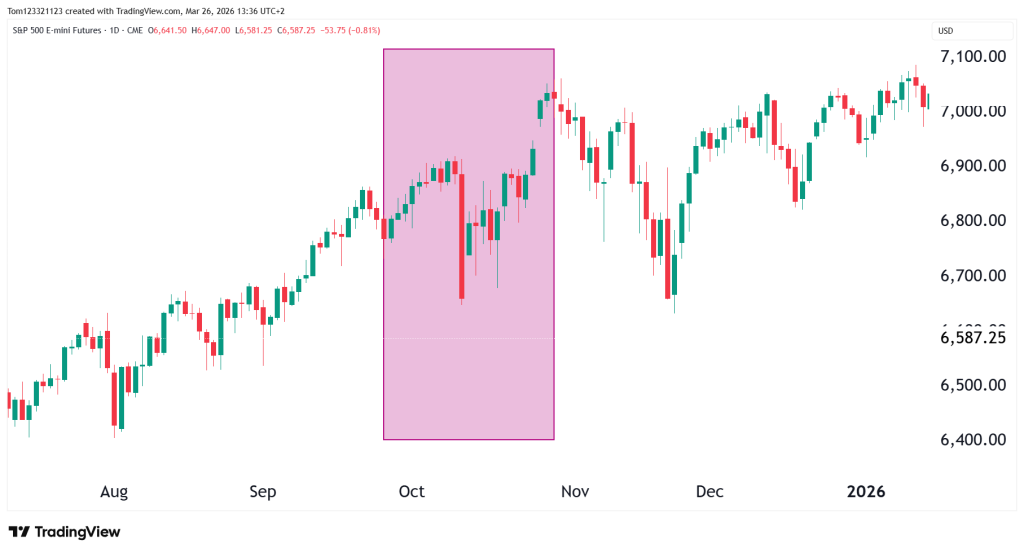
Even when traders are comfortable with several instruments, sticking to one usually works out better in the long run because each market moves differently. The E-mini S&P 500 is one of the most actively traded futures markets, and for a trader who combines scalping and swing trading, it offers enough movement and structure to support both styles. With this, it is not as volatile as NQ, which can wipe accounts out in seconds.
Daily Routine
Ali’s preparation routine is one of the strongest parts of his overall profile.
Before the session begins, he reviews higher timeframes, marks key support and resistance levels, checks the economic calendar, and defines both his trading plan and risk parameters. That routine gives him a framework before the market opens, which is often what separates prepared trading from reactive trading.
This matters because a trader who starts the session already knowing where key levels are and what the main risks might be is much less likely to make impulsive decisions. In many cases, discipline during the session is not just about self-control in the moment. It starts earlier, with preparation. Ali’s process reflects that well.
Strengths & Weaknesses
Ali identifies discipline, patience, risk management, and the ability to follow a trading plan under pressure as his main strengths. Looking at the statistics, that seems accurate. A 62% win rate, nearly 2.0 profit factor, and over 300 trades in less than three weeks suggest a trader who is not acting randomly or emotionally.
At the same time, he says that one of his weaknesses is being overly cautious and missing trades. That is an interesting contrast because many traders have the opposite problem. They take too many trades, force setups, or become too aggressive after a few wins or losses.
Being too cautious can still limit performance, but it is often easier to refine than to be impulsive. In many cases, the trader who is slightly too careful already has a foundation of patience and respect for risk. The next step is usually not to become more aggressive, but to build more confidence in the setups that already fit the plan.
That is another reason his statistics are useful to study. They show a trader who already has a strong base. The performance is good as it is, but there are also clear signs that small adjustments could make it even better over time.
OneUp Trader Experience
Ali found OneUp Trader on social media and chose the funded trader program for its fair evaluation rules, clear risk parameters, strong reputation, and trader-friendly platform.
He described the overall experience as positive, saying that the rules are clear, the platform is stable, and the evaluation process feels fair and transparent. He also noted that, compared to other prop firms he has worked with, OneUp Trader stands out for its straightforward structure and trader-friendly conditions.
He rated the OneUp Trader funded trader program 8 out of 10 overall and was very satisfied with customer support.
What Traders Can Learn From This
Ali’s performance offers a few useful lessons.
First, profitable trading does not always have to look spectacular. A steady win rate, balanced risk-reward profile, and consistency can produce very solid results without relying on oversized trades.
Second, preparation matters more than many traders realize. Reviewing higher timeframes, marking levels, and defining risk before the session starts often makes it easier to stay disciplined once the market begins moving.
Third, statistics can reveal both strengths and opportunities. In Ali’s case, the results already show discipline and structure, but they also show that cutting losing trades sooner could improve efficiency even more.
Final Thoughts
With a $10,111 withdrawal in just 18 days on his first funded account, Ali put together a strong start with OneUp Trader. His results were not built on hype or unusually large outlier trades, but on a more balanced and repeatable approach.
For traders reading this, that may be the most useful takeaway. Good performance does not always come from doing something dramatic. Often, it comes from having a clear plan and properly managing risk!