



- Bonds have benefited greatly from the signing of a peace deal between the US and Iran.
- Tehran agreed to have its nuclear activities monitored.
- Next week, market participants will watch the US monthly employment report.
Interest futures traded near highs hit in the previous session as a rapid decline in oil prices sent treasury yields lower. However, there was some downward pressure from a strong dollar amid an increase in Fed rate hike expectations.
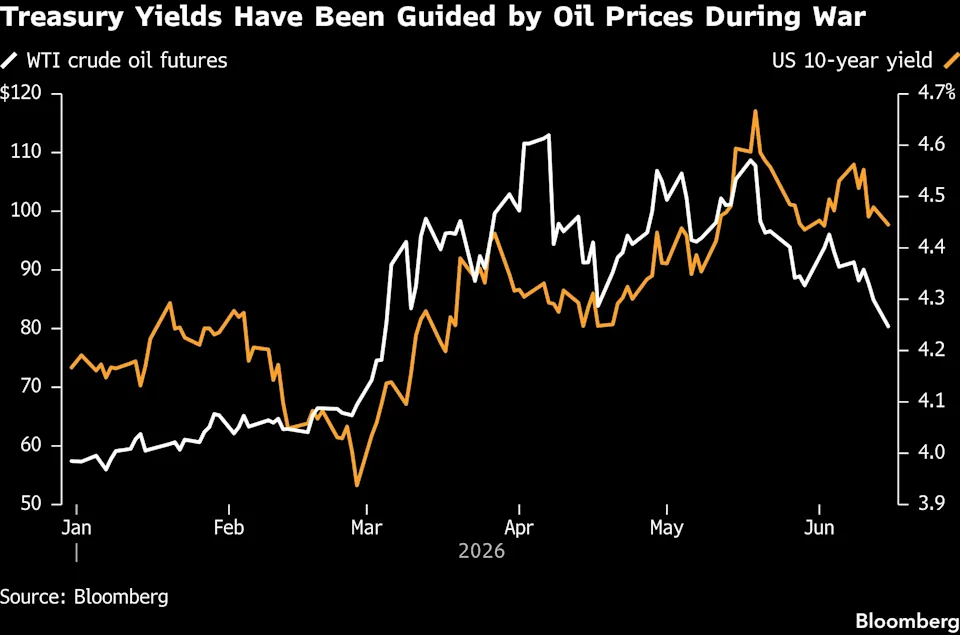
WTI crude oil futures (Source: Bloomberg)
Bonds have benefited greatly from the closing of a peace deal between the US and Iran. For months, the spike in oil prices caused by the war fueled inflation worries, propelling treasury yields higher. Yields rose due to an increase in Fed rate hike expectations. This increase led to a decline in interest futures.
Fortunately for bond traders, there was a sharp sentiment shift last week after Trump announced a deal at last with Iran. The deal, which was signed on Friday, saw the immediate reopening of the Strait of Hormuz. At the same time, the US ended its blockade of Iranian ports. The reopening of the Strait allowed for the resumption of traffic flow, boosting the outlook for supply. As a result, oil prices started descending.
The deal also gave more time for further talks on Monday, which, resulted in the removal of sanctions on Iranian oil. At the same time, Tehran agreed to have its nuclear activities monitored. Investors saw this as great progress towards a longer-lasting peace deal, and it sent oil lower.
“Our core view has been that the energy spike was always likely to prove transitory rather than structural, and that markets had over-weighted the persistence of the resulting inflation impulse,” said Ross Pamphilon, chief investment officer of fixed income at Impax Asset Management.
“We continue to see scope for further declines in longer-dated yields over the near term,” he added.
Meanwhile, there was some pressure after the FOMC meeting revealed a surprisingly hawkish tone among policymakers. Officials were open to rate hikes this year despite the easing of geopolitical tensions. As a result, the likelihood of a rate hike in September increased to 69%. At the same time, traders are now fully pricing a rate hike in October, boosting the dollar.
Higher borrowing costs are bullish for treasury yields and bearish for interest futures. Next week, market participants will watch the US monthly employment report for more clues on the outlook for monetary policy.

