



- Fed rate hike bets fell to 58% on news of a peace deal.
- Fed’s Warsh maintained a hawkish tone on Wednesday.
- Next week, the US will release its core PCE price index report.
Interest futures rallied on Thursday as market participants eagerly awaited the signing ceremony of the US-Iran peace deal. Optimism over an end to the Iran war and a reopening of the Strait of Hormuz have supported bonds in recent days. However, a hawkish Fed meeting on Wednesday capped gains.
Interest futures, like most other asset classes, have collapsed since the Iran war started in February. The decline came as Treasury yields rallied amid inflation worries and rising expectations of Fed rate hikes.
The war led to the closure of the Strait of Hormuz, which sent oil prices skyrocketing. Expensive oil led to higher prices for goods and services and a spike in inflation. This put the Fed on high alert and led to a sudden shift in the outlook for monetary policy.
Before the war, the US central bank was easing monetary policy as inflation had fallen significantly from its highs at the onset of the Ukraine war. However, this changed with the closure of the Strait. Inflation rose to a 3-year high of 4.2% in May, prompting a surge in rate-hike expectations.
Traders were now placing a 70% chance that the Fed would increase borrowing costs in December. It fell to 58% on news of a peace deal.
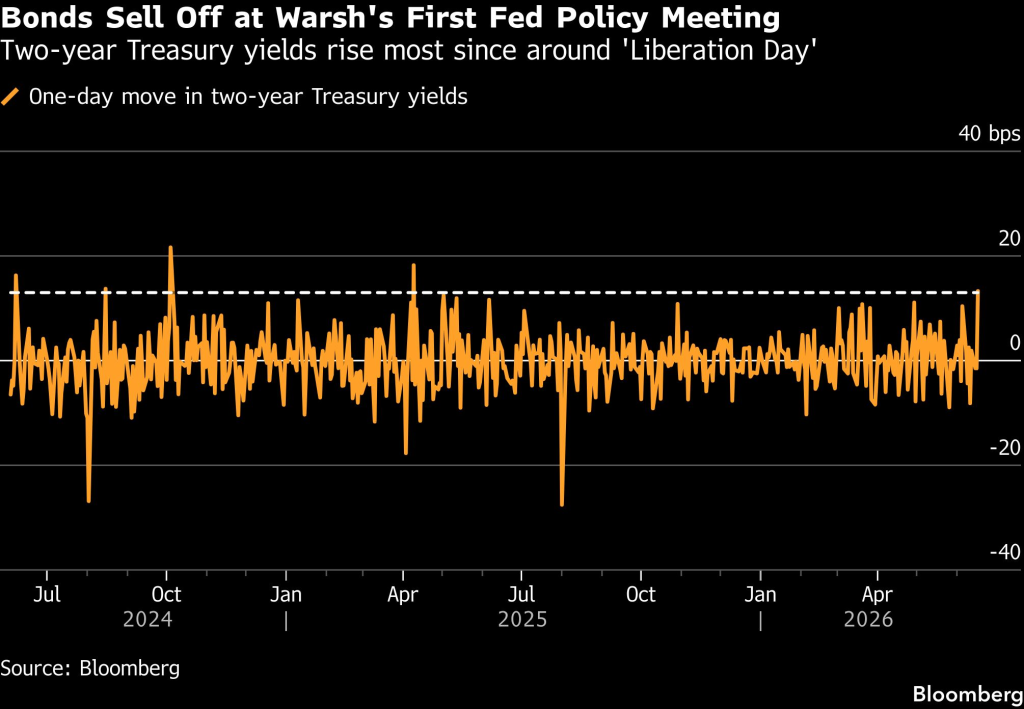
2-Year Treasury yield (Source: Bloomberg)
Still, during Wednesday’s meeting, Warsh maintained a hawkish tone, hurting bonds. Moreover, policymakers remained open to near-term rate hikes.
“What was interesting from Warsh’s first FOMC outcome is a clear message to markets that the Federal Reserve sees inflation as an issue to be solved, and if they do identify an inflation problem, they are prepared to act,” ING’s rates analysts wrote in a note published Thursday.
The fact that the US and Iran have finally agreed to end the war means oil prices will drop. Therefore, inflation will come down, and interest futures will rise. However, it remains to be seen whether the peace deal will hold. A successful signing ceremony later in the day will be a good place to start. Moreover, it could take time for traffic through the Strait to resume to pre-war levels.
Next week, the US will release its core PCE price index report. This will give a better measure of inflation, further shaping the outlook for Fed policy.