



- Interest futures have rallied amid hopes of an end to the Iran war.
- The US and Iran are planning to extend their ceasefire deal.
- Next week, all eyes will be on the US nonfarm payrolls report.
Interest futures recovered sharply on Thursday after reports of a likely ceasefire extension deal between the US and Iran. The news sent US Treasury yields lower as oil prices collapsed and inflation concerns eased. At the same time, a set of downbeat economic figures lowered bets for a Fed rate hike in December.
The bond market has had a good few days of bullish momentum fueled by hopes of an end to the Iran war. It all started after Trump said last week that he had called off strikes on Iran to give time for talks. Since then, market participants have followed comments from top officials in both countries, which have remained mostly positive.
However, despite the talks, there were pockets of tension when the US conducted defensive strikes in Iran. Interest futures initially collapsed on Thursday as Iran retaliated. However, sentiment shifted by the end of the day when reports indicated a looming ceasefire extension deal.
If Trump agrees to the deal, then talks on Iran’s nuclear program will begin. These developments have weighed heavily on oil prices. As oil becomes cheaper, price pressures ease. Consequently, the Fed would feel less pressure to tighten monetary policy. A decline in rate-hike expectations pushes Treasury yields lower, while interest-rate futures climb.
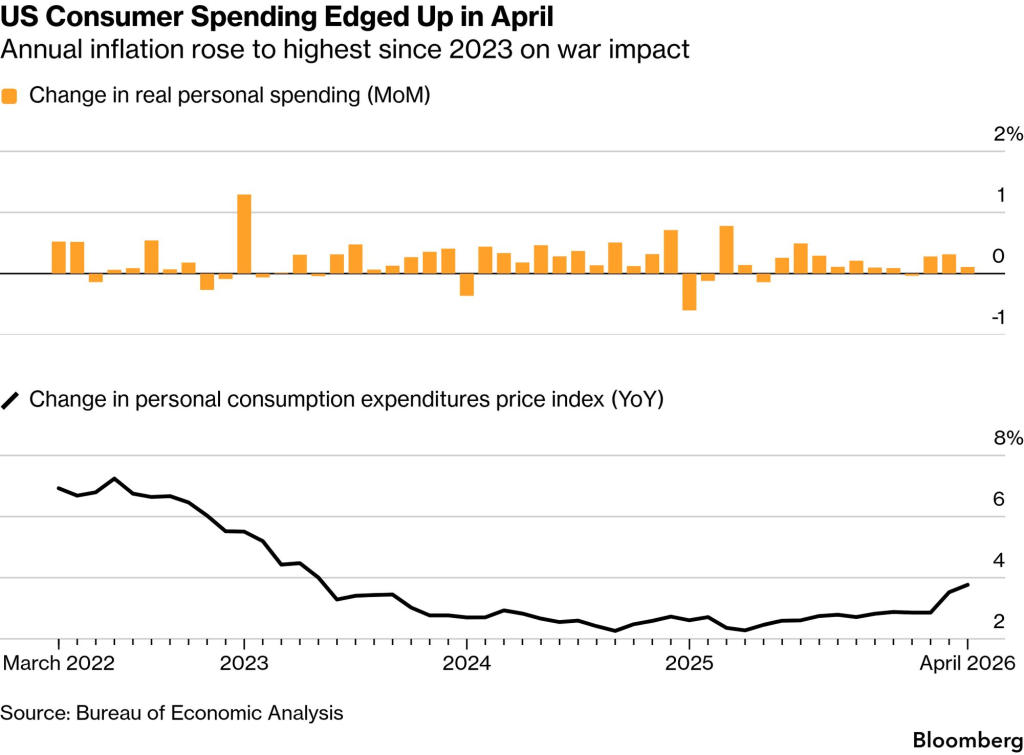
US PCE price index (Source: Bureau of Economic Analysis)
Elsewhere, economic data released on Thursday showed that the US core PCE price index rose 0.2%, missing the forecast of 0.3%. However, the annual PCE increased by 3.8% as expected. The Fed considers this a better measure of inflation. It will therefore greatly impact future policy moves.
“If Washington economic officials were looking for evidence to back up claims there is no cost-of-living crisis in America, they will have to look elsewhere because PCE consumer inflation is still heating up in April as the Iran war pushes energy costs sharply higher,” said Chris Rupkey, chief economist at FWDBonds.
Meanwhile, a separate report showed that US GDP increased by 1.6%, below the 2.0% estimate. The increase in fuel prices has also begun to hurt growth. This means the Fed will have to balance growth and inflation. Next week, all eyes will be on the nonfarm payrolls report, which will shape the outlook for monetary policy.

