


Introduction
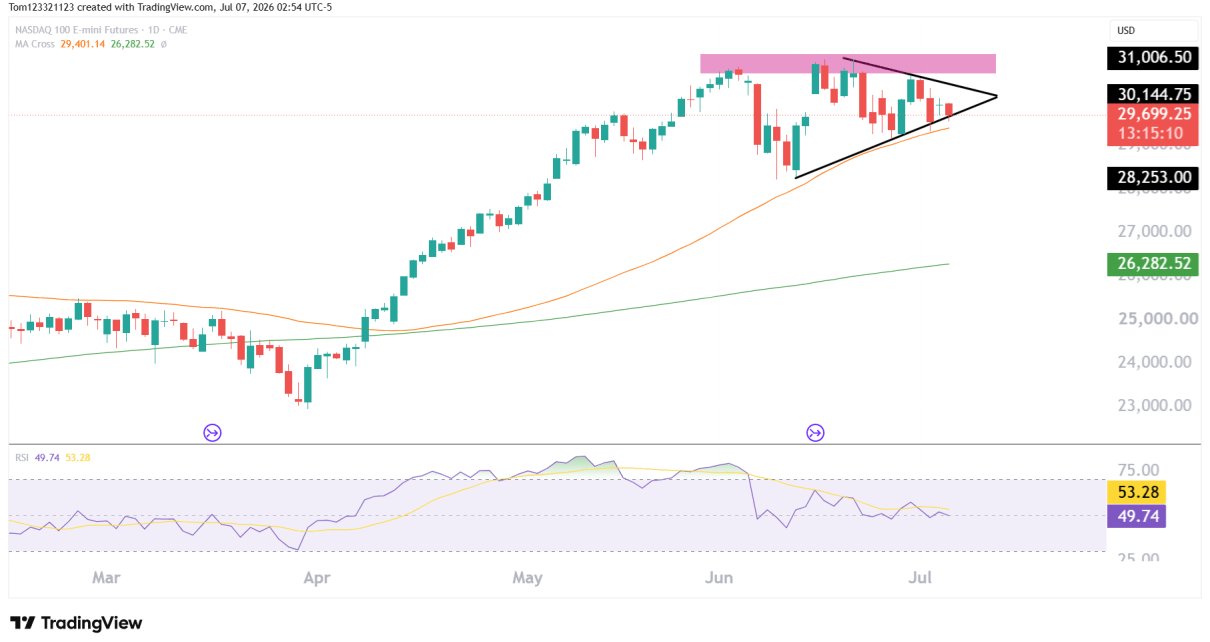
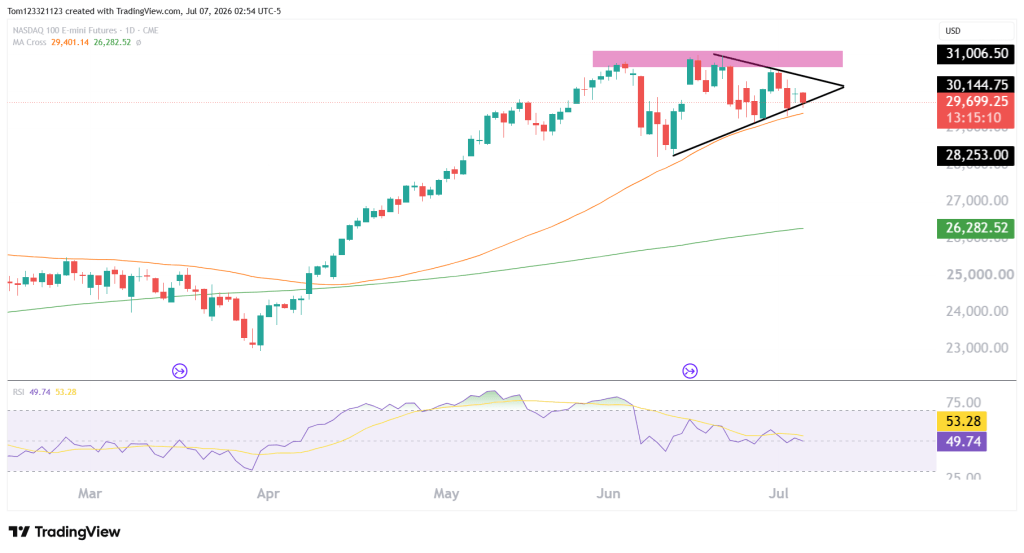
Nasdaq futures continue trading exactly as we outlined in our previous analysis. Rather than breaking in either direction, NQ remains trapped inside the triangle that has been developing over the past several weeks. There is more support building off the lower end of this trianlge now, which could mean there is an opportunity for buyers to get involved.
The overall trend remains bullish, with price holding comfortably above both the 50-day and 200-day moving averages. The 50 has held as a strong support level each time the market tests it. From here, the key is going to be if the buying pressure will be strong enough to hold the price above both the 50 MA and the triangle.
NQ Futures Trend Analysis
Estimated Probabilities for NQ Futures
| Scenario | Estimated Probability | Market Interpretation |
|---|---|---|
| Bullish breakout above 31,000 | 50% | Buyers resume the primary uptrend and target fresh highs |
| Continued consolidation inside the triangle | 30% | Market remains balanced while awaiting a catalyst |
| Breakdown below 29,300 support | 20% | Sellers gain temporary control and trigger a deeper pullback |
Key Support and Resistance Levels
Major Resistance Levels
- 30,800–31,000
- 31,500
- 32,000
Major Support Levels
- 29,300 ascending trendline
- 29,400 (50-day moving average)
- 28,250 previous swing low
- 26,280 (200-day moving average)
NQ Futures Possible Trades
Bullish Continuation Trade
The broader trend continues favouring buyers. A convincing daily close above the 30,800–31,000 resistance zone would complete the triangle pattern and could trigger another leg higher as breakout traders re-enter the market.
This analysis is provided for educational and informational purposes only and should not be considered financial or trading advice. Trading futures, forex, and other leveraged financial instruments carries a high level of risk and may not be suitable for all investors. Past performance is not indicative of future results. Before making any trading decisions, conduct your own research, assess your risk tolerance, and consult with a qualified financial advisor if necessary.

