

Introduction
The Japanese yen has fallen to its weakest level against the US dollar since 1986 as the widening interest rate gap between the United States and Japan continues to favour the dollar. Although the Bank of Japan has raised interest rates to 1%, they remain well below US rates, while higher oil prices and expectations that the Federal Reserve will keep policy tight have further pressured the yen.
The weakness has fuelled speculation that Japanese authorities could intervene in currency markets for a second time this year after a previous $70 billion intervention failed to halt the decline. While any Treasury selling is expected to have only a modest impact, a sharp rebound in the yen could trigger an unwind of the popular yen carry trade, increasing volatility across US equity markets.
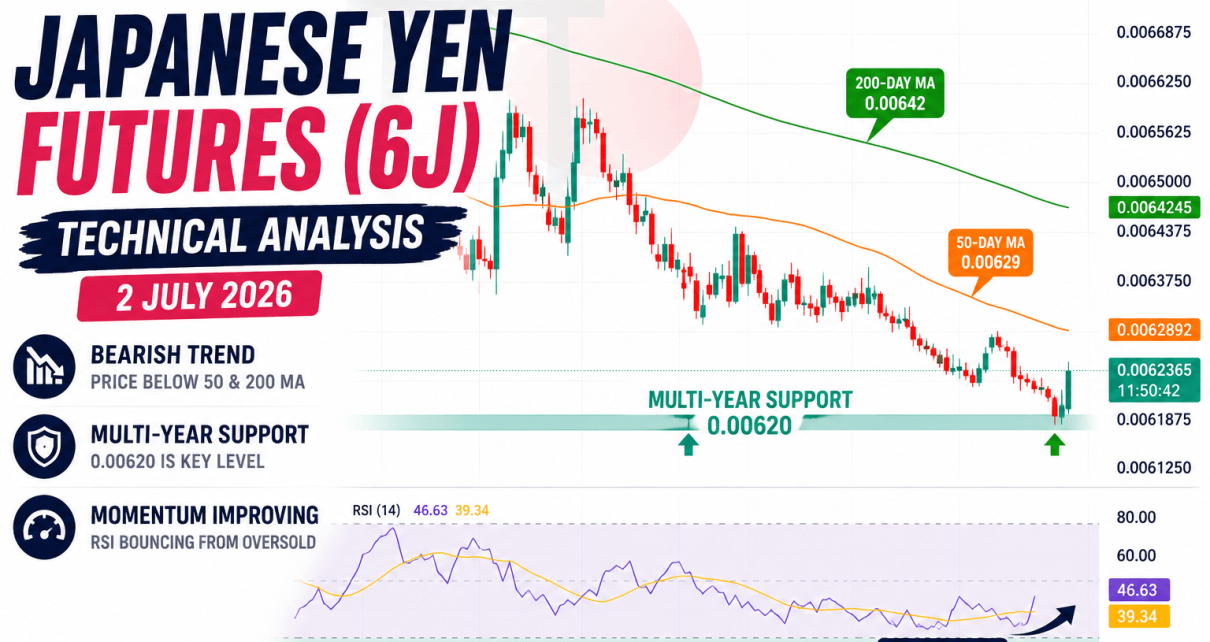
Japanese Yen futures continue to trade in one of the clearest downtrends across the major currency futures markets. Since peaking earlier this year, sellers have remained in firm control, with price consistently making lower highs and lower lows while trading below both the 50-day and 200-day moving averages.
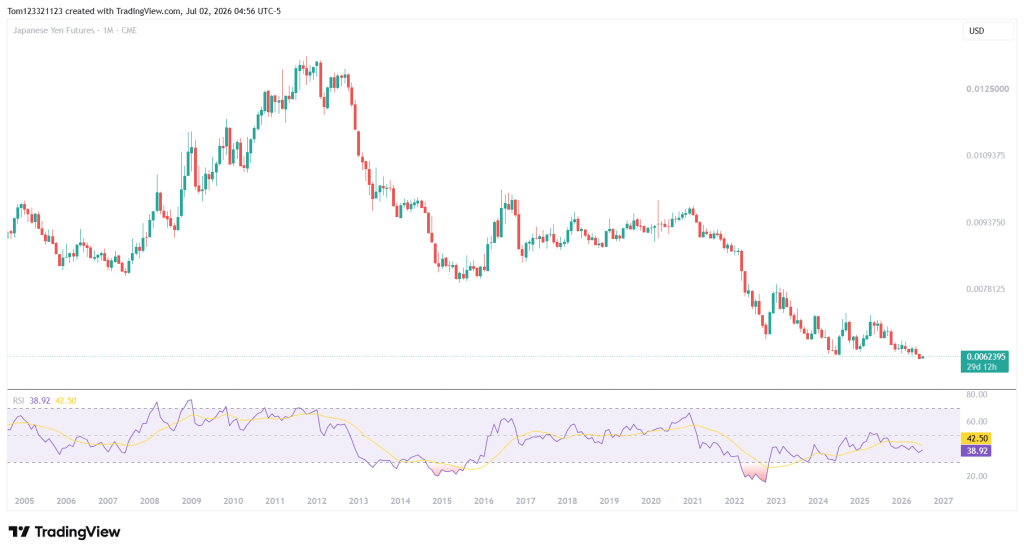
Although the Yen has produced a small bounce over the past few sessions, the broader technical picture has changed very little. Looking at both the daily and monthly charts, the longer-term trend remains bearish, and buyers still have significant work to do before any meaningful trend reversal can be considered.
Let’s take a closer look at the technicals.
6J Futures Trend Analysis
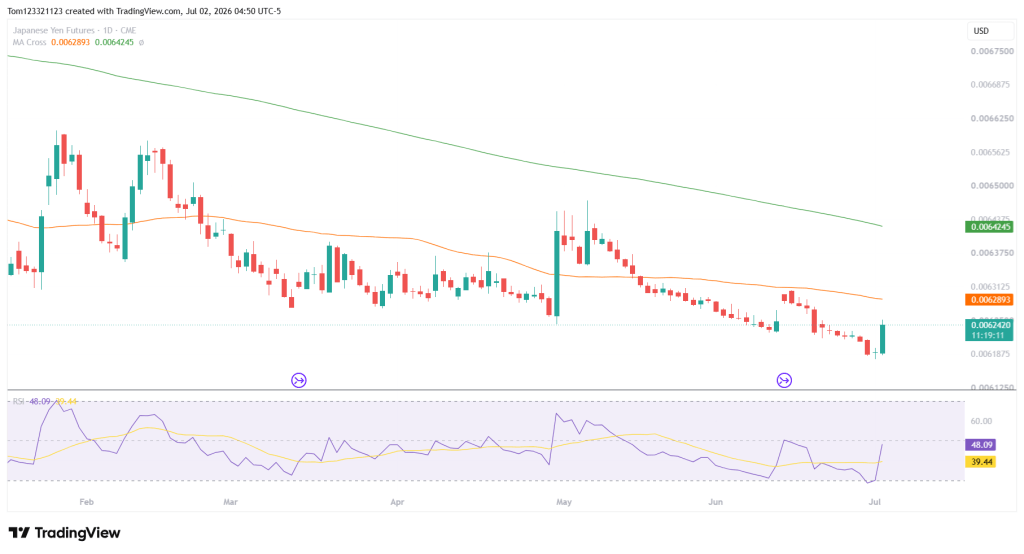
As we have seen for the past few years, the main driver behind the Yen’s price action is fundamental. The technicals are not giving us many options right now, but they can help us in some way look for entries and exits.
One thing we can note is that when the RSI hits oversold, we see the price spike quickly. Recently, we saw this, and it could be one possible way to take counter-trend trades by going long.
The Trend Has Not Changed Yet
Despite the recent improvement in momentum, traders should avoid confusing a short-term bounce with a trend reversal.
For the technical outlook to improve meaningfully, buyers first need to reclaim the 50-day moving average and begin producing higher highs on the daily chart. Until that occurs, rallies are likely to face selling pressure.
The monthly chart also continues printing lower highs since the 2021 peak, reinforcing the broader bearish structure that has remained intact for several years.
Estimated Probabilities for 6J Futures
| Scenario | Estimated Probability | Market Interpretation |
|---|---|---|
| Consolidation above long-term support | 45% | Selling pressure slows while buyers defend major support |
| Continued decline toward fresh multi-year lows | 35% | Bears maintain control and extend the long-term downtrend |
| Recovery above the 50-day moving average | 20% | Buyers regain short-term momentum and begin building a larger reversal |
Key Support and Resistance Levels
Major Resistance Levels
- 0.00629 (50-day moving average)
- 0.00642 (200-day moving average)
- 0.00650
Major Support Levels
- 0.00620 multi-year support
- 0.00610
- 0.00600 psychological support
6J Futures Possible Trades
Support Reaction Trade
The long-term support around 0.00620 is becoming the most important level on the chart. If buyers continue defending this area, the Yen could enter a period of consolidation after several months of persistent selling.
Bearish Continuation Trade
The broader trend remains bearish while price trades below both major moving averages. Failure to hold above current support would likely expose the market to another leg lower toward fresh multi-year lows.
Bullish Recovery Trade
For the bullish outlook to improve, buyers need to reclaim the 50-day moving average and establish higher highs on the daily timeframe. A move back above the 200-day moving average would provide much stronger evidence that the long-term downtrend is beginning to reverse.
This analysis is provided for educational and informational purposes only and should not be considered financial or trading advice. Trading futures, forex, and other leveraged financial instruments carries a high level of risk and may not be suitable for all investors. Past performance is not indicative of future results. Before making any trading decisions, conduct your own research, assess your risk tolerance, and consult with a qualified financial advisor if necessary.