




- US jobless claims dropped to 207,000 last week.
- Fed’s Beth Hammack said the Fed will likely keep interest rates on hold.
- Trump threatened to fire Powell if he did not resign as Fed governor in May.
US interest futures dropped on Thursday after upbeat US jobs data sent Treasury yields higher. However, sentiment lifted on Friday morning, amid hopes of an end to the conflicts in Iran and Lebanon.
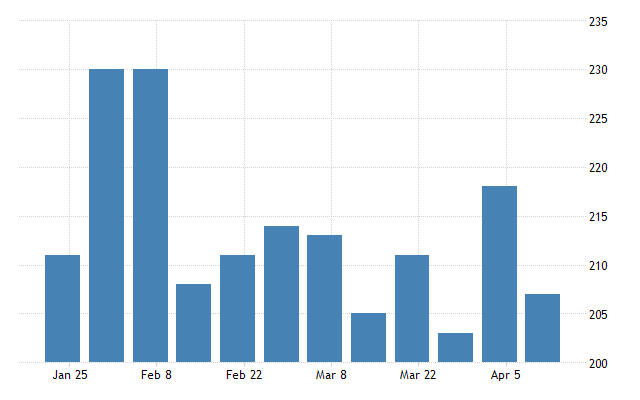
US jobless claims (Source: Trading Economics)
US data on Thursday showed that jobless claims fell to 207,000 the previous week. Meanwhile, economists had expected 215,000 claims. The upbeat report pointed to a hot labor market that could prompt the Fed to hold rates or even raise them. Such an outcome would send Treasury yields high and interest futures lower.
Market participants have been keeping an eye on the US economy for signs of overheating. The US-Iran war has sent oil prices higher, affecting the prices of most goods and services in many countries. As a result, there have been concerns about higher inflation that would force the Fed to pause its rate-cut cycle.
On Wednesday, Cleveland Federal Reserve President Beth Hammack said the Fed will likely keep interest rates on hold for some time. According to her, the central bank needs time to assess the impacts of the war on inflation and the economy.
Meanwhile, risk appetite has improved after Trump said the US and Iran could hold more talks in Pakistan. At the same time, a ten-day ceasefire between Israel and Lebanon took effect on Friday. An end to these conflicts would lower oil prices, easing US inflation concerns. Moreover, the Fed would not have to resume hiking interest rates. Such an outcome would lower Treasury yields and boost interest futures.
Nevertheless, the Strait of Hormuz blockade has kept traders on edge. If it continues and there is no longer-lasting ceasefire deal between the US and Iran, oil will keep climbing. At the same time, inflation will spike.
“The conflict could also result in a large supply shock with pronounced effects that simultaneously raise inflation through a surge in intermediate costs and commodity prices and dampen economic activity. This has begun to play out already,” New York Fed President John Williams said in a speech.
Elsewhere, Trump threatened to fire Powell if he did not resign as Fed governor when his term ends in May. The statement raised concerns about the central bank’s independence.