

- Focus this week shifted slightly from the Iran war to US economic data.
- US wholesale inflation increased by 1.4%, well above the estimate of 0.5%.
- Retail sales data indicated a decline in US consumer spending.
Interest futures were heading for a bearish close on the week after upbeat US inflation figures raised the likelihood of Fed rate hikes. The Middle East war has sent oil prices higher, boosting wholesale and consumer prices. At the same time, the US economy is starting to show signs of a slowdown.
Focus this week shifted slightly from the Iran war to US economic data. The CPI report out on Tuesday revealed that prices increased by 3.8% annually in April. This number beat the estimate of 3.7% and was a big increase from 3.3% in March.
Meanwhile, the PPI report on Wednesday indicated a monthly increase of 1.4%, well above the estimate of 0.5%. Both numbers point to an overheating economy that will force the Fed to pause its easing and consider tightening monetary policy.
However, policymakers might have a difficult time balancing growth and inflation. In April, the US economy added a positive 115,000 new jobs. Still, the number was a drop from the previous month when there were 185,000 new jobs.
“The Federal Reserve has an inflation problem on its hands at a time when the labor market has slowed down, and that makes its job much more difficult, especially as the central bank is set to welcome a new Chair in the very near-term,” Bellin said.
Furthermore, retail sales data on Thursday indicated a decline in consumer spending from the previous month. Sales rose by 0.5% as expected. It was a significant decline from the last reading of 1.6%.
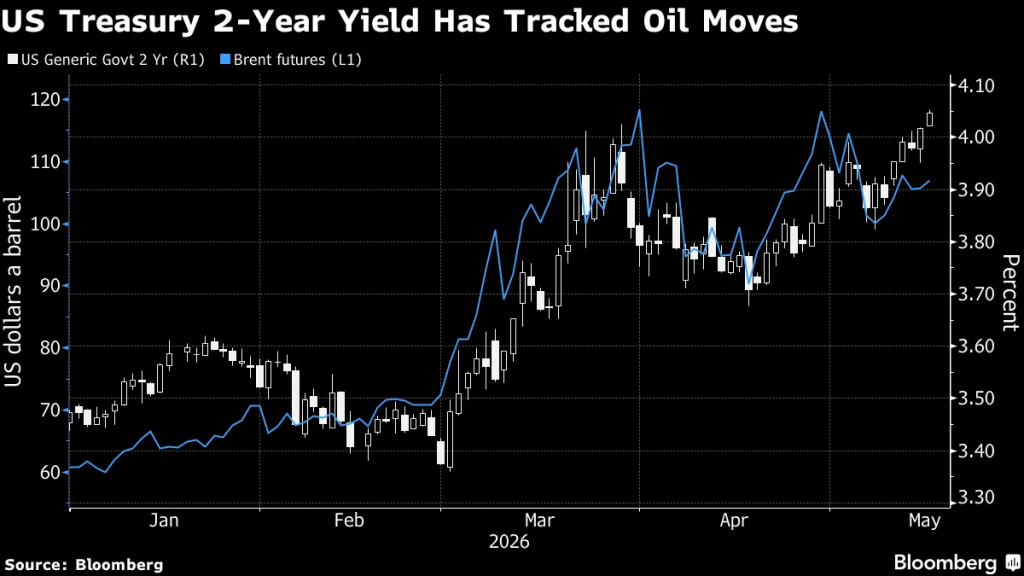
US 2-year yield (Source: Bloomberg)
If the Fed is forced to hike borrowing costs, Treasury yields will continue rising while interest futures will drop.
The recent rally in oil prices caused by the Middle East war has had an impact on most economies. The closure of the Strait of Hormuz has tightened the market by disrupting supply. As a result, most economies that depend on imported oil have experienced a decline in inventories.
Furthermore, the International Energy Agency believes oil will climb further in the summer as demand rises. The combination of higher demand and low supplies will mean more expensive oil and more pressure on the Fed to hike interest rates.