



Introduction
Futures trading attracts people for one reason above all others: the opportunity to make money. The futures markets offer liquidity, volatility, leverage, and 23 hours a day trading. But opportunity alone is not enough. Most traders fail because they approach the futures market without a trading plan.
Profitable futures trading is not about finding a “secret indicator” or looking for the holy grail. Consistency comes from combining technical analysis skills, discipline, strong risk management, and the right mindset.
In this guide, we’ll break down the foundations of profitable futures trading, including:
- How technical analysis helps traders find high-probability setups
- Why a trading journal can dramatically improve performance
- The risk management principles professional traders rely on
- How to build a realistic futures trading plan
- Futures trading strategies beginners and experienced traders can use
- Why trader psychology often separates profitable traders from losing traders
- How prop firms like OneUp Trader allow traders to access capital without risking large personal accounts
Whether you trade E-mini S&P 500 futures, Nasdaq futures, crude oil, gold, or agricultural contracts, these principles apply across every market.
What Makes Futures Trading Profitable?
Futures trading becomes profitable when traders consistently trade a strategy with an edge without deviating from their plan. Successful traders know that losses are in the game but over a series of hundreds of trades, a strategy with an edge will come out on top.
A difficulty is that most traders focus only on entries.
Professional traders focus heavily on risk management, consistency, and emotional control. A great setup with poor discipline can still lose money over time. On the other hand, an average strategy paired with excellent risk control can become consistently profitable.
The goal is to:
- Protect capital
- Limit emotional decision-making
- Execute a repeatable process
- Let probabilities play out over time
Technical Analysis in Futures Trading
Technical analysis is one of the most widely used approaches in futures trading. It involves studying price action, chart structure, volume, and momentum to identify potential trading opportunities. Large traders that manage hundreds of contracts at a time will look at fundamentals too, but still keep a close eye on technicals.
Unlike long-term investing, futures trading often depends on short-term price movement. Technical analysis helps traders identify where buyers and sellers are active and where momentum may shift. Support & resistance are major factors in deciding where to place trades.
Why Technical Analysis Is Important
Technical analysis allows traders to identify trends, find support and resistance levels, improve trade timing, define risk clearly, and build repeatable trading systems.
Some of the most effective technical analysis tools include trend lines, candlestick patterns, moving averages, VWAP, volume analysis, market structure analysis, Fibonacci retracements, and support and resistance zones.
The key is not using every indicator available. It’s learning how to use a small set of tools well and applying them consistently.
Trend Line Trading Strategy
Trend lines remain one of the simplest and most effective tools in futures trading. A trend line is created by connecting swing highs or swing lows to visualize market direction. Traders use trend lines to identify trend continuation, potential reversals, pullback entries, and areas where momentum may accelerate.
For example, in an uptrend:
- Connect two or more higher lows
- Wait for price to retrace into the trend line
- Look for bullish confirmation candles
- Enter with a stop loss below structure
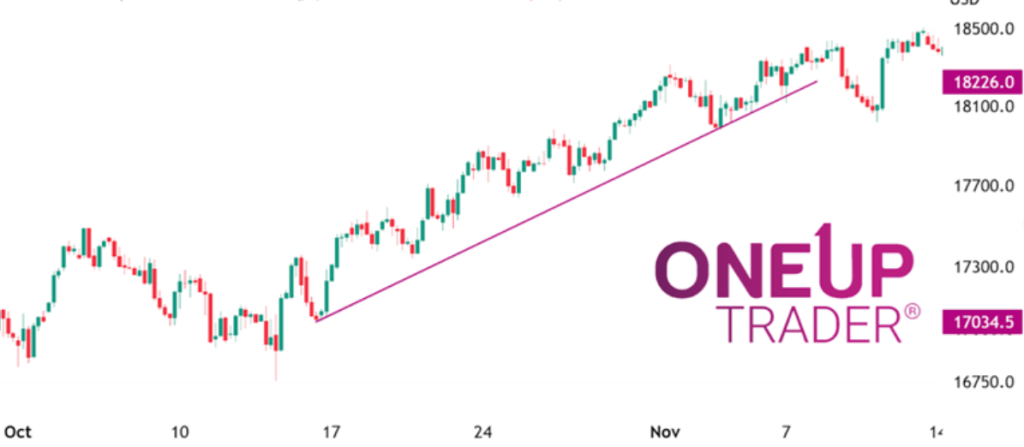
This approach works because it brings together a few key things that matter in trading: understanding market structure, keeping risk clearly defined, trading in the direction of the trend, and looking for setups where the potential reward outweighs the risk.
Instead of chasing random price moves, the focus is on waiting for the market to pull back within an existing trend and then looking for a higher-probability entry. That patience can make a big difference. It helps traders avoid emotional decisions and stay consistent with a structured plan.
A lot of successful futures traders build their entire strategy around this idea. Trends rarely move in a straight line. Markets naturally pause, retrace, and then continue. By learning how to identify those pullbacks, traders can often enter at better prices with tighter risk and more upside potential if the trend continues.
What makes this approach appealing is that it is both disciplined and repeatable. The rules are usually clear, the risk is known before entering the trade, and the strategy works with the market’s natural rhythm rather than fighting against it.
Candlestick Patterns Every Futures Trader Should Know
Candlestick Patterns and Market Psychology
Candlestick patterns help traders read short-term shifts in momentum and understand the ongoing battle between buyers and sellers. Every candle tells a small part of the story: who was in control, where pressure entered the market, and how traders reacted at important price levels.
As traders move down to lower timeframes, candlestick behavior becomes even more important. Price tends to move faster and with more noise, so learning how to recognize strong rejection, momentum shifts, and failed moves can help traders make more informed decisions in real time.
Some of the most commonly used reversal patterns include:
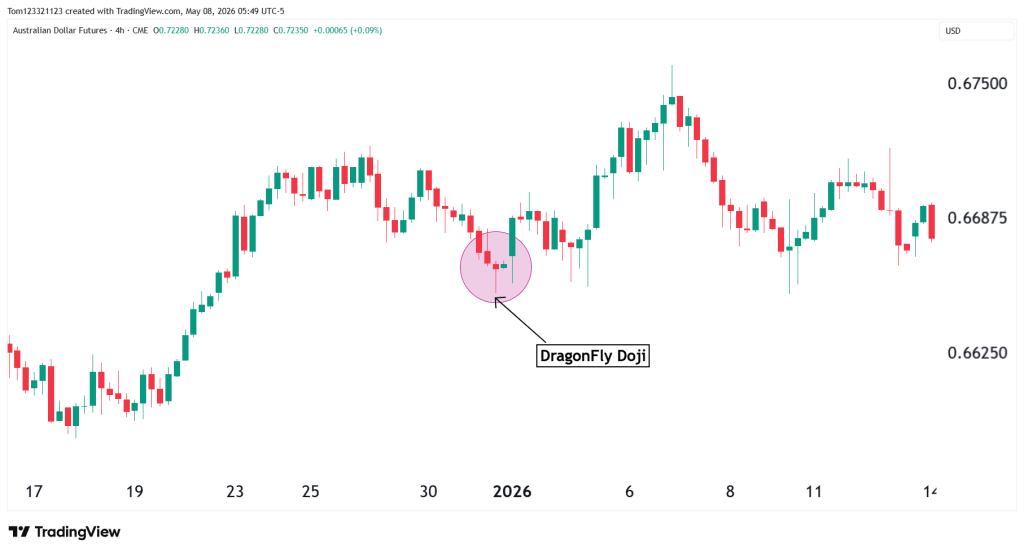
Dragonfly Doji
A dragonfly doji often signals buyer strength after sellers initially drive prices lower. During the session, sellers appear to be in control, but buyers step in aggressively and push price back toward the opening level before the candle closes.
This type of reaction can suggest that downside momentum is weakening, especially when the pattern forms near support or after an extended move lower. Traders often view it as a sign that buyers are beginning to regain control.
False Break Candle Strategy
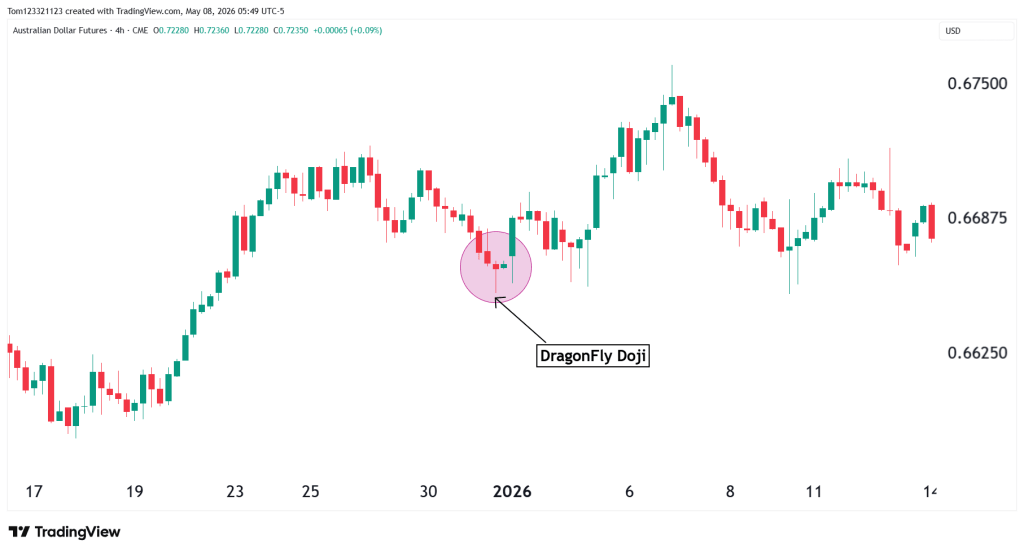
False break setups happen when price briefly moves above resistance or below support, only to reverse sharply back into range. These moves can trap breakout traders who entered too late, creating momentum in the opposite direction as positions quickly unwind.
Many traders pay close attention to false breaks because they reveal failed conviction in the breakout direction. When combined with strong rejection candles or increased volume, they can offer high-probability reversal opportunities.
Trade The False Break Candlestick Strategy At OneUp Trader For Only $65!
Engulfing Candles
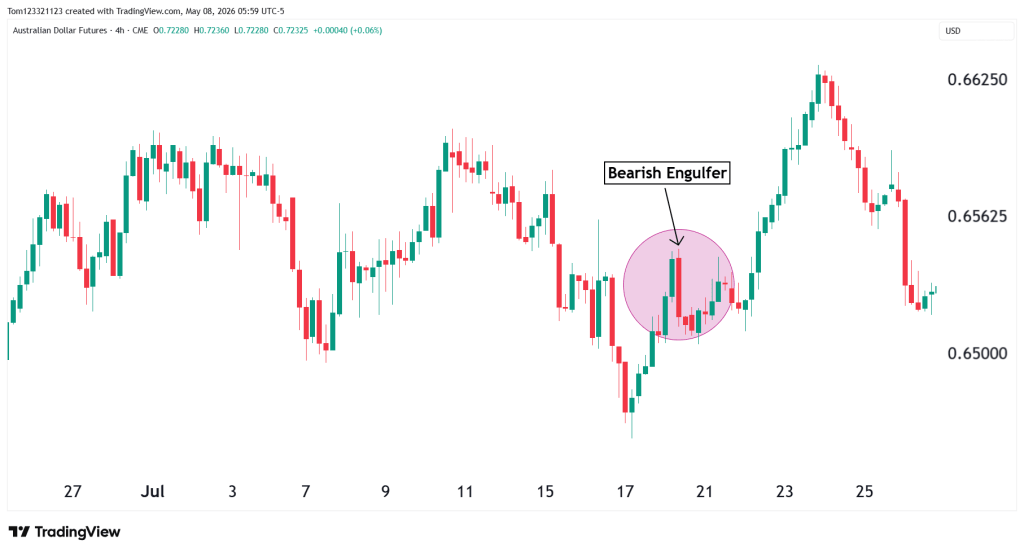
Bullish and bearish engulfing candles can signal strong participation from buyers or sellers. In a bullish engulfing pattern, buyers completely overwhelm the previous candle’s bearish move. A bearish engulfing candle shows the opposite, with sellers taking control after buying pressure weakens.
These patterns often stand out because they reflect a sudden shift in momentum and sentiment. Traders frequently look for them near key support and resistance zones or after pullbacks within a larger trend.
Pin Bars
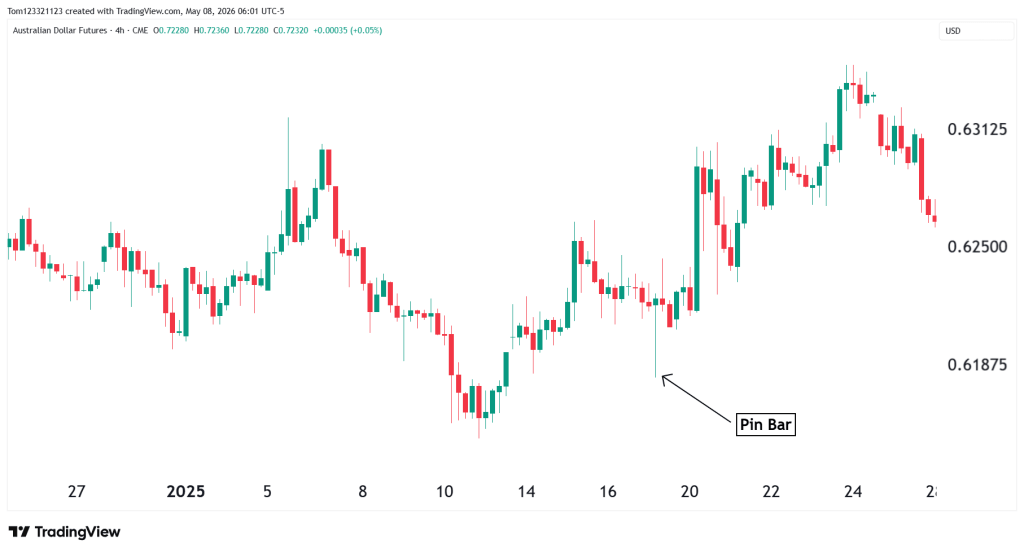
Pin bars show rejection of higher or lower prices and are commonly used to identify potential turning points in the market. They are recognized by their long wick and relatively small body, which reflects a failed attempt to push price in one direction.
For example, a long lower wick can show that sellers pushed price down but buyers rejected those lower levels and forced price back higher before the close. Pin bars tend to carry more weight when they appear at major support, resistance, trendlines, or liquidity zones.
The Importance of Context
Candlestick patterns work best when they are combined with overall market context, trend direction, volume, key price levels, and proper risk management. A strong-looking pattern means very little if it forms in the middle of choppy price action or directly against a powerful trend.
No candlestick pattern works in isolation. The strongest setups usually come from multiple factors lining up together. Traders who focus on context rather than memorizing patterns alone are often better positioned to identify higher-quality opportunities and avoid low-probability trades.
Why Every Futures Trader Needs a Trading Journal
A trading journal is one of the fastest ways to improve trading performance. While many traders focus only on finding new strategies, real improvement often comes from understanding their own behavior and decision-making.
Most traders think they remember their mistakes clearly, but emotions can easily distort memory. A trading journal creates objective feedback and allows traders to review their performance with a clearer perspective.
Professional traders constantly analyze their results because consistent improvement requires measurable data, not guesswork.
What to Track
A strong trading journal should include details such as:
- Entry and exit price
- Position size
- Setup type
- Time of day
- Emotional state
- Market conditions
- Mistakes made
- Lessons learned
Over time, patterns begin to emerge. You may notice that certain setups perform better than others, your strongest trades happen during specific sessions, or that emotional trading increases after losses or winning streaks.
This type of information is extremely valuable because it helps traders make adjustments based on real data rather than emotion or assumptions.
How to Build an Effective Trading Journal
Set Clear Trading Goals
Your trading goals should be specific and measurable. Instead of vague goals like “become a better trader,” focus on things you can actually track over time.
Examples include improving your win rate, reducing your average daily loss, following your trading plan consistently for 30 days, avoiding revenge trading, or maintaining disciplined position sizing.
Not every goal needs to be financial. Psychological goals are just as important. Many traders work on staying calm after losses, avoiding impulsive entries, accepting uncertainty, and following their rules without hesitation.
Record Every Trade
Consistency is key when journaling trades. One of the biggest mistakes traders make is only documenting their best setups while ignoring emotional or impulsive trades. In many cases, those are the trades that reveal the most about a trader’s weaknesses.
Important details to track include:
- Instrument traded
- Entry and exit points
- Stop loss placement
- Trade rationale
- Chart screenshots
- Emotional state before and after the trade
The more detailed the journal becomes, the easier it is to identify recurring mistakes and improve decision-making over time.
Review Trades Weekly
Daily reviews are helpful, but weekly reviews often reveal the bigger behavioral patterns that are easy to miss in the moment.
Questions to ask during review include:
- Did I follow my trading plan?
- Which setups performed best?
- Was my risk management consistent?
- Did emotions affect my decisions?
- What caused my biggest losses?
The goal is continuous refinement. Small adjustments made consistently over time can have a major impact on long-term trading performance.
Futures Trading Risk Management
Risk Management and Long-Term Survival
Risk management is the foundation of long-term profitability in trading. Without proper risk control, even skilled traders can struggle to survive over time.
Many new traders spend months searching for better entries and new strategies while completely overlooking position sizing and drawdown management. In reality, poor risk management destroys far more trading accounts than poor strategy selection ever does.
Professional traders think defensively before they think about profits. Before entering a trade, they focus on questions like:
- How much can I realistically lose on this trade?
- Does the setup justify the level of risk?
- Is my position size appropriate?
- Does this trade fit within my overall trading plan?
This mindset helps traders protect their capital during difficult periods and stay consistent over the long run. Successful trading is not just about maximizing gains. It is also about managing losses carefully and staying in the game long enough for skill and consistency to compound over time.
Stop Losses
A stop loss defines the maximum acceptable loss on a trade and plays a critical role in protecting trading capital. Without stop losses, traders leave themselves exposed to potentially catastrophic losses, especially during fast-moving or highly volatile market conditions.
However, simply using a stop loss is not enough. Placement matters just as much.
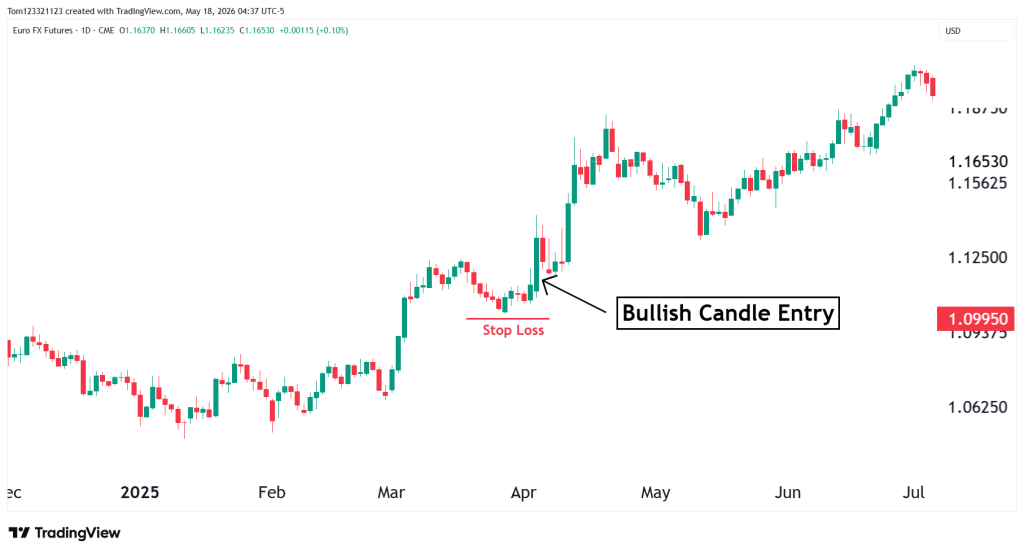
A stop that is too tight can easily get triggered by normal market fluctuations before the trade has a chance to develop. On the other hand, a stop that is too wide can create poor risk-to-reward ratios and increase unnecessary exposure.
Effective stop placement is often based on market structure rather than arbitrary numbers. Traders commonly use swing highs and lows, volatility measurements, support and resistance zones, and indicators like the Average True Range (ATR) to determine logical stop locations.
In most cases, the best stop losses are placed at the point where the original trade idea is no longer valid. If price reaches that level, the setup has likely failed, and staying in the trade no longer makes sense.
Position Sizing
Position sizing determines how much capital is risked on each trade, making it one of the most important aspects of risk management. Even the strongest setups should never expose an account to excessive risk.
For example:
- Risking 1% per trade gives traders room to survive normal losing streaks and remain emotionally stable.
- Risking 10% per trade can create intense emotional pressure, inconsistent decision-making, and major account instability.
This becomes especially important in fast-moving futures markets like Nasdaq futures (NQ), where volatility can increase quickly. Traders who ignore volatility often take oversized positions and end up damaging their accounts much faster than expected.
In many cases, smaller position sizes actually lead to better performance over time. They help traders stay calmer, make more objective decisions, reduce emotional stress, and maintain consistency during both winning and losing periods.
Daily Loss Limits
Daily loss limits help traders avoid emotional spirals and protect them from making impulsive decisions after a difficult trading session.
After several consecutive losses, many traders begin revenge trading by increasing position sizes, forcing low-quality setups, or abandoning their trading rules entirely in an attempt to recover losses quickly. This emotional decision-making often leads to even larger losses.
A daily loss limit acts as a circuit breaker by creating a clear point where trading stops for the day.
For example:
- Maximum daily loss: $300
- Maximum consecutive losses: 3 trades
Once that limit is reached, trading ends for the session regardless of how the market looks afterward.
This approach helps protect both trading capital and mental discipline. In many cases, stepping away after reaching a loss limit prevents emotional trading from turning a manageable loss into a much larger problem.
How to Create a Futures Trading Plan
A trading plan creates structure, consistency, and accountability. Without a clear plan, trading often becomes emotional, reactive, and heavily influenced by short-term market movements.
A strong futures trading plan should outline important areas such as:
- Trading goals
- Preferred markets
- Risk management rules
- Entry and exit criteria
- Trading schedule
- Position sizing guidelines
- Psychological rules and discipline standards
Think of a trading plan as a business framework rather than a collection of random ideas. It provides a clear process for decision-making and helps traders stay consistent during both winning and losing periods.
Professional traders operate systematically, not impulsively. Instead of reacting emotionally to every market move, they rely on predefined rules and structured routines to guide their decisions over time.
Define Your Trading Goals
Ask yourself:
- Are you trying to make additional income?
- Do you want to trade full time eventually?
- Are you learning market skills long term?
- How much time can you realistically commit?
Don’t just dive in hoping for the best, there needs to be a plan.
Choose the Right Futures Markets
Every market moves differently.
E-mini S&P 500 (ES)
- High liquidity
- Balanced volatility
- Popular among day traders
Nasdaq Futures (NQ)
- Fast-moving
- Higher volatility
- Larger intraday swings
Crude Oil Futures (CL)
- Extremely volatile
- Sensitive to news events
- Larger directional moves
Treasury Futures
- Often slower-moving
- Highly liquid
- Influenced by interest rates and economic data
New traders should spend time in simulation before committing real capital. This is why the OneUp Trader funded trader program is so beneficial for traders. They can test their systems in a simulated environment that is as close to the real thing as possible without ever having to risk their own money. With this, they get the opportunity to make withdrawals from the market too if they get funded!

Establish a Daily Routine
A trading routine may include:
- Pre-market analysis
- Economic calendar review
- Journaling
- Reviewing prior trades
- Defining key price levels
- Post-market review
Professional traders treat trading like a business, not a hobby.
Profitable Futures Trading Strategies
There is no single “best” futures trading strategy. The most effective strategy is usually one that fits a trader’s personality, works with their schedule, manages risk properly, and can be followed consistently over time.
Below are several of the most common futures trading approaches.
Mean Reversion Trading
Mean reversion strategies are based on the idea that price often returns toward an average after moving too far in one direction. Traders look for stretched market conditions where momentum may be fading and price is likely to pull back.
Common tools used in mean reversion trading include:
- VWAP
- Moving averages
- Standard deviations
- Bollinger Bands
For example, if price moves aggressively above VWAP and momentum begins slowing, some traders may enter short positions expecting price to rotate back toward the average.
Institutional traders closely monitor VWAP, which is why it remains one of the most important intraday indicators in futures trading.
Momentum Trading
Momentum trading focuses on strong directional price movement. Instead of fading moves, momentum traders aim to participate in trends that already show strength and increasing participation.
Momentum traders typically look for:
- Breakouts
- Trend continuation setups
- High relative volume
- Strong market sentiment
Popular momentum tools include moving averages, breakout levels, trend lines, and relative strength indicators.
Momentum strategies often perform best during strong trending market conditions where buyers or sellers remain in control for extended periods.
Range Trading
Range trading is commonly used in consolidating or sideways markets where price repeatedly reacts between clear support and resistance levels.
Traders generally look for:
- Well-defined support
- Well-defined resistance
- Repeated reactions within the range
The typical approach involves buying near support, selling near resistance, and placing stop losses outside the range boundaries.
One major advantage of range trading is that risk levels are usually easy to define. Because entries often occur near key levels, risk-to-reward ratios can become very favorable when the range holds consistently.
Trader Psychology: The Most Overlooked Skill
Trader psychology is often the difference between consistently profitable traders and those who continue to struggle despite having solid strategies. While many traders focus heavily on technical analysis, indicators, and market setups, the psychological side of trading is frequently overlooked.
Common psychological challenges include fear of missing out (FOMO), revenge trading after losses, overtrading, hesitation during valid setups, fear of taking losses, and excessive confidence during winning streaks. These emotions can quietly influence decision-making and cause traders to abandon their plans at the worst possible moments.
The market constantly tests emotional discipline. There will always be uncertainty, unexpected volatility, losing streaks, and periods of frustration. Learning how to stay calm and objective during those moments is a major part of becoming a consistent trader.
This is also why two traders can use the exact same strategy and still produce completely different results. One trader follows rules consistently, manages risk properly, and stays disciplined during difficult periods. The other allows emotions to influence entries, exits, and position sizing.
Over time, psychology often becomes the factor that determines whether a trader can execute consistently enough for a strategy to actually work.
Thinking in Probabilities
Professional traders think in probabilities rather than certainties. They understand that losses are a normal part of trading, no setup works every time, and individual trades mean very little over the long run.
Instead of trying to be right on every trade, experienced traders focus on executing their edge consistently over a large sample size. They know that consistency matters far more than perfection.
This mindset helps reduce emotional attachment to individual outcomes. A losing trade does not automatically mean the trader made a mistake, just as a winning trade does not always mean the decision was good.
A trader can follow their plan perfectly, manage risk correctly, and still lose money on a trade. That does not make it a bad trade. Likewise, breaking rules and getting lucky does not make a trade successful in the long term.
Thinking probabilistically helps traders stay disciplined during both winning and losing periods. It encourages patience, emotional stability, and a stronger focus on process rather than short-term results.
Visualization and Mental Rehearsal for Traders
Visualization can help traders improve discipline, focus, and emotional control. Many elite athletes use visualization regularly because repeated mental rehearsal helps strengthen confidence, preparation, and decision-making under pressure.
The goal is not fantasy or unrealistic expectations. The goal is to mentally reinforce disciplined behavior and prepare for common trading situations before they happen in real time.
For example, traders may visualize themselves following their trading plan precisely, accepting losses calmly, avoiding impulsive trades, executing setups confidently, and remaining patient during slow or frustrating market conditions.
Over time, this type of mental rehearsal can help strengthen emotional consistency and improve self-awareness during live trading sessions.
A Simple Visualization Exercise for Traders
A basic visualization routine can be simple and effective:
- Sit quietly without distractions
- Focus on slowing your breathing
- Visualize a calm and controlled trading session
- See yourself following your rules with discipline
- Mentally rehearse handling losses professionally
- Imagine ending the day satisfied with your execution regardless of profit or loss
This kind of exercise can help traders become more emotionally prepared and reduce impulsive decision-making during stressful market conditions.
Why Many Traders Use Prop Firms Like OneUp Trader
One of the biggest challenges in futures trading is access to sufficient capital. Many traders struggle because their accounts are underfunded, they risk too much personal money, or the emotional pressure of trading their own savings affects decision-making.
This is one reason proprietary trading firms have become increasingly popular.
How OneUp Trader Works
OneUp Trader allows traders to demonstrate their trading ability through a structured Evaluation process.
During the Evaluation, traders must reach specific profit targets while following strict risk management rules, maintaining discipline, and trading consistently over a minimum number of days.
Traders who successfully complete the process may qualify for funded accounts through OneUp Trader’s funding partners.
This model can offer several advantages, including access to larger account sizes, reduced personal financial risk, and the opportunity to develop consistency in a simulated environment before managing larger capital.
For developing traders, it can also reinforce many of the professional habits that are essential for long-term success, including discipline, patience, and proper risk management.
Final Thoughts
Profitable futures trading is built on consistency, discipline, and effective risk management over time.
Technical analysis matters. Trading strategies matter. But long-term success usually depends even more on emotional control, position sizing, patience, journaling, structured routines, and the ability to follow a repeatable process consistently.
Most traders struggle because they constantly search for shortcuts, quick profits, or perfect indicators. The traders who improve over time are usually the ones who focus on mastering the fundamentals and refining their execution step by step.
If you approach futures trading with realistic expectations, disciplined execution, and strong risk management, long-term profitability becomes far more achievable.
And for traders looking to access larger capital opportunities without risking significant personal funds, firms like OneUp Trader can provide a structured pathway into the futures markets.


Very detailed and informative article. Nice work.