


- Efforts to reach a peace deal stalled over the weekend.
- Trump said he would maintain the blockade on the Strait of Hormuz until there was a nuclear deal.
- The Fed kept interest rates unchanged as expected.
Oil prices jumped by over 6% on Wednesday after Trump said the US would maintain its blockade on the Strait of Hormuz. Tensions between the US and Iran have remained high since last week. Uncertainty about the future, stalled negotiations, and the ongoing disruptions to oil supply have all pushed prices higher.
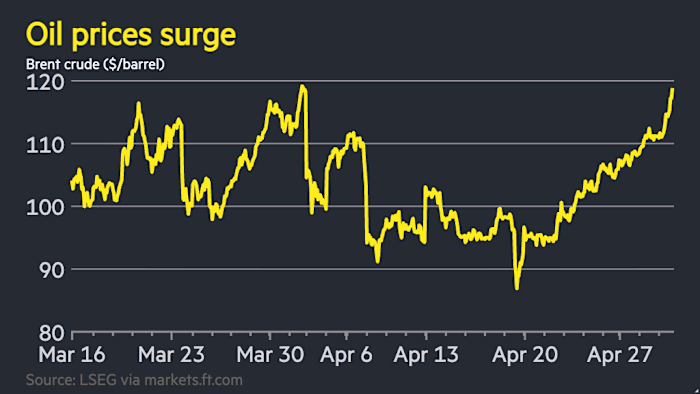
Brent Crude rally (Source: LSEG via markets.ft.com)
Efforts to reach a peace deal stalled over the weekend after the US failed to send its team to Pakistan. Trump later said that it would have been a waste of time since Tehran’s leaders were still confused. The collapse of these talks cast doubt on the future.
However, Iran presented the US with a new proposal at the start of the week. It said that Iran would open the Strait of Hormuz as long as the US stops its blockade. Moreover, Iran wanted to postpone nuclear talks. Trump rejected the proposal and, on Wednesday, said he would maintain the blockade until there was a nuclear deal and oil prices jumped.
“The blockade is somewhat more effective than the bombing,” Trump told Axios on Wednesday. “They are choking like a stuffed pig, and it is going to be worse for them. They can’t have a nuclear weapon.”
As time goes by, the continuing disruptions to oil supply are tightening the market and sending prices higher. This, in turn, is increasing inflation worries. On Wednesday, the Fed kept interest rates unchanged as expected. Moreover, policymakers noted that inflation remains elevated.
Price pressures in the US have remained around 3% since 2023, after dropping from high levels. The Fed had initially hiked interest rates before pivoting to rate cuts when inflation was tamed. However, the central bank might have to reconsider hiking if oil keeps pushing inflation higher.
Elevated borrowing costs are meant to cool down the economy. When this happens, even demand for oil drops, pushing prices lower. However, this would only happen in the long run. The uncertainty surrounding the war has made it difficult to bet on future policy moves. The Fed will likely keep monitoring incoming data to see the state of the economy. The next major release will be the core PCE price index, a figure the Fed prefers for measuring inflation.