



- US inflation numbers pointed to an overheating economy.
- Traders are pricing a 35.6% chance of the Fed hiking rates this year.
- Later in the day, traders will assess the FOMC minutes.
Gold extended its decline from Tuesday as market participants worried about hot US inflation and its impact on monetary policy. At the same time, a rally in the US dollar made the precious metal expensive for foreigners. Traders are now awaiting the FOMC meeting minutes due on Wednesday.
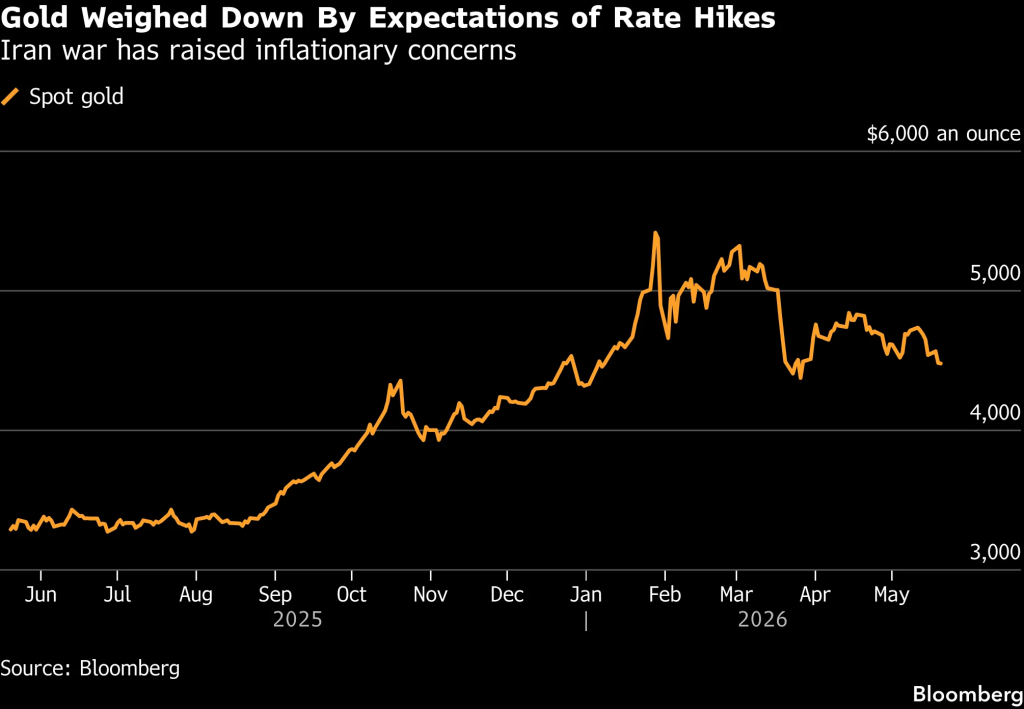
Gold Price Chart (Source: Bloomberg)
Since last week, gold has been on a downward trajectory. The biggest catalysts for this move were the US CPI and PPI reports. Consumer inflation in the US came in at 3.8%, hotter than the forecast. Meanwhile, wholesale inflation exceeded expectations at 6%. These numbers pointed to an overheating economy that will require the intervention of the Fed.
Previously, the central bank was easing monetary policy, as inflation had dropped significantly and was nearing its 2% target. However, things changed when the Iran war broke out at the end of February. Tensions in the Middle East have contributed to a spike in fuel prices across the globe. This, in turn, has increased price pressures in most economies, including the US.
Before the inflation numbers, there was a 16.3% chance that the Fed would hike rates this year. After the surprise numbers, this likelihood increased to 35.6%, boosting the US dollar. A strong dollar makes gold expensive overseas, reducing demand.
Moreover, higher borrowing costs would increase the opportunity cost of holding gold, which has no yield. This trend is the same in most economies that are grappling with high fuel prices. As a result, global demand for gold will likely drop.
“We are seeing a multi-country rise in real rates around the world, and that is really weighing mostly on gold. The dollar is also stronger, that’s a negative,” said Edward Meir, an analyst at Marex.
The stalemate between the US and Iran continues to cause uncertainty about the future. As a result, oil prices could remain elevated. At the same time, the US summer driving season will likely increase demand for oil. Since the closure of the Strait of Hormuz, oil inventories have dropped. Therefore, an increase in demand would send oil higher, increasing inflation worries.
Later in the day, traders will assess the FOMC minutes for clues on future policy moves. Gold will drop further if the minutes are hawkish.