


- Reports on Wednesday revealed that the US expects the Saudi Arabian pipeline to restart in a few days.
- The US military has created a new route for ships through Oman’s coast.
- The Fed increased borrowing costs in a bid to tame inflation.
Oil prices eased on Wednesday after reports that the damaged Saudi Arabian pipeline would be operational in a few days. At the same time, a hawkish FOMC meeting boosted the dollar, making oil more expensive for foreign buyers. Nevertheless, with tensions still high in the Middle East, prices might resume their rally.
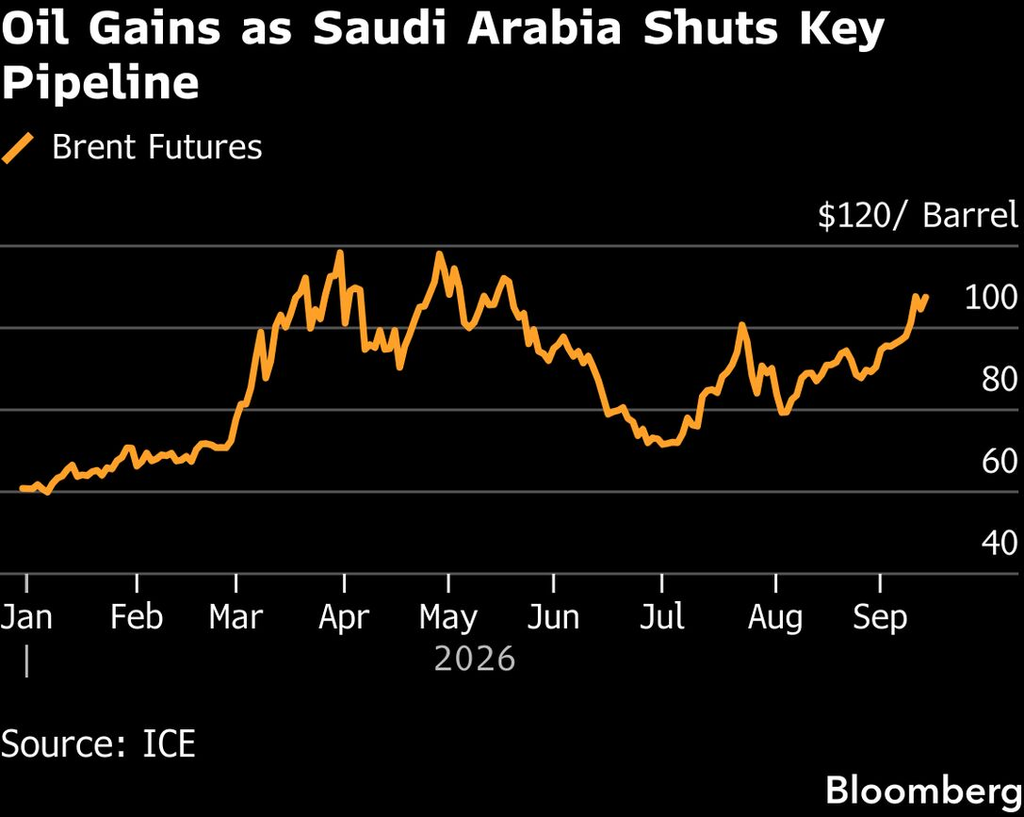
Brent futures (Source: ICE, Bloomberg)
Last week, Iran and its allies attacked a major oil pipeline in Saudi Arabia, leading to its closure. The Iran war escalated to include the major oil producer, with the Houthis constantly hitting targets in the country. The attacks have caused significant damage to energy facilities, heightening concerns about the oil supply. As a result, prices have soared.
However, reports on Wednesday revealed that the US expects the major pipeline to restart in a few days. That would ease some of the supply worries, sending oil prices lower. However, some experts believe it could take longer since the drone attack caused a lot of damage, according to satellite images.
Furthermore, the US military has created a new route for ships along Oman’s coast that has helped Gulf states export their oil through the Strait of Hormuz. This has allowed oil to flow to the global market, easing pressure on prices. Saudi Arabia might start using this route in the meantime.
“Four supertankers that can carry 8 million barrels total were observed loading at Saudi Arabia’s Persian Gulf ports of Ras Tanura and Juaymah on Tuesday,” said Matt Smith, director of commodity research at Kpler.
“They are likely going to be part of the shuttling effort via the Omani route through the Strait,” Smith said.
Still, with no prospects for peace talks in the Middle East, supply disruptions will continue, which could mean even higher oil prices in the future.
Elsewhere, market participants paid attention to the FOMC meeting, where policymakers hiked interest rates. For the first time since 2023, the Fed raised interest rates in a bid to tame inflation. Moreover, policymakers believe the economy is on solid ground despite the geopolitical tensions. Therefore, there is enough room to tighten monetary policy. Officials projected one more 25-basis-point rate hike this year. The dollar rallied after the meeting, making most commodities, including oil, expensive for foreign buyers.