



- The US reimposed its blockade on Iranian ports.
- Market participants are again grappling with the likelihood of a sharp increase in oil prices.
- US data revealed cooler-than-expected price pressures.
Oil paused its rally on Wednesday as traders took time to assess developments in the Iran war. In the previous sessions, it rallied as the US and Iran went back to missile and drone attacks, and progress made in recent talks was undone. At the same time, market participants were digesting downbeat US inflation numbers.
Tensions between the US and Iran escalated further this week as they hit at each other. The catalyst for this new conflict was the hitting of three tankers near the Strait of Hormuz. It set off the US president, who soon after ordered the attack on several targets in Iran. From that point, talks between the two collapsed, and Iran started hitting back.
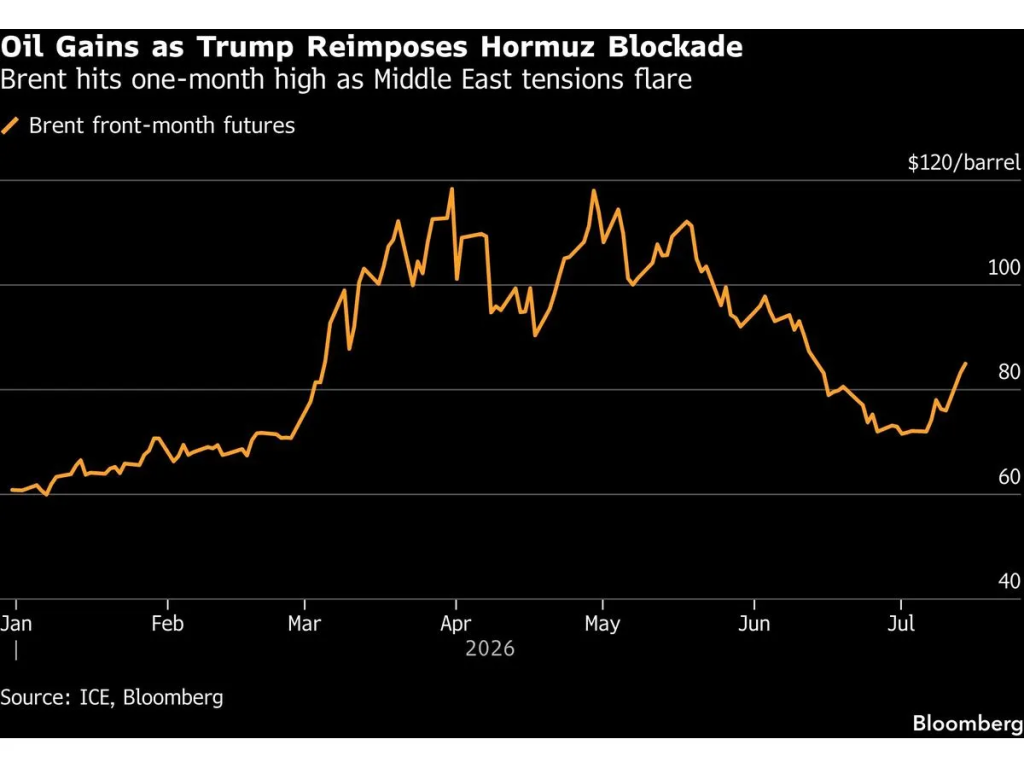
Brent futures (Source: ICE, Bloomberg)
At the same time, Iranian officials claimed they were closing the Strait of Hormuz. Meanwhile, Trump said their ceasefire deal was over, and the US reimposed its blockade on Iranian ports. A conflict that intensified over several days is undoing progress made in negotiations that had brightened the outlook for the global economy. At the same time, the likelihood of a longer-lasting deal to end the war had increased significantly.
However, all that has changed. Market participants are again grappling with an uncertain future and the likelihood of a sharp increase in oil prices due to supply disruptions.
“The latest escalation shows how expectations of a rapid opening of the Strait were premature,” said Saul Kavonic, senior energy analyst at Mst. Marquee.
“The hostilities and reimposed blockade set the conflict back on an escalatory trajectory,” he told CNBC in an email. “Oil could retest $100 if the current intensity of hostilities persists for a few weeks or head higher still if regional oil infrastructure is targeted.”
Elsewhere, the US released a set of inflation figures this week that revealed cooler-than-expected price pressures. The first showed consumer inflation increased by 3.5% annually, compared to estimates of a 3.8% increase. Meanwhile, wholesale inflation fell by 0.3% in June when economists had expected no change. The data led to a decline in Fed rate hike expectations.
Nevertheless, if the tensions in the Middle East keep escalating, high fuel prices could drive inflation higher. Such an outcome would boost rate hike bets.