



- Planned talks in Pakistan between the US and Iran failed.
- Oil gained over 6% on Wednesday, increasing inflation concerns.
- The Fed held rates on Wednesday.
Interest futures were heading for a bearish week on Friday as market participants grappled with escalating Middle East tensions and a less dovish Fed. Rising tensions in the Middle East sent oil prices higher, boosting Treasury yields. Meanwhile, some Fed policymakers took on a more hawkish tone during the FOMC meeting, increasing chances of rate hikes.
The week started off with uncertainty after planned talks in Pakistan between the US and Iran failed. The two had planned to meet and work out a peace deal to end the ongoing war. However, at the last minute, Trump decided against the meeting, saying Iran’s leadership remained confused.
Furthermore, when Iran presented the US with a new proposal, Trump rejected it. The proposal was for a reopening of the Strait of Hormuz. Iran was ready to do it if the US would end its blockade and postpone nuclear talks. Trump said the US would maintain its blockade on the Strait. Moreover, he would not agree to any deal without nuclear talks.
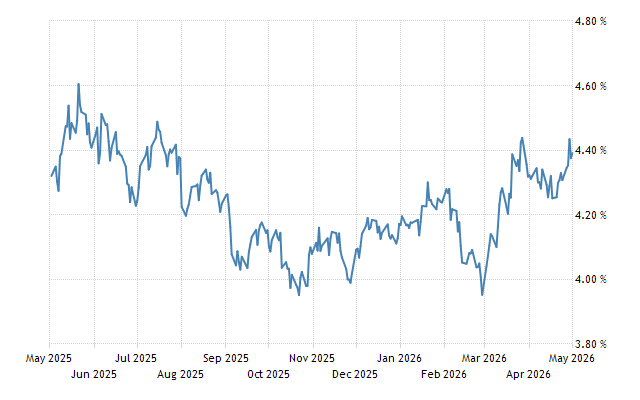
US 10-Year Treasury yields (Source: Trading economics)
After this, oil gained over 6% on Wednesday, increasing inflation concerns. As oil keeps climbing, higher energy costs are fueling price pressures. This increases the likelihood of rate hikes, boosting Treasury yields and weighing on interest futures. The Fed held rates on Wednesday but some policymakers disagreed with the easing bias in the bank’s statement.
Meanwhile, traders also focused on inflation data which revealed a 0.3% increase as expected. Before the report, Osaic’s Philip Blancato, had noted that a flat PCE number would suggest further delays in Fed rate cuts. Policymakers would not consider lowering borrowing costs when the economy is heating up quickly.
“The bond market is simply so threatened by the idea that higher oil leads to higher broad-based inflation, even though that’s not been validated yet,” he added.
Market participants and policymakers will continue watching incoming data to see whether the economy is overheating. Next week, the US will release its monthly employment report. In March, US jobs increased by 178,000, well above the forecast of 65,000.
Another better than expected number would point to robust employment, consistent with a quickly growing economy. As a result, Fed rate hike bets would increase, Treasury yields would rise and interest futures would collapse. On the other hand, a weaker than expected report would result in the opposite reaction.