

- Futures markets indicate a 63.6% likelihood of a Fed rate hike in September.
- Iran started talks with Oman to manage traffic through the Strait of Hormuz.
- The US is set to release its core PCE price index report.
Gold paused its recent rally on Wednesday as market participants cautiously awaited the US core PCE price index report. The yellow metal hit an over three-month high in the previous session after reports revealed that Iran had started talks with Oman to manage the Strait of Hormuz.
Gold has maintained its bullish trend this month amid factors like a slowdown in the US economy, hopes for a peace deal, and a decline in Fed rate hike expectations. Poor economic data on employment, growth, and inflation this month led to a drop in Fed rate hike expectations. Before the month began, market participants were almost fully pricing a rate hike in September. However, by this week, futures markets indicate a 63.6% likelihood of a rate hike in September.
Rate hike expectations also fell as geopolitical tensions eased and traders hoped for a deal to reopen the Strait of Hormuz. However, it has become difficult to predict the future in terms of a deal. The two countries continue to find reasons to disagree, leaving market participants uncertain.
Last week, tensions were high with both sides claiming control of the Strait of Hormuz. On Monday, reports revealed that the US was planning to sanction Iran. Meanwhile, Iran started talks with Oman to manage traffic through the Strait of Hormuz. As a result, oil prices dropped.
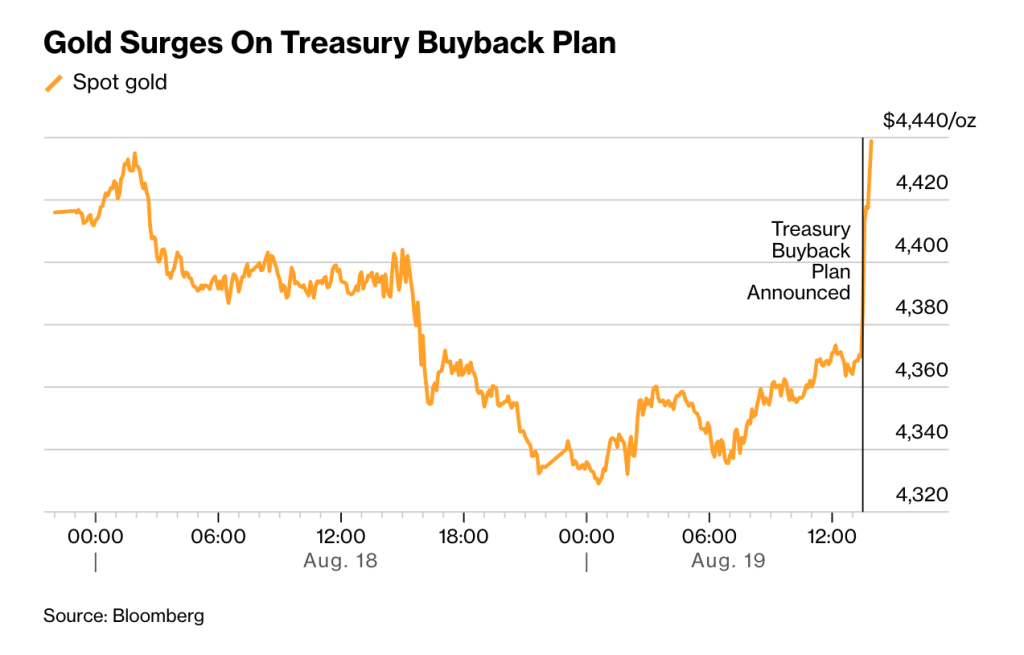
Spot gold (Source: Bloomberg)
Another major catalyst for the recent rally was the announcement of a bond buyback in the US to support government debt. The bonds market has been on a decline amid the rise in oil and yields. An intervention to support prices would bring down yields, reducing the opportunity cost of holding gold, sending prices higher.
Later in the day, the US is set to release its core PCE price index report, which will show the state of inflation. Traders will also watch a speech from Fed Chair Kevin Warsh for more clues on future policy moves.
“For gold, the best outcome would be softer-than-expected inflation and a dovish or balanced message from Warsh, which would lower real yields and reduce the opportunity cost of holding a non-yielding asset,” said Wael Makarem, financial markets strategist lead at Exness.