


- The dollar ended last week lower amid hopes of a US-Iran peace deal.
- On Saturday, Trump posted that a peace deal with Iran was finally complete.
- This week, traders will watch the FOMC policy meeting.
Currency futures jumped on Monday as the dollar declined after reports of a deal to end the Iran war. The news which came out over the weekend boosted risk appetite and eased inflation concerns. Meanwhile, market participants are gearing up for the FOMC policy meeting.
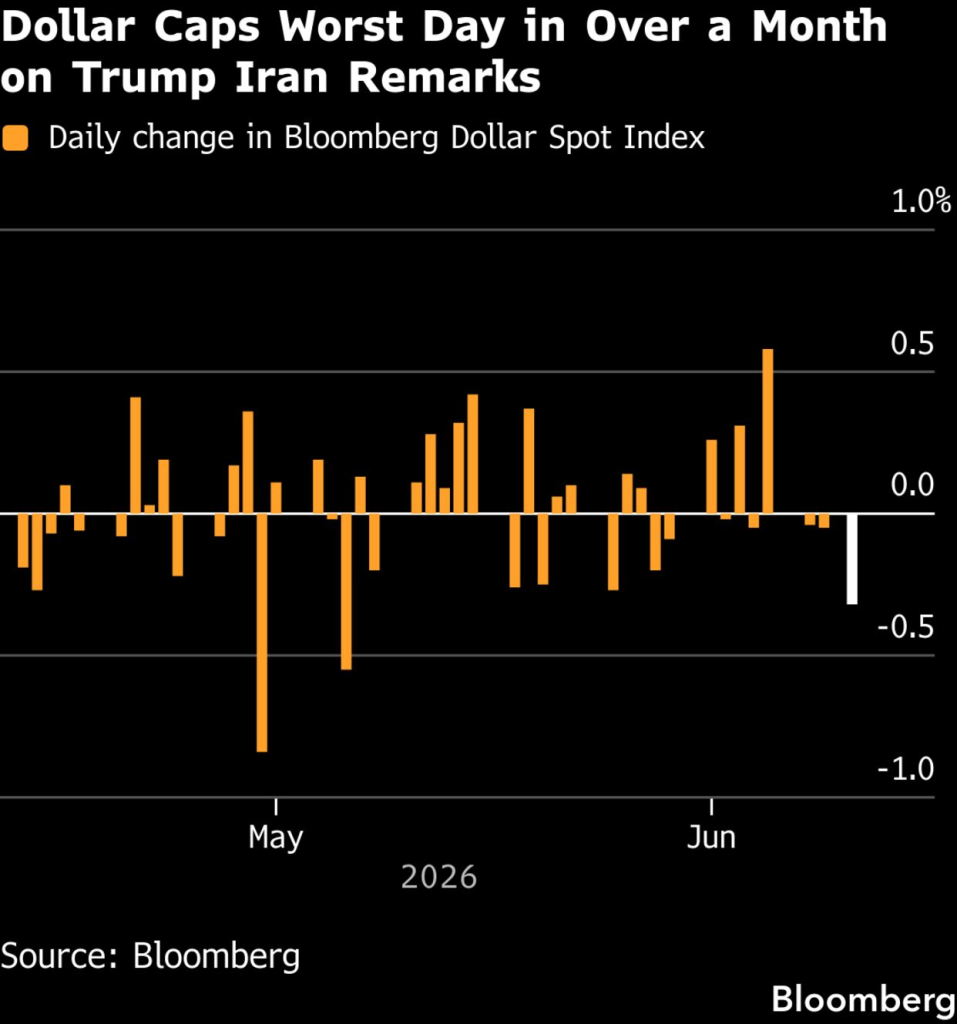
Dollar performance (Source: Bloomberg)
The dollar ended last week lower despite increased tensions in the Middle East that had escalated from the previous week. Although the US and Iran exchanged fire, official comments revealed progress in talks. Trump was optimistic at the start of the week that a deal would come within the week.
The biggest indicator of progress came on Thursday when the US president cancelled planned strikes on Iran. He also announced that all parties involved in negotiations had agreed to the terms. On Saturday, the president posted that a peace deal with Iran was finally complete. He wanted it signed on Sunday, but Tehran was more cautious. As a result, the signing ceremony was set for Friday this week.
“Following intensive talks, we are pleased to announce that the peace deal between the United States of America and the Islamic Republic of Iran has been REACHED,” Sharif said in a post on X. Pakistan has served as a mediator between the two countries.
“The official signing ceremony will be on Friday, 19 June, in Switzerland,” Sharif said.
After months of a war that has sent oil prices to the roof, traders can finally breathe a sigh of relief. Since the war began, oil has shot up by 30%, increasing the cost of living in most countries. Inflation concerns have caused a lot of uncertainty for central banks as they try to balance growth, inflation and an uncertain future. For most, like the Fed, rate cuts were pushed back while expectations for hikes increased.
Last week, US consumer inflation hit a 3-year high as expected. Meanwhile, the Bank of Canada and the ECB kept interest rates unchanged. An end to the Iran war will mean a reopening of the Strait of Hormuz and an increase in the oil supply. Lower oil prices will ease pressure on central banks to tighten monetary policy.
This week, traders will watch the FOMC policy meeting. Policymakers might maintain caution until the peace deal is signed.