



- Demand for safe-haven assets increased last week.
- The economy added 172,000 new jobs in May.
- The rally in the dollar significantly hurt the yen.
Currency futures collapsed last week as the dollar soared amid rising hostilities in the Middle East. The biggest move came on Friday when the US released a solid jobs report. Market participants increased bets for a Fed rate hike this year. This week, traders will watch the crucial CPI report for more clues on future policy moves.
The dollar regained its shine last week amid increased demand for safe-haven assets. This was a sharp shift from a week ago, when hopes for peace were at their highest. Throughout the week, reports showed an escalation in the Middle East war, with an increased exchange of missiles between the US, Iran, Israel, Lebanon, and other neighboring countries.
The tensions escalated when Iran said it would no longer hold talks with the US due to ceasefire violations in Lebanon. From that point, hostilities flared, talks stalled, and uncertainty about the future sent traders to the dollar.
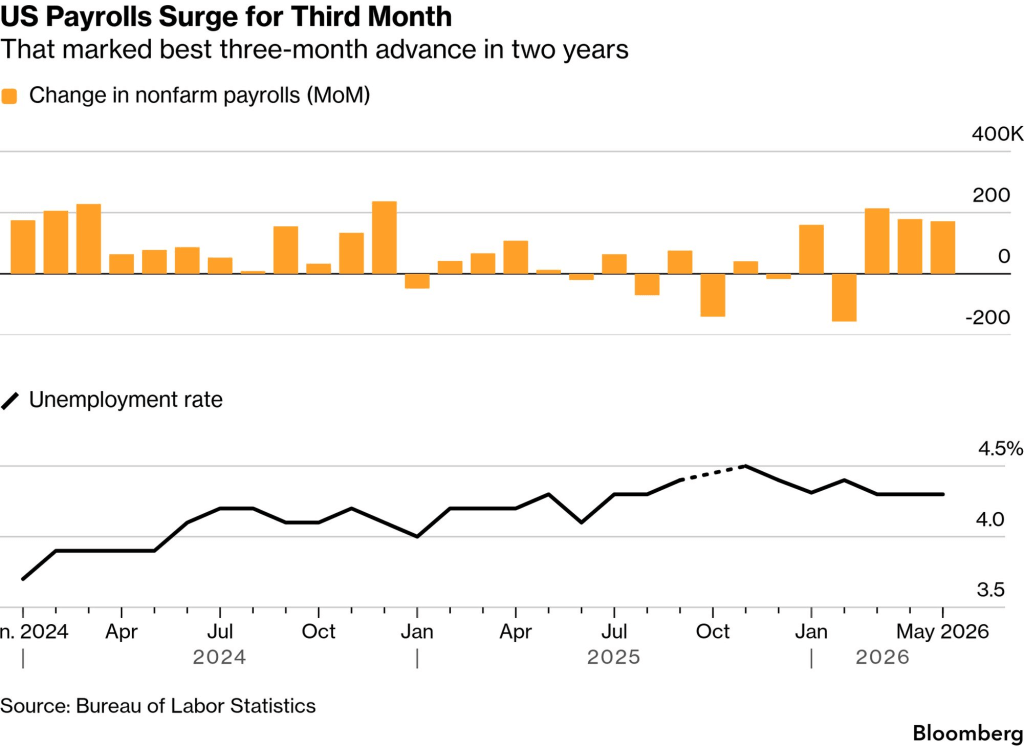
US employment (Source: Bureau of Labor Statistics)
The biggest boost for the dollar came on Friday when the US released its monthly employment report. According to the report, the economy added 172,000 new jobs in May, beating the forecast of 85,000. Meanwhile, the unemployment rate held steady at 4.3%.
The jump in jobs pointed to a hot labor market, putting pressure on the Fed to raise interest rates. After the data, market participants were pricing a 70% chance of a December hike. This was a significant jump from a week before, when they were giving it a 45% chance. The increase propelled the dollar and weighed on currency futures.
“The US payrolls report released… paints a picture of a US labor market that is strengthening despite the ongoing energy price shock,” said Jonas Goltermann, chief markets economist at Capital Economics.
“That combination makes policy tightening by the Fed later this year increasingly probable… we now expect the FOMC to deliver two 25-basis-point rate hikes later this year.”
The rally in the dollar significantly hurt the yen, sending it back to its 160.00 key intervention level. As a result, traders will remain cautious if Tokyo intervenes again. Meanwhile, the Canadian dollar got some support on Friday after upbeat employment figures.
This week, the crucial US CPI report will show the state of inflation in the economy. This will continue to shape the outlook for monetary policy.