



- The greenback shone last week amid soaring demand for safe-haven assets.
- The Middle East war escalated to include Iran’s allies in Yemen.
- Traders are pricing a 36% chance of a hike at this week’s Fed meeting.
Currency futures recovered on Monday after the US paused its two-week-long attacks on Iran. The pause boosted risk sentiment and sent oil prices lower. Meanwhile, the dollar pulled back as demand for safe-haven assets declined. Market participants were also optimistic after reports that China was pushing for diplomacy in the Middle East.
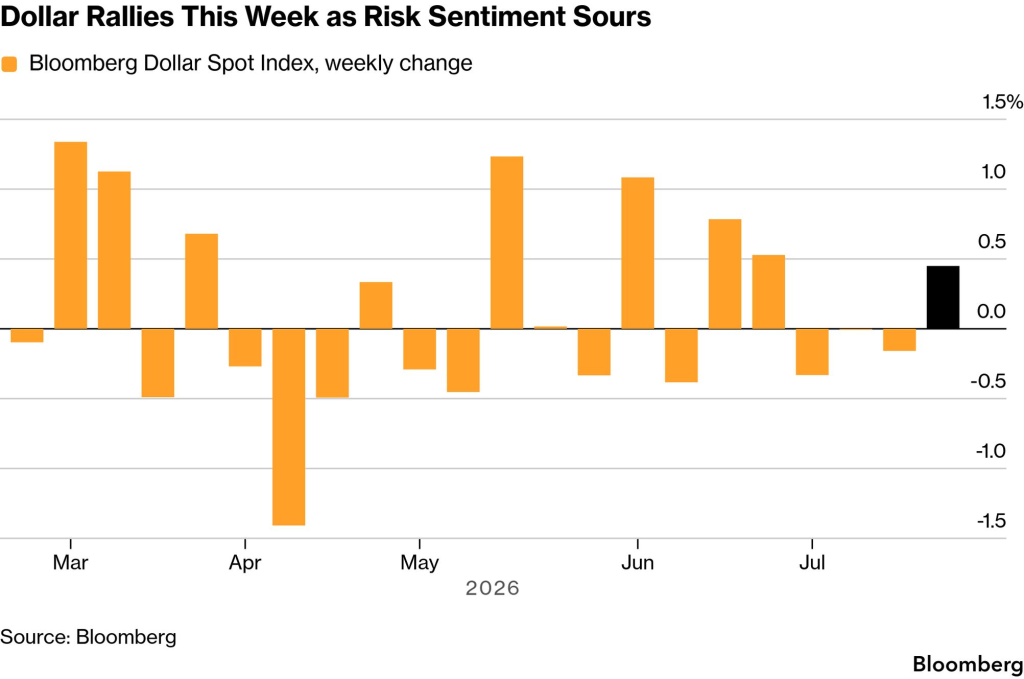
Dollar performance (Source: Bloomberg)
Most major currencies recovered slightly against the dollar after experiencing a very bearish week. The greenback shone last week as demand for safe-haven assets soared amid tensions in the Middle East. The conflict between the US and Iran went on without pause, with the two exchanging fire. It caused panic in the market about supply disruptions in the Strait of Hormuz and a spike in oil prices.
Furthermore, the war escalated to include Iran’s allies in Yemen, who announced a naval blockade on Saudi Arabia. The Houthis went on to attack tankers on the Red Sea coast of Saudi Arabia, a major oil supplier. This intensified supply concerns, fueling the surge in oil prices.
However, as the week came to a close, sentiment lifted slightly after reports that China was calling for a resumption of talks between the US and Iran. At the same time, after over two weeks of continued strikes on Iran, the US paused over the weekend.
“Market sentiment was supported by reports that Pakistan and Iran were exploring new peace talks with the US and that oil exports from the Middle East continued to flow,” Westpac analysts wrote in a research report. “Over the weekend, the US paused strikes against Iran as tensions in the region continued to escalate.”
Nevertheless, Fed rate-hike expectations remain elevated due to the war and rising oil prices. Traders are pricing a 36% chance of a hike at this week’s meeting and a nearly 80% chance of a similar move in September.
Elsewhere, inflation figures from Canada and the UK came in below estimates, easing pressure on their central banks to hike rates. However, recent fundamentals suggest higher price pressures ahead.
Meanwhile, the ECB kept interest rates unchanged last week. Policymakers also noted rising fuel prices, which could keep inflation elevated. As a result, market participants are expecting a rate hike in September.