



- Reports indicated that the US and Iran would resume talks at the UN.
- Trump said he would annihilate Iran if there was no deal to end the war.
- Market participants are pricing a 75% chance of a Fed rate hike in October.
Interest futures collapsed on Thursday, extending the previous session’s move as Fed rate hike expectations increased. Comments from US and Iranian officials at the UN showed simmering tensions. As a result, oil prices jumped, raising inflation worries and sending rate hike expectations higher.
Initially, the bond market had been on a slow uptrend as oil prices pulled back. Last week, supply concerns eased as affected countries like Saudi Arabia used the safer US route through Oman to transport their oil. At the same time, market participants were hopeful after reports indicated that the US and Iran would resume talks at the UN. A pause in the war eased inflation worries, sending Treasury yields lower and boosting interest futures.
However, sentiment suddenly shifted on Wednesday after hostile remarks at the UN. Trump said he would annihilate Iran if there was no deal to end the war. Meanwhile, Iran’s president accused the US of terrorist attacks and said his country would fight until its last breath.
The remarks dashed hopes for a near-term peace deal. Instead, they revealed simmering tensions and an unwillingness to compromise on either side. With such stances, the likelihood of a peace agreement drops significantly.
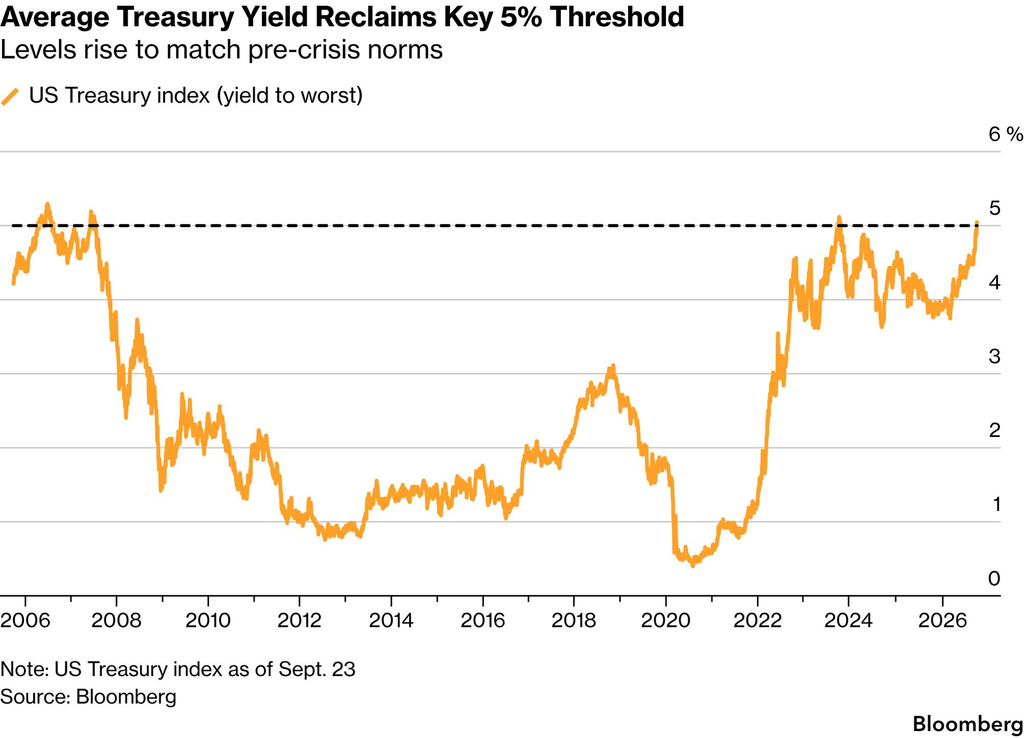
US Treasury Index (Source: Bloomberg)
Consequently, oil prices rebounded, reigniting inflation worries. At the same time, inflation concerns pushed up Fed rate hike expectations. Before the meeting, traders were pricing one more rate hike in December. The likelihood of a hike in October was only 49%. These remarks sent the figure up to 75%. As a result, Treasury yields rallied while interest futures collapsed.
Market participants are also keeping a close eye on US economic data for signs of overheating. Next week’s non-farm payrolls report will show the state of the labor market. Strong numbers will give the Fed enough room to increase borrowing costs, hurting bonds. On the other hand, soft figures could force policymakers to exercise caution when tightening monetary policy.
“The combination of fiscal, economic, geopolitical, and supply-side inflation pressures converging has bond markets in less familiar territory. The recent rise in yields can no longer be attributed simply to concerns over the deficit,” said Mike Sanders, head of fixed income at Madison Investments.