



- The UAE came under attack from Iranian missiles and drones on Monday.
- Trump said he was making great progress towards a final peace deal with Iran.
- Economists forecast an addition of 60,000 US jobs in April.
Gold prices pivoted from one-month lows on Tuesday amid optimism over a looming end to the Iran war. However, before the positive sentiment, tensions had escalated with Iran attacking the United Arab Emirates. Meanwhile, market participants are gearing up for the US nonfarm payrolls report.
Gold has been on a decline recently as escalating tensions in the Middle East and inflation worries sent traders to yielding safe-haven assets. Ideally, the precious metal should have gained, as it is considered a hedge against inflation. However, in this case, central banks are pressured to hike interest rates. Therefore, yielding assets gain more attraction.
The conflict in the Middle East intensified at the start of the week after Iran started attacking the United Arab Emirates. The UAE came under attack from Iranian missiles and drones. Meanwhile, the US sank some Iranian boats in the Strait of Hormuz and tried to forcefully open the restricted waterways.
On Tuesday, market sentiment shifted when Trump paused his Project Freedom. The effort to guide ships through the Strait had caused friction. However, Trump said the two nations were making great progress towards a final peace deal.
An end to the war would lower oil prices, reduce inflation concerns and ease pressure on central banks to tighten monetary policy. As a result, gold bounced off its one-month low.
“We are seeing some bargain hunting after the recent selloff, and oil prices easing are also providing support. The market is going to continue to watch the headlines, but we could see focus shift a little towards economic data,” said Jim Wyckoff, market analyst at American Gold Exchange.
This week, the US will release its crucial monthly employment report. The labor market is a key indicator of the state of the economy. Robust numbers when oil prices are climbing would suggest an overheating economy. Therefore, it would pressure the Fed to consider rate hikes.
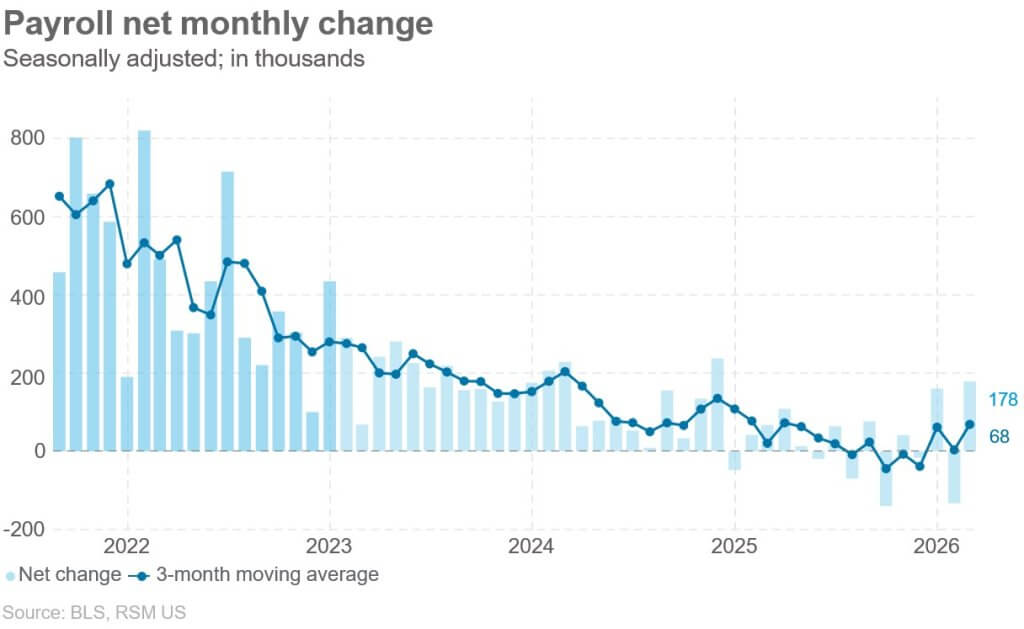
US employment (Source: BLS, RSM US)
Economists forecast an addition of 60,000 jobs in April, a drop from 178,000 in March. Meanwhile, the unemployment rate will likely hold at 4.3%. An upbeat report would further lower rate cut expectations and continue the new uptrend, hurting gold. On the other hand, a downbeat report would ease inflation worries and boost the yellow metal.

