




- Traders are preparing for inflation figures from Canada and the UK.
- The US CPI report briefly overshadowed escalating Middle East tensions.
- Rising oil prices will pressure central banks to hike interest rates.
Currency futures were down on Monday as risk appetite remained low amid the escalating tensions in the Middle East. Meanwhile, the dollar regained its shine as safe-haven demand increased. However, most major currencies were up against the greenback last week as a downbeat US inflation report eased Fed rate hike expectations.
“FX markets were relatively subdued, with the USD broadly stable, while the AUD weakened against the greenback and most major currencies,” Westpac analysts wrote in a research report.
“Market sentiment continued to deteriorate as tensions in the Middle East escalated after Iran suspended its commitments under the interim peace deal.”
Meanwhile, traders are preparing for inflation figures from Canada and the UK. At the same time, Australia will release its monthly employment report while the ECB is set to meet on Thursday.
The dollar ended last week down as a poor inflation report overshadowed increased safe-haven demand. The US CPI report released on Tuesday revealed that consumer inflation increased by 3.5% compared to the expectation of a 3.8% increase. At the same time, the monthly figure fell 0.4%, missing the forecast of a 0.1% decline.
Wholesale inflation was also down 0.3% in June. Economists had expected no change. The poor numbers eased pressure on the Fed to tame inflation by raising borrowing costs. As a result, rate hike expectations fell. However, this was only brief because recent fundamentals, not captured in the report, show a growing chance that global inflation will spike again.
Tensions between the US and Iran have gradually escalated, undoing progress made towards a long-lasting deal to end the war. The conflict heated up last week as the two hit at each other, dashing hopes for any progress towards a deal.
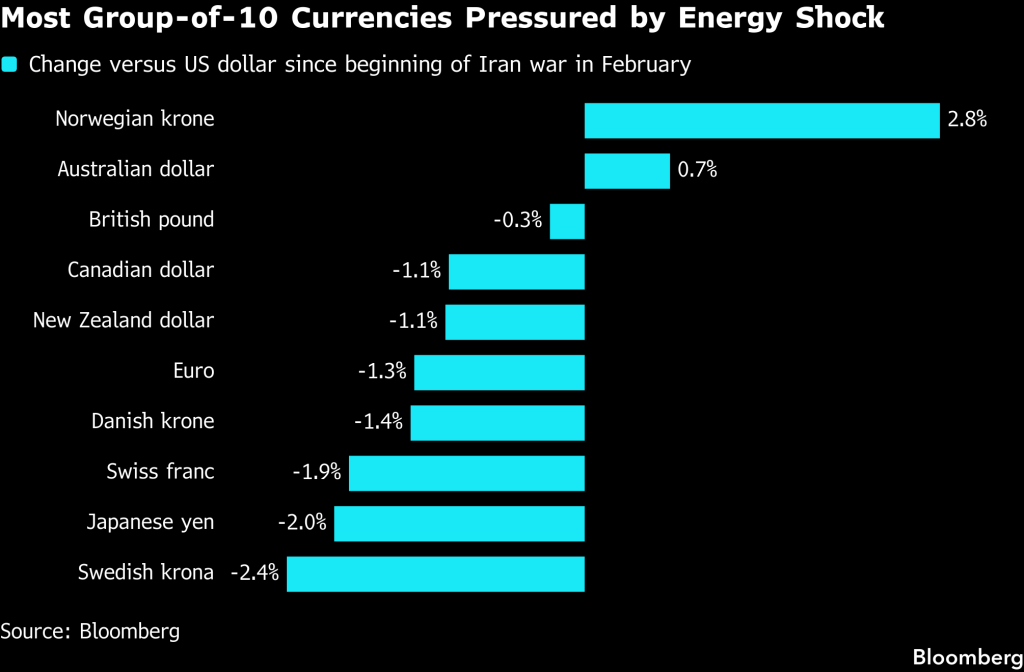
G-10 currencies performance (Source: Bloomberg)
As the conflict grew, Iran said it would again close the Strait of Hormuz. Meanwhile, the US reimposed its blockade on Iranian ports. The moves have sent oil prices higher, reigniting inflation concerns. The two nations are now going against commitments made when they signed their latest peace deal.
If the conflict continues, expensive fuel prices will reshape the outlook for currency futures and Fed policy. Major currencies have suffered since the war began due to high energy prices.