

- Oil pivoted from lows as Middle East tensions reignited.
- Iran started attacking its regional neighbors, such as Kuwait.
- US PMI data showed a bigger-than-expected expansion in the services sector.
Oil extended gains on Wednesday as renewed tensions in the Middle East dashed hopes for a near-term peace deal between the US and Iran. Meanwhile, a set of upbeat US economic data strengthened the dollar, putting a cap on the oil rally.
Last week, talks between the US and Iran were quite successful, almost leading to a ceasefire extension deal. After a period of uncertainty and no progress, Trump became more optimistic about a likely deal. His comments last week, like the talks were proceeding nicely, helped bolster hopes for a deal. Nevertheless, military action and spontaneous strikes continued beneath the surface. Still, oil prices collapsed.
As the week came to a close, reports revealed that US and Iranian officials were planning to extend their ceasefire by 60 days. At the same time, Iran was prepared to end its restrictions on the Strait of Hormuz, which would ease supply disruptions. Trump was supposed to make a final decision on the deal. However, he failed to do this on Friday and left market participants uncertain about the future.
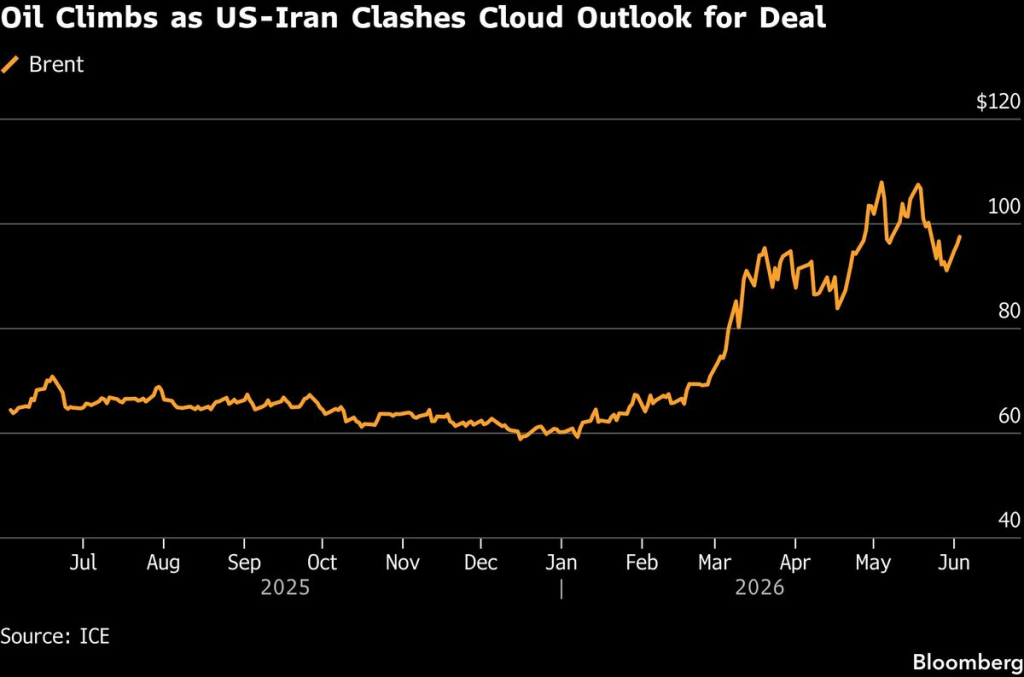
Brent (Source: ICE, Bloomberg)
Oil whipsawed this week, pivoting from lows hit on Friday and ascending as tensions reignited in the Middle East. It all started on Monday when Iranian officials said they would no longer hold talks with the US. Meanwhile, Trump showed little concern, saying he really did not care if they ended.
On Tuesday and Wednesday, the conflict in the Middle East intensified with the US and Iran exchanging missiles and drones. Moreover, Iran started attacking its regional neighbors, such as Kuwait. The developments left market participants uncertain about the ongoing ceasefire. Moreover, it dashed hopes that the war would end soon. Consequently, oil prices climbed.
Meanwhile, the US released its ADP employment report, which showed strong job growth in the private sector. Meanwhile, the ISM services PMI showed a bigger-than-expected expansion, indicating strength in the economy. The PMI came in at 54.5 compared to the forecast of 53.7. The data strengthened the dollar, making oil more expensive for foreign buyers.
Market participants are now looking forward to the nonfarm payrolls report. An upbeat report would increase expectations for Fed rate hikes, further strengthening the dollar and putting pressure on oil prices.