



- Currency futures remain soft as the US dollar continues to gain amid poor risk sentiment.
- The Australian dollar remains in positive territory as the RBA is expected to hike rates, while the CAD remains supported by higher oil prices.
- Markets await key central bank decisions due this week for further impetus.
As tensions rise in the Middle East, safe-haven flows continue to favor the US dollar. This is changing expectations for global monetary policy. The benchmark US Dollar Index futures (DXY) are trading close to 100.3, a level not seen since May 2025. The index is on track for a second consecutive weekly gain.
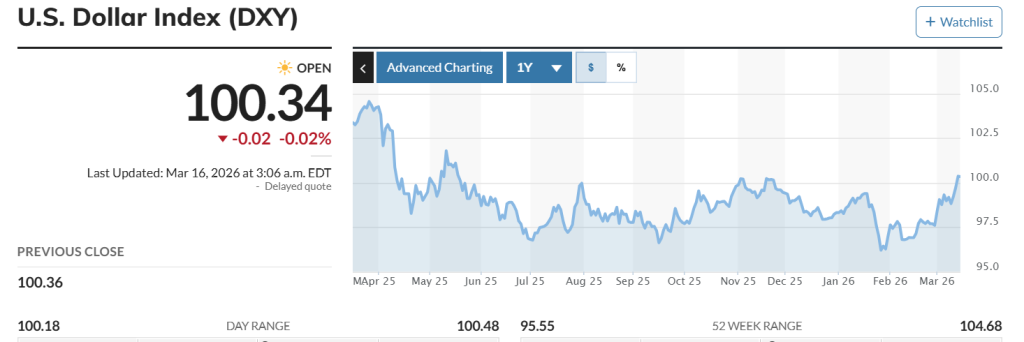
The recent rise in DXY futures is a sign of heightened geopolitical uncertainty driven by the ongoing US-Iran conflict and tensions in the Strait of Hormuz. About 20% of the world’s oil shipments go through this waterway. Supply risks have caused crude prices to rise, which has indirectly supported the dollar since most energy trade occurs in USD.
Concerns about inflation are also rising due to higher oil prices, which have changed investors’ perception of US monetary policy. Interest rate futures markets now only expect about 20 basis points of easing by December. This is a big drop from earlier expectations of more than 50 basis points of cuts before the conflict got worse. As a result, US Treasury yields have gone up, which is good news for the dollar.
In the euro complex, Euro FX futures (6E) remain under pressure as investors tend to prefer the dollar during risk-off sentiment. The euro has stabilized near recent lows, but it doesn’t seem poised to rise much before important policy decisions by the Fed and the European Central Bank later this week. Markets widely anticipate that both central banks will hold current policy settings.
The same thing is happening in the sterling markets. The British Pound futures (6B) stay volatile as traders await the Bank of England rate decision for directional bias. The bank is expected to keep rates steady around 3.75%. Higher energy prices, on the other hand, could hurt UK growth, especially if crude oil prices rise to the worst-case scenario of $140 per barrel, which economists say could trigger a mild recession.
Meanwhile, Canadian Dollar futures (6C) have declined because of downbeat job market data, which showed that 83.9K jobs were lost in February, much worse than expected. The worsening job market has increased investors’ confidence that the Bank of Canada will cut interest rates in the next few months. However, high oil prices could help keep the currency from falling too low.
The Australian Dollar futures (6A) have bounced back after a sharp drop over the course of two days. This is because traders expect the Reserve Bank of Australia to raise rates again, bringing the policy rate up to 4.1%.
Even though dollar-linked contracts are doing well right now, there are still structural problems. Concerns about the US’s budget deficits, rising government debt, and political pressure on monetary policy continue to fuel the long-term debate about the dollar’s direction in global currency markets.