



- The IEA warned of more upside for oil during the summer.
- US data showed consumer inflation rose 3.8% in April.
- US wholesale inflation came in at 1.4%.
Oil has had a strong week so far, as forecasts point to a tighter market amid summer demand. However, an unexpected jump in US inflation has decreased expectations of a Fed rate cut, putting a lid on gains. Meanwhile, market participants are still watching developments in the Middle East war.
The International Energy Agency released its monthly report on Wednesday, which warned of more upside for oil prices. According to the IEA, the summer driving season will increase demand in a market already tight due to low inventories. Therefore, it will most likely get tighter, sending prices even higher.
The oil market has grown tighter since the war in the Middle East broke out. The closure of the Strait of Hormuz has greatly disrupted oil supply. As a result, most countries are experiencing low inventory levels.
“More than ten weeks after the war in the Middle East began, mounting supply losses from the Strait of Hormuz are depleting global oil inventories at a record pace,” the IEA wrote.
Recently, the US and Iran failed to reach a lasting peace deal. The US has rejected Iranian proposals, while Iranian officials have rejected those from the US. As a result, negotiations have stalled, the Strait of Hormuz remains closed, and the US has maintained its blockade on Iranian ports.
Elsewhere, US data on Tuesday showed that consumer inflation rose 3.8% in April, above the forecast of 3.7%. The unexpected jump came mainly due to the surge in oil prices.
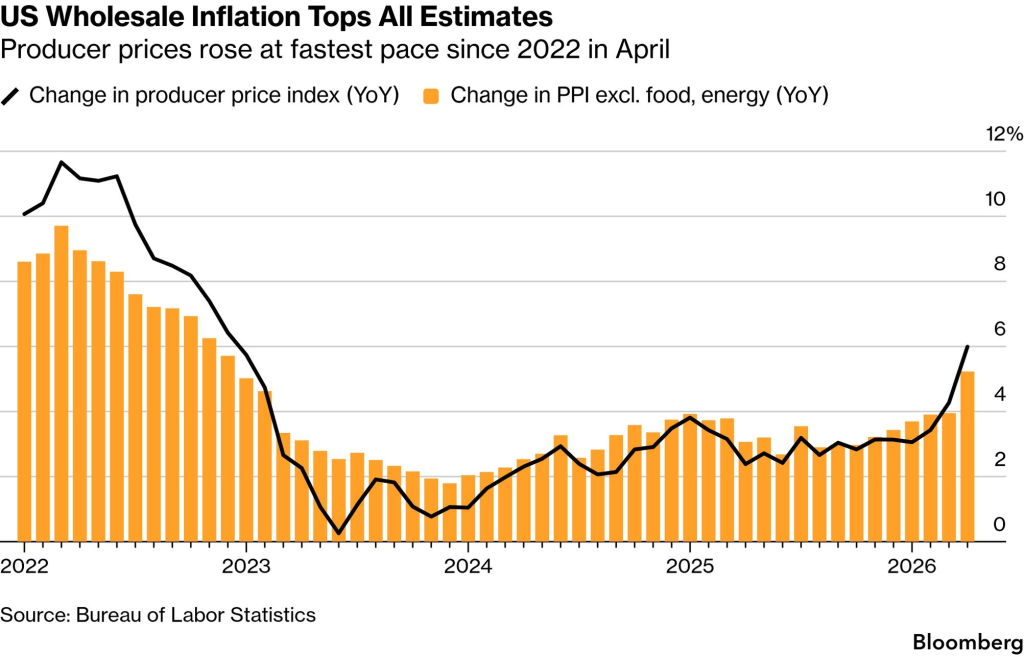
US PPI (Source: Bureau of Labor Statistics, Bloomberg)
Moreover, a separate report on Wednesday revealed that monthly wholesale inflation came in at 1.4%, far above the forecast of 0.5%. The annual figure also beat estimates. This surge in producer prices will most likely be passed on to the consumers.
The stronger-than-expected numbers pile more pressure on the Fed to tighten monetary policy. As a result, rate cut expectations fell, and the dollar strengthened. The stronger dollar made oil more expensive for foreign buyers, exerting downward pressure.
Market participants are now looking forward to retail sales data coming out later on Thursday. An upbeat report would signal an overheating economy, increasing expectations of Fed rate hikes. Higher borrowing costs would hurt demand for oil.