




- The Houthis took responsibility for the attack on Saudi Arabia’s largest refinery.
- Market participants are looking forward to the OPEC+ meeting.
- The recent surge in the greenback has hurt oil demand.
Oil prices rose on Wednesday, recovering for the second session after the recent collapse. The rebound came after reports that the Houthis had attacked Saudi Arabia’s largest refinery, raising supply concerns. However, before this, prices were declining after reports that supply would outpace demand this year. At the same time, the rally in the dollar weighed on fuel prices.
Crude oil rose for a second day on Wednesday after the Houthis took responsibility for the attack on Saudi Arabia’s largest refinery. Tensions between the two have persisted, keeping alive concerns over supply.
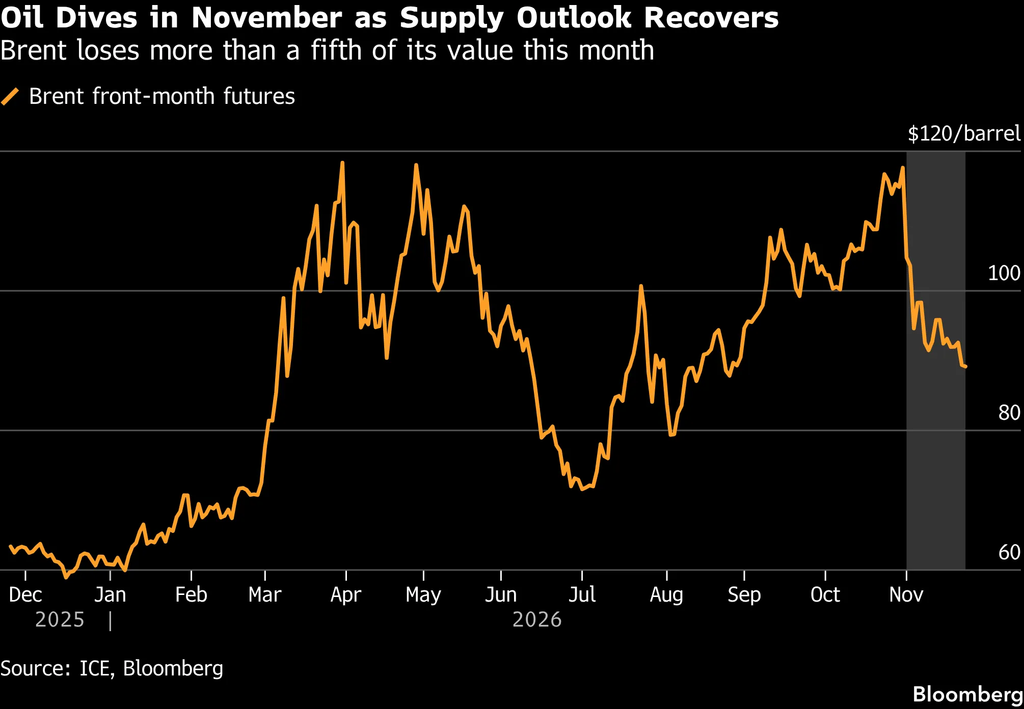
Brent futures (Source: Bloomberg, ICE)
Nevertheless, oil prices remain near recent lows amid a global supply increase. The war between the US and Iran had significantly tightened the market. Moreover, any small development in the war caused wide swings in prices.
However, global markets have adapted, and other major producers have increased production and supply. As a result, prices have been pulling back despite continued tensions between the US and Iran. Notably, the IEA released its report this month, showing that supply will outpace demand in 2026.
“Since the release of an IEA report this month, perceptions of a global supply glut have kept prices in check,” said Tsuyoshi Ueno, senior economist at NLI Research Institute. “Attention is also focused on how next year’s production quotas will be determined at the OPEC+ meeting,” Ueno added.
Market participants are now looking forward to the OPEC+ meeting later this month. Traders will focus on the message regarding 2027 policy, which will shape the outlook for supply. If major producers increase production, supply will increase, and prices will keep dropping. On the other hand, they could hold or cut production, which will also affect prices.
Elsewhere, traders also focused on Fed policy and the rallying dollar. The recent surge in the greenback, caused by an increase in rate hike expectations, has made oil more expensive for overseas buyers. The move came as traders bet on more rate hikes after hawkish policymaker remarks.
Furthermore, higher borrowing costs can affect demand for oil. When high rates tame inflation, they also cool the economy and make it harder for businesses to borrow money. As a result, demand for oil goes down, and prices drop.