


- Iran said the Strait of Hormuz will remain closed until the US meets its conditions.
- Iran’s allies continued attacking tankers in the Red Sea and the Gulf of Oman.
- The IEA reported that global demand is set to drop more than expected this year.
Oil prices traded near weekly highs as traders worried about oil supply amid the Middle East crisis. Meanwhile, experts forecast a drop in global demand this year, which could further tighten the market.
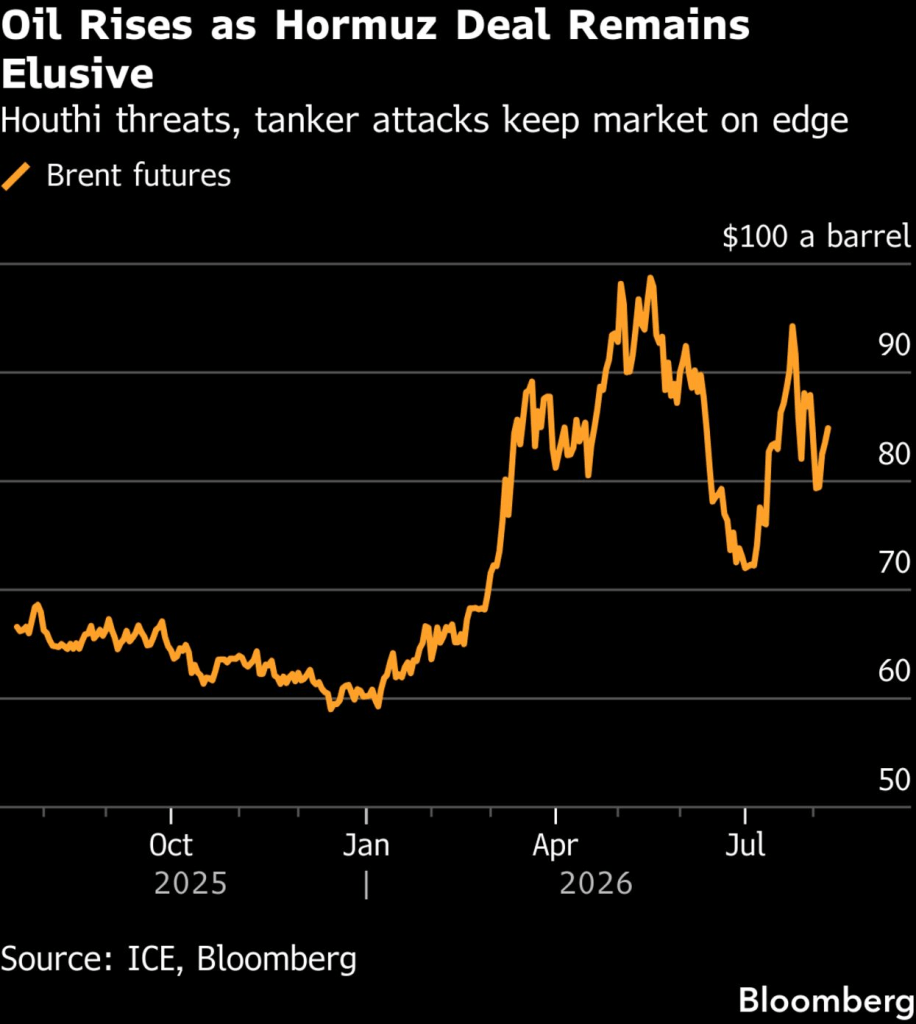
Brent futures (Source: ICE, Bloomberg)
Oil prices were declining last week as traders hoped for a deal to reopen the Strait of Hormuz. Talks between the US and Iran had resumed at the start of the week, and top US officials were optimistic that a deal was forthcoming. However, as the week progressed, it became clear that the two nations were not ready to sign a deal.
Notably, Iran proposed a draft that would ban US and Israeli ships from using the Strait. The news sent oil prices higher. As the days progressed, Iran again said it would not hold direct talks with the US due to violations of their June ceasefire deal. This meant that the Strait remained closed for longer.
Meanwhile, Trump has said on several occasions that the US has full control of the Strait. However, Iran said on Wednesday this week that the waterway will remain closed until the US meets its conditions.
“The lack of clarity over the possibility of a full reopening of the waterway could leave oil prices exposed to the upside at a time when the market remains tight,” said Christopher Tahir, a senior market strategist at Exness.
Elsewhere, Iran’s allies continued attacking tankers in the Red Sea and the Gulf of Oman. Reports revealed that a tanker was hit near Oman, causing a massive spill. These continued disruptions to oil supply will keep prices elevated.
Furthermore, the International Energy Agency reported that global demand is set to drop more than expected this year. There is no doubt that the war in the Middle East has hurt many economies. US data on Friday revealed that the economy unexpectedly lost 23,000 jobs in July. A slowdown in the labor market could spread to the rest of the economy, leading to a drop in oil demand.
On Wednesday, data showed that inflation was slightly cooler in July than the previous month, easing pressure on the Fed to hike rates. However, the future remains uncertain due to the war in Iran.