



- The dollar had its best week since September.
- Data on Tuesday revealed that the US CPI increased by 0.4% in October.
- The Australian dollar collapsed amid a divergence in policy outlooks.
Currency futures remained weak as the dollar extended gains on Monday after a robust rally last. week. The greenback gained amid an increase in Fed rate hike expectations after hotter-than-expected consumer inflation numbers. At the same time, worries about an escalation in the Iran war after Trump’s remarks increased demand for the dollar.
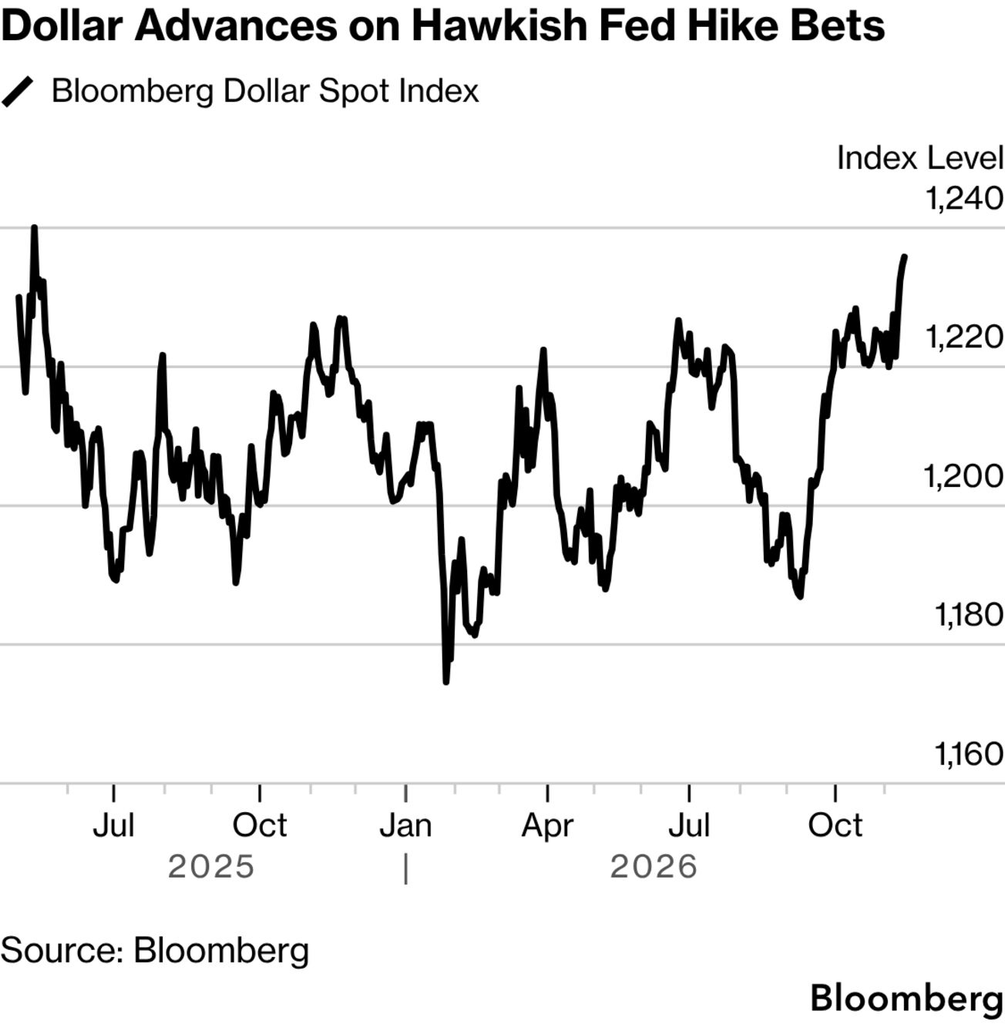
Dollar Spot Index price (Source: Bloomberg)
The dollar had its best week since September as market participants absorbed strong inflation numbers and hawkish remarks from several Fed officials. Last week, the US CPI increased by 0.4% in October, slight uptick from expected 0.3%. The surprise increased confidence among market participants that the Fed will hike in December. Some even started pricing a bigger 50-bps hike.
Meanwhile, Goldman Sachs changed its outlook, expecting another rate hike in March 2027. Furthermore, the fact that the upbeat inflation numbers followed a robust jobs report solidified the hawkish outlook. A resilient economy will allow the Fed to hike rates without worrying too much about growth.
“The dollar is still firm and that’s driven by a robust jobs report and an acceleration of the CPI,” said Marc Chandler, chief market strategist at Bannockburn Global Forex. “We’ve had a series of hawkish comments from Fed officials this week including from (New York Fed President John) Williams and (Fed Governor Christopher) Waller.”
The dollar also gained as demand for safe-haven assets increased. Meanwhile, oil prices and Treasury yields rallied. This move came after Trump said that he did not need to sign a deal with Iran. His remarks dashed hopes that talks would go well, leading to a peace deal.
Meanwhile, other currencies like the yen and the Australian dollar suffered the most as the dollar gained. The yen reached the key 160.00 level causing caution as traders expected an intervention. Most times when the price has hit that level, Tokyo has intervened to strengthen its currency. However, if underlying fundamentals do not support yen strength, the currency resumes its decline.
Elsewhere, the Australian dollar collapsed amid a divergence in policy outlooks. It is only in Australia that traders are expecting a rate cut next year. This week, traders will watch the US sales report for more cues on future Fed moves.