



- The US hit Iran in retaliation for an attempt to attack a US base in Jordan.
- Saudi Arabia met with several countries in a bid to protect their ships against attacks.
- The US core PCE was cooler-than-expected at 0.1%.
Interest futures recovered on Friday after collapsing in the previous sessions amid an escalation in the Iran war. The rebound came late Thursday after the US released a set of downbeat economic data. The GDP and inflation numbers eased Fed rate hike expectations.
Wednesday witnessed the biggest collapse in interest futures after the US hit Iran in retaliation for an attempt to attack a US base in Jordan. Iran targeted the base on Tuesday, but the US intercepted the missiles. After that, Trump announced that the US would be hitting Iran hard.
The heavy attacks on Wednesday caused a spike in oil prices. At the same time, it dimmed hopes that the two would end the war soon after resuming talks earlier in the week. The ups and downs are creating the same uncertainty witnessed at the height of the war.
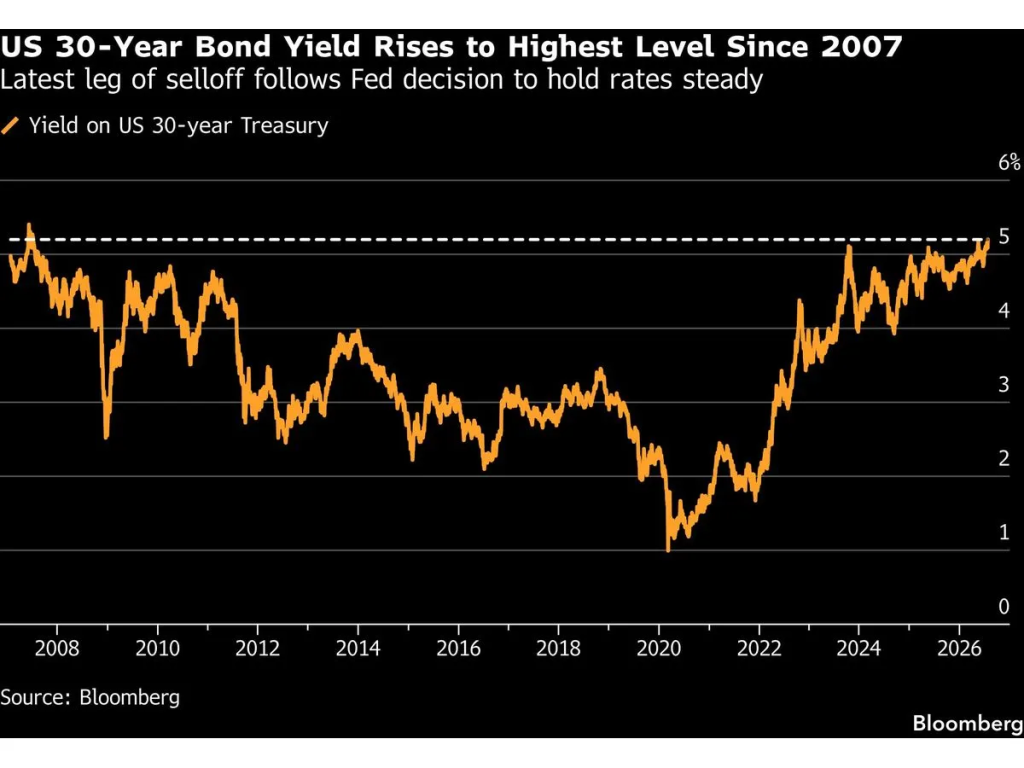
US 30-year yield (Source: Bloomberg)
Inflation worries due to the spike in oil prices on Wednesday sent yields to levels last seen in 2007. The rise in yields also reflects higher expectations for borrowing costs. This, in turn, pressures interest futures.
Fortunately, there was some positive news indicating that Saudi Arabia had met with several countries in a bid to protect their ships against attacks. The Houthis, Iran’s allies in Yemen, recently declared a naval blockade against Saudi Arabia. They started attacking ships along the Red Sea coast, heightening concerns about oil supply disruptions. An alliance to protect these ships could ease these worries.
Furthermore, interest futures recovered on Thursday after data showed the US economy grew 1.5% in the second quarter. Economists had forecasted a 2.1% expansion. Meanwhile, the core PCE was cooler-than-expected at 0.1%. These numbers ease pressure on the Fed to hike interest rates.
During the FOMC meeting on Wednesday, the Fed maintained its hawkish stance. Policymakers noted that the economy remains on solid ground. Market participants will assess incoming data, especially on employment, to see whether this statement will hold true.
“Economic activity is expanding at a solid pace despite elevated uncertainty that owes, in part, to the conflict in the Middle East,” the FOMC statement said following the decision. “Job gains have kept pace with the workforce, and the unemployment rate has changed little.”