


- The US CPI increased by 3.5% annually, missing the forecast of 3.8%.
- Traders are pricing a 58% chance of a September Fed rate hike.
- The US has resumed its blockade of Iranian ships using the Strait of Hormuz.
Gold prices pulled back on Wednesday after jumping by more than 2% the previous session. A downbeat US consumer inflation report led to a drop in expectations for a Fed rate hike, which favored the yellow metal. However, sentiment shifted on Wednesday as focus returned to tensions in the Middle East.
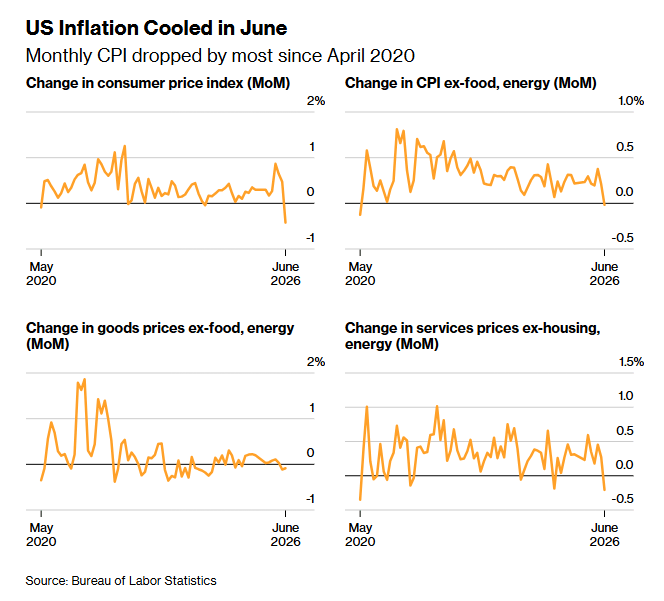
US inflation (Source: Bloomberg)
“Gold gallops higher on a surprisingly subdued CPI report that saw the headline dive lower but, more importantly, the core unchanged versus 0.2%. This should drop rate hike expectations sharply at least for the July and September meetings,” said Tai Wong, an independent metals trader.
Gold soared on Tuesday after the US released its monthly consumer inflation data. According to the report, the CPI increased by 3.5% annually, missing the forecast of 3.8%. Meanwhile, the monthly figure showed inflation fell by 0.4%, below the forecast of -0.1%. The soft numbers eased pressure on the Fed to hike borrowing costs.
Before the report, market participants were pricing a 76% chance of a September hike. However, the data brought this figure down to 58%. High borrowing costs increase the opportunity cost of holding gold, which is a non-yielding asset. Instead, when interest rates rise, investors flock to assets that yield, such as the dollar.
Consequently, as inflation eases and bets on rate hikes decline, gold climbs. However, by Wednesday, the yellow metal was dropping again as focus returned to the Middle East. In recent days, the conflict between the US and Iran has intensified, with the two exchanging missiles and threatening to undo progress made from recent negotiations.
Strikes between the two this week have resulted in the closure of the Strait of Hormuz. At the same time, the US has resumed its blockade of Iranian ships using the Strait. Furthermore, the US president said their ceasefire deal was over. At the same time, negotiations have stopped completely, leaving investors uncertain about the future.
These developments have caused a spike in oil prices, rekindling inflation concerns. If the conflict continues and escalates, oil will keep climbing, fueling global inflation. Such an outcome would put pressure on central banks to hike interest rates, which would weigh on gold prices. On the other hand, if tensions ease and the outlook brightens, gold could recover from its lows.