



- The dollar collapsed on Friday as hopes for an end to the Iran war improved risk appetite.
- The US seized an Iranian cargo ship.
- Eurozone consumer prices jumped by 2.6%, above the forecast of 2.5%.
Currency futures recovered slightly on Monday after collapsing in the previous session amid an escalation of Middle East tensions. On Friday, currency futures had soared after Iran declared the Strait of Hormuz was fully open. However, this changed when the US seized an Iranian cargo ship over the weekend.
The dollar collapsed on Friday as hopes for an end to the Iran war improved risk appetite. Iran said on Friday that the Strait of Hormuz was completely open after a ten-day ceasefire deal between Israel and Lebanon. As a result, there was optimism that oil supply disruptions would ease. Consequently, inflation concerns dropped, allowing traders to buy riskier currencies.
Furthermore, Trump’s comments on social media on Friday supported currency futures. He said that the war with Iran will likely end soon. Additionally, the US president had said earlier in the week that the two countries would hold more talks in Pakistan.
However, market sentiment shifted as the week ended, and the US military maintained its blockade on the Strait of Hormuz. Tensions escalated after the US seized an Iranian cargo ship on Sunday. In retaliation, Iran closed the Strait, rekindling oil supply concerns. At the same time, Iranian officials are no longer willing to meet and negotiate with the US.
If the war in the Middle East escalates, oil prices will climb higher. At the same time, global inflation and recession worries will rise, hurting risk appetite. Meanwhile, the dollar is expected to regain its appeal due to a rise in safe-haven demand. Market participants also paid attention to economic data from different regions last week.
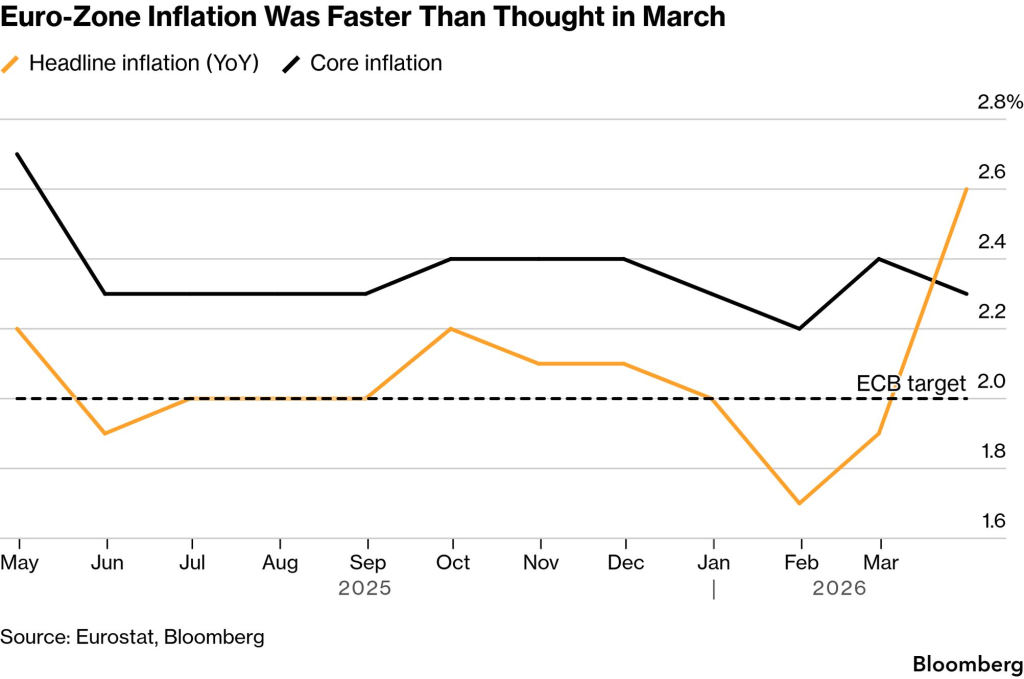
Eurozone inflation (Source: Eurostat, Bloomberg)
Notably, inflation figures from the Eurozone revealed that consumer prices jumped by 2.6%, above the forecast of 2.5%, boosting the euro. This figure could put pressure on the ECB to consider hiking interest rates. However, traders are also worried about the impact of rising energy prices on the Eurozone economy. An escalation in the war could send the economy into a recession.
Elsewhere, the UK economy grew by 0.5% in February, beating the forecast of 0.1%. The solid reading supported the pound. However, things could change with the release of more recent data. Traders will closely monitor US retail sales data this week.