




- Trump rejected another Iranian proposal.
- Canada’s economy unexpectedly lost 17,700 jobs, hurting the loonie.
- The Australian dollar rose after the Reserve Bank of Australia hiked interest rates.
Currency futures had another strong week as hopes for a peace deal between the US and Iran improved risk appetite. However, uncertainty returned this week after Trump rejected another Iranian proposal. This week’s focus will be on US inflation and retail sales figures.
Hopes for an end to the Iran war surged on Tuesday after Trump paused his project that aimed at escorting ships through the Strait of Hormuz. The pause came as focus shifted towards working on a peace deal. As a result, risk appetite began to climb. Meanwhile, the dollar lost some of its safe-haven shine.
By Wednesday, the US White House announced a 14-point proposal to end the war. Meanwhile, Iran said it was reviewing the proposal. The news sent oil prices tumbling. An end to the war would finally loosen the market by easing supply disruptions. Furthermore, the decline in oil prices reduced inflation worries and expectations of rate hikes. As a result, the dollar eased further. Meanwhile, currency futures gained.
On Thursday, strikes between the US and Iran raised concerns about an escalation in the war. However, Trump later said it was only a love tap and that the ceasefire deal was still in place. Afterward, Iran submitted a counterproposal to the US for peace. Reports, however, indicated that Trump rejected it. Meanwhile, Iran said it will never surrender to the US. As a new week starts, market participants will continue to watch developments in the war.
Elsewhere, traders focused on employment reports from Canada and the US. In Canada, the economy unexpectedly lost 17,700 jobs. At the same time, the unemployment rate came in higher than expected at 6.9%, weighing on the currency. Furthermore, downward pressure on the commodity currency resulted from declining oil prices, making it an outlier.
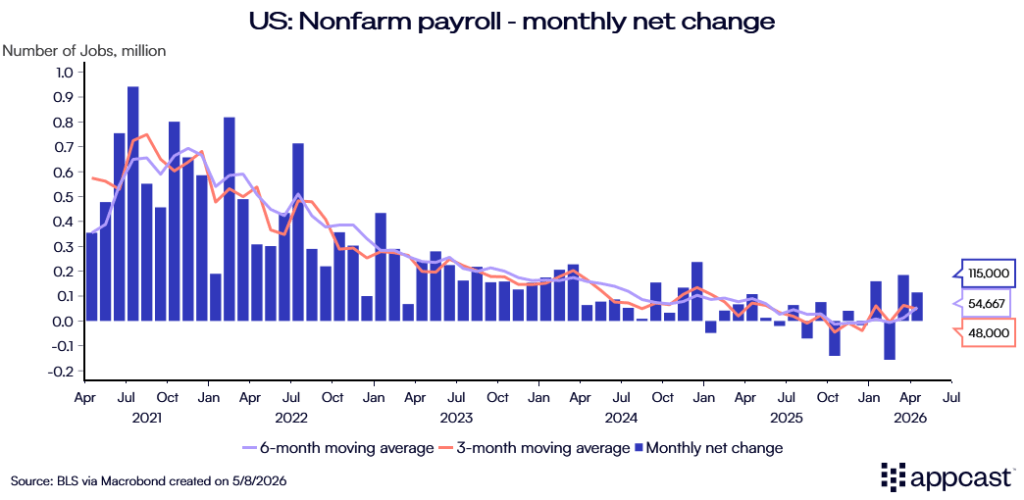
US NFP (Source: Bureau of Labor Statistics)
In the US, the economy added 115,000 new jobs, beating the estimate of 65,000. However, the dollar still fell due to other factors in the report, such as average hourly earnings.
Meanwhile, the Australian dollar rose after the Reserve Bank of Australia hiked interest rates by 25 basis points. This week, market participants will watch US consumer inflation and retail sales data.