




- US retail sales came in at 0.2%, beating the estimate of 0.1%.
- Kevin Warsh said he was very concerned about inflation.
- The yen was an outlier last week, gaining amid increased demand for safe havens.
Currency futures recovered on Monday, while the dollar pulled back as Fed rate-hike expectations eased. Most major currencies collapsed last week amid a rally in the greenback and downbeat economic data from countries like Canada and Australia. Market participants are looking forward to the US core PCE price index report for more clues on Fed policy.
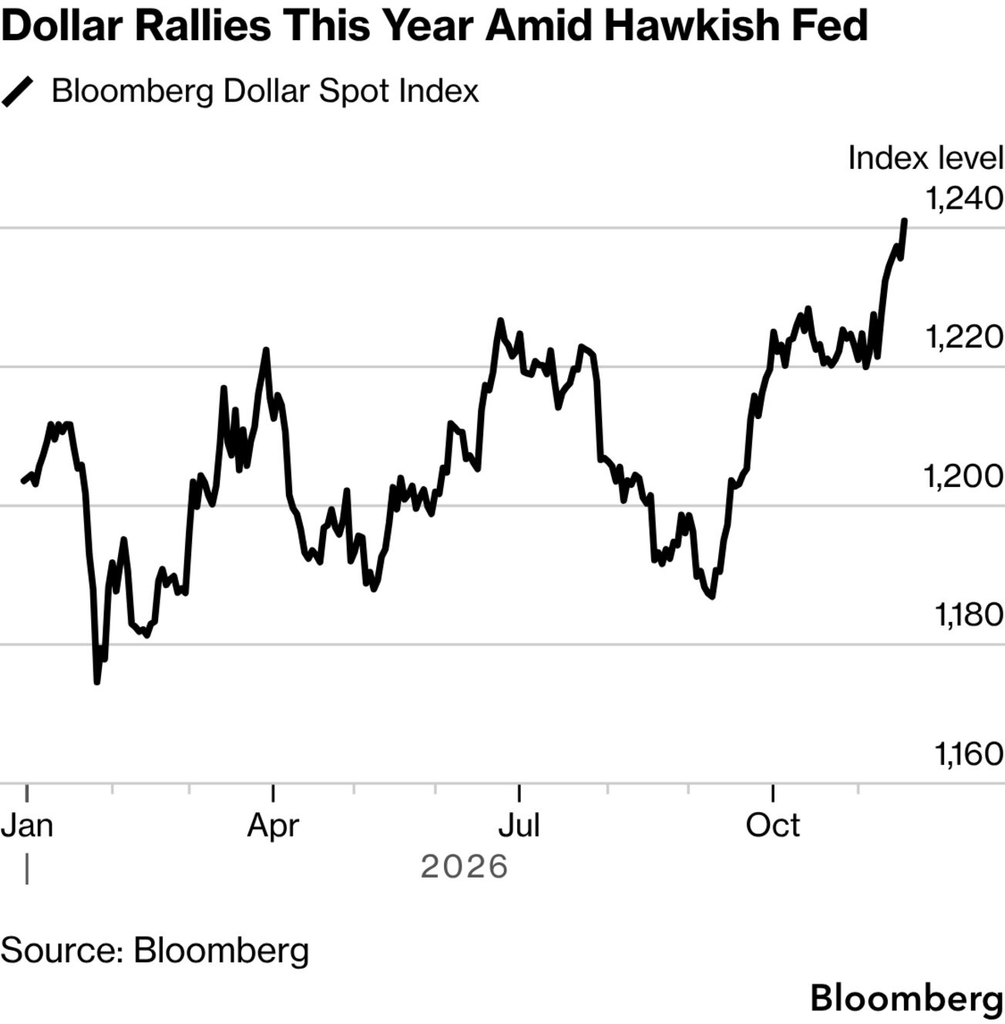
Dollar Index (Source: Bloomberg)
The dollar had a strong week as market participants assessed economic data and policymakers’ remarks. Data on Tuesday revealed that US retail sales slowed down from the previous month. Nevertheless, sales came in at 0.2%, beating the estimates of 0.1%. The data followed hotter-than-expected consumer inflation numbers and a robust jobs report.
Policymakers have noted the resilience of the US economy and shown concern about high inflation. Last week, Kevin Warsh said he was very concerned about inflation. Moreover, he said the Fed would have to work aggressively to tame inflation. His remarks mirrored those of other policymakers and sent rate-hike expectations higher.
By Friday, traders were pricing a 94% chance of the Fed hiking rates in December. Moreover, there was a small chance that policymakers would vote for a 50-bps move. However, this changed on Monday. Traders are no longer expecting a big move in December, and the likelihood of a 25-bps move has eased to 88%, allowing currency futures to recover.
This week, traders will watch the core PCE number for more clues on future policy moves.
“We expect the USD to continue to outperform,” said Eric Robertsen, global head of foreign exchange, rates and credit research at Standard Chartered in Dubai.
Meanwhile, the Canadian dollar fell after Canada released data showing softer-than-expected inflation. Moreover, a decline in oil prices weighed on the commodity currency. On the other hand, the Australian dollar collapsed after data revealed a surprise decline in jobs. At the same time, the unemployment rate unexpectedly increased, giving the Reserve Bank of Australia more reason to lower borrowing costs.
The yen was an outlier last week, gaining amid increased demand for safe havens. Tensions between the US and Iran increased after attacks on an island in the Strait of Hormuz and Kuwait.