


- Microsoft soared on better-than-expected earnings.
- Trump said new talks with Iran started on Monday.
- In the second quarter, the US economy grew by 1.5%.
Equities extended gains on Tuesday as investors cheered strong earnings and hoped for peace between the US and Iran. At the same time, downbeat US data last week eased Fed rate hike bets, allowing stocks to climb. Market participants are now looking forward to the monthly employment report for more cues on future Fed moves.
Stocks had a strong end last week after Microsoft soared on better-than-expected earnings. Meanwhile, Amazon shares soared after a strong report that restored investor confidence in the AI sector. The solid reports indicate that the business environment is still conducive for companies despite the ongoing Middle East war.
Tensions between the US and Iran intensified last week after Tehran targeted a US base in Jordan. The attack, which was intercepted, caused a heavy retaliation by the US that led to a spike in oil prices. The surge in energy prices and increased inflation worries pushed Treasury yields to the highest levels since 2007.
A surge in yields is bearish for equities, especially growth stocks. However, the solid earnings overshadowed this. Furthermore, over the weekend, Trump said new talks with Iran started on Monday. The US president said that he had paused a planned strike to give room for talks and a likely deal. Hopes for a peace deal weighed on oil and lowered Fed rate hike expectations.
“Diplomatic progress is likely to be punctuated by periodic military flare-ups, while miscalculation by either side could trigger a renewed escalation,” BMI analysts wrote in a note.
Market participants also paid close attention to US economic data. In the second quarter, the economy grew by 1.5%. The figure missed the forecast of 2.1%, raising concerns that the Middle East war was slowing the economy. Ideally, such a report would be bearish for stocks. However, with high yields and high chances of rate hikes, it came as a relief. If the Fed has to balance growth and inflation, it might not tighten monetary policy aggressively.
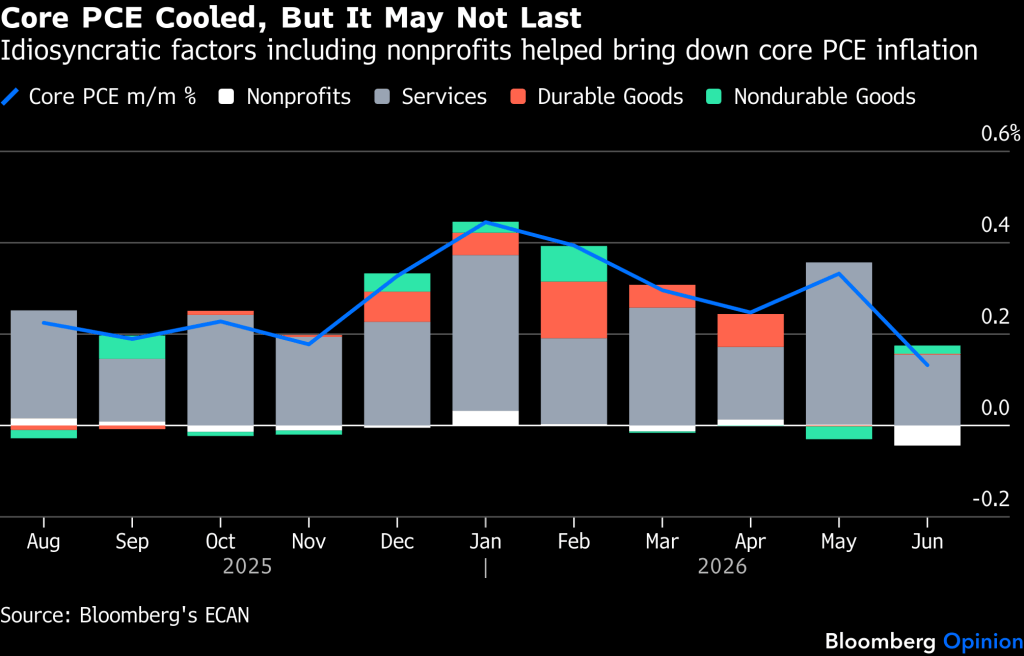
US core PCE (Source: Bloomberg’s ECAN)
At the same time, the core PCE revealed cooler than expected inflation at 0.1%, further denting rate hike expectations. However, this might change if the war continues and oil prices rally. This week, the nonfarm payrolls report will show the labor market conditions, further shaping the outlook for Fed policy.

