




- The US economy expanded by 1.5% in the second quarter.
- The US core PCE came in at 0.1% below the estimate of 0.2%.
- Trump said the US would start new talks with Iran on Monday.
Currency futures gained last week as the dollar collapsed after data indicated slower-than-expected growth in the second quarter. At the same time, the core PCE number missed forecasts, leading to a drop in Fed rate hike expectations. The move was extended on Monday after, over the weekend, it was said that the US would start new talks with Iran.
The conflict between the US and Iran continued last week, dimming hopes for peace. Iran targeted a US base in Jordan, but the missiles were intercepted. Meanwhile, the US retaliated, striking its opponents hard and sending oil prices higher. However, for the dollar, focus shifted slightly from the war to economic data.
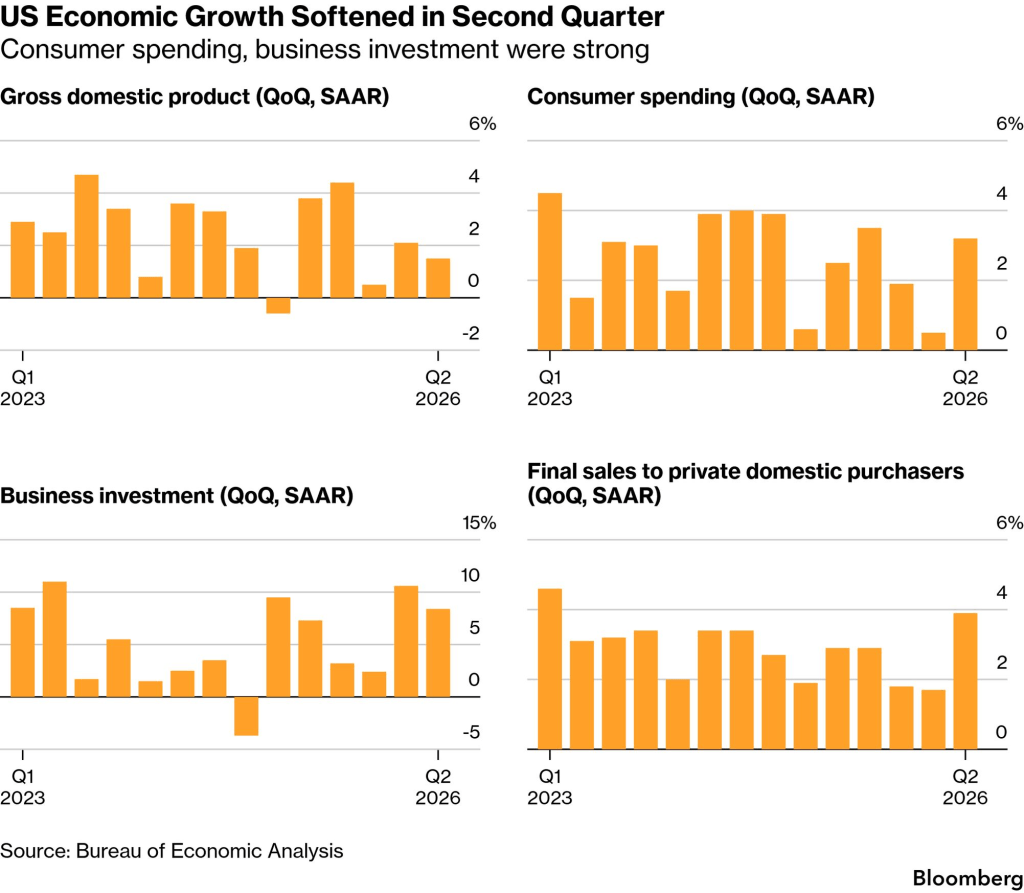
US GDP (Source: Bureau of Economic Analysis, Bloomberg)
On Thursday, the US released its GDP report, which showed that the economy expanded by 1.5% in the second quarter. Meanwhile, experts had predicted a 2.1% expansion. The miss was alarming because it revealed an economic slowdown caused by the Iran war.
A slowdown in the economy would put the Fed in a very difficult position, especially if the war continues. Policymakers would have to balance between growth and taming inflation. While high borrowing costs bring down price pressures, they impede growth and could send the economy into a recession.
A separate report revealed that the core PCE came in at 0.1% below the estimate of 0.2%. Nevertheless, fundamentals point to higher inflation if the war continues and oil prices rise. Market participants are pricing an over 70% likelihood that the Fed will hike rates in September.
During the meeting last week, the central bank kept interest rates unchanged. Moreover, the messaging remained similar to the previous meeting. However, some policymakers were ready to hike.
The yen was one of the biggest beneficiaries of dollar weakness last week. The Bank of Japan held borrowing costs as expected. The Canadian dollar also strengthened with the outlook for higher oil prices. Additionally, data revealed a bigger-than-expected expansion in Canada’s monthly GDP.
The dollar extended its declines in the new week after Trump said the US would start new talks with Iran on Monday. Hopes for an end to the missile exchange sent oil prices lower. Meanwhile, most major currencies remained strong. Traders are also preparing for the US nonfarm payrolls report, which will shape the outlook for Fed policy.