


- The US economy added only 57,000 jobs in June.
- Experts expect the Fed to maintain its hawkish stance.
- The US hit two tankers in the Strait of Hormuz.
Gold prices eased on Monday and Tuesday after reaching a two-week high on a downbeat US jobs report. The pullback came amid a return to strikes in the Strait of Hormuz, which has paused negotiations between the US and Iran. Meanwhile, market participants are looking forward to the FOMC meeting minutes for more cues on future policy moves.
Bullion recovered last week after the US released weaker-than-expected reports that lowered bets for a Fed rate hike in September. First, the ISM PMI revealed that business activity in the manufacturing sector eased slightly. However, it remained above 50, indicating expansion.
Meanwhile, the nonfarm payrolls report out on Thursday revealed that the US economy added only 57,000 jobs in June. Economists had forecasted an additional 114,000 jobs. Moreover, the Bureau of Labor Statistics revised the May figures down from 172,000 to 129,000. The weak numbers pointed to a likely slowdown in the labor market. As a result, rate hike expectations eased, and gold prices rose.
High borrowing costs hurt the yellow metal by increasing the opportunity cost of holding it compared to other yielding assets like the dollar. Since the surprisingly hawkish June FOMC meeting, markets have been pricing more than one rate hike this year, starting as early as September. Consequently, the dollar has rallied together with Treasury yields. Meanwhile, gold has suffered. However, this rally paused after the report.
Still, experts are forecasting more dollar strength, noting that the Fed will likely maintain its hawkish stance.
“However, I think the reality is that the Fed is still very much focused on reigning in inflation, so higher for longer still seems the most likely Fed path,” said Peter Grant, vice president and senior metals strategist at Zaner Metals.
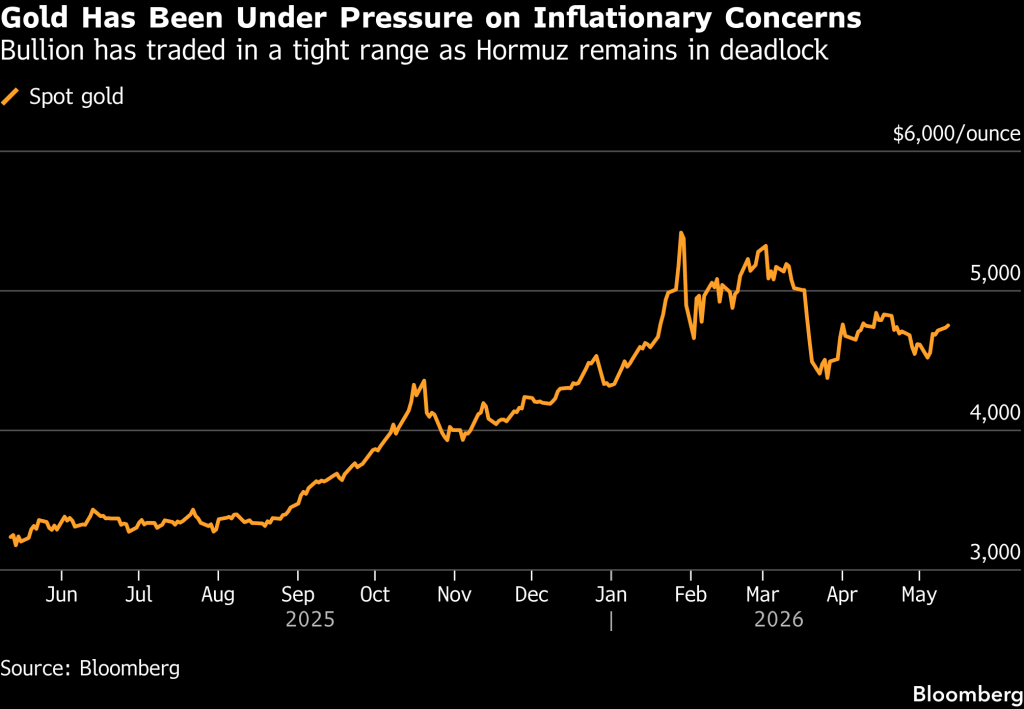
Gold (Source: Bloomberg)
This outlook was confirmed this week when tensions between the US and Iran reignited. The US hit two tankers in the Strait of Hormuz, shaking an already fragile ceasefire deal. After the move, Iran said it would no longer hold talks with the US. The conflict led to a rebound in oil prices. At the same time, inflation concerns returned, and Fed rate hike expectations edged higher. The developments have weighed on gold. Next, traders will assess the FOMC minutes to gauge the likely path for interest rates.