


- Geopolitical tensions in the Middle East have been a major catalyst for the dollar.
- Traders are pricing a 69% chance of a Fed rate hike in September.
- This week, all eyes will be on the nonfarm payrolls report.
Currency futures were heading for a red month as the dollar recorded a 2% gain in June. The greenback remained elevated on Monday as market participants awaited the US nonfarm payrolls report. Over the past month, demand for the currency has been high amid tensions in the Middle East and a hawkish Fed outlook.
Geopolitical tensions in the Middle East, especially between the US and Iran, have been a major catalyst for dollar strength this month. The two nations exchanged fire on several occasions, keeping the Strait of Hormuz closed. This, in turn, boosted oil prices, causing inflation worries. Consequently, many traders sought safety in the dollar. Meanwhile, the poor risk sentiment hurt other currencies.
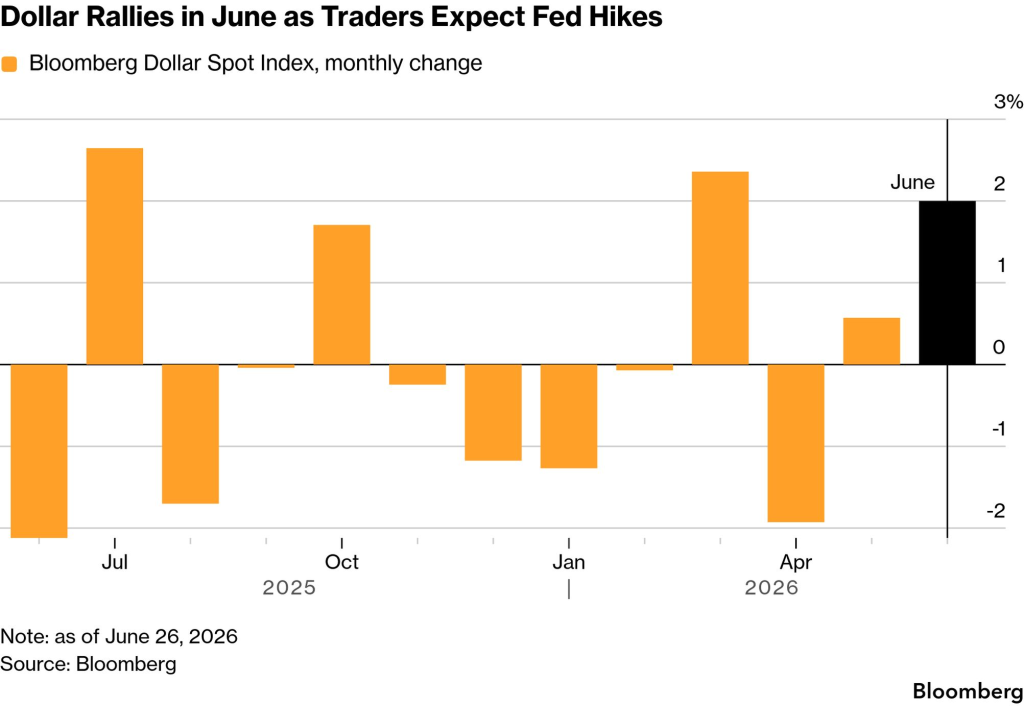
Dollar performance (Source: Bloomberg)
This trend continued despite progress towards a deal to end the Iran war. At this time, focus shifted from the conflict to US monetary policy. The Fed surprised many with a very hawkish tone at its June meeting. Almost half of the officials were ready for rate hikes this year.
As a result, market participants pushed forward the timing for the next hike to September. The likelihood of this move increased from 29% to 69%. Treasury yields soared, sending the dollar higher. Meanwhile, currencies like the yen and the euro suffered greatly.
The US and Iran finally reached a peace agreement that led to the reopening of the Strait of Hormuz. At the same time, the US blockade on Iranian ports ended. The developments improved risk sentiment as inflation worries eased. With the Strait open, traffic would increase, improving the outlook for oil supply. Consequently, oil prices fell, and experts forecast further declines.
The war had led to a sharp increase in oil prices, causing great distress in most major economies. The Eurozone was among the worst hit, and there were fears of a recession. The fears weighed heavily on the euro. A strong dollar only worsened the situation. Even the peace deal and a decline in oil prices were not enough to boost currency futures.
This week, all eyes will be on the nonfarm payrolls report. An upbeat number will further support rate hike bets, boosting the dollar and pushing currency futures lower. The reverse is also true.