



- The US and Iran announced that their ceasefire would be extended for 60 days.
- Expensive fuel has significantly hurt European economies.
- This week, all eyes will be on the US monthly employment report.
Currency futures gained last week as risk appetite improved after reports that the US and Iran were planning to extend their ceasefire deal. Meanwhile, demand for the safe-haven dollar declined, with the dollar falling for a second week. Focus will now shift to the US nonfarm payrolls report due on Friday.
After days of anticipation and caution, the US and Iran finally announced that their ceasefire would be extended for 60 days. At the same time, Iran is ready to remove shipping restrictions in the Strait of Hormuz. Consequently, oil prices fell, and currency futures extended last week’s gains.
A reopening of the Strait of Hormuz will ease oil supply disruptions, allowing prices to drop. Such an outcome would be bearish for the dollar, which has benefited from safe-haven demand since the Iran war broke out. Meanwhile, currency futures would rise. However, experts believe it will take time for the Strait of Hormuz to fully reopen and for traffic to resume to normal levels.
The ceasefire extension will allow the two nations to discuss other issues, like Iran’s nuclear program. Moreover, market participants are more optimistic about an end to a war that has negatively impacted most economies.
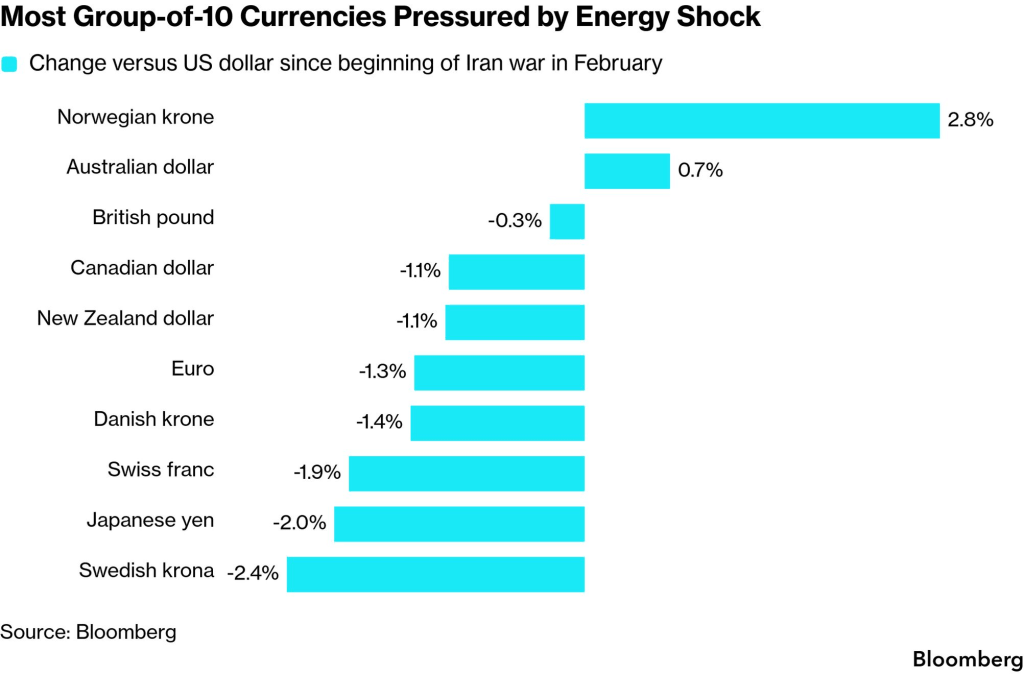
G-10 currencies (Source: Bloomberg)
The rally in oil prices has increased the cost of living in most economies, weighing on their currencies. At the same time, it has left most central banks with the headache of balancing growth and inflation. If inflation stopped rising, it would be a relief for these banks as they would return their focus to growth.
The euro soared last week as Eurozone recession worries eased with the ceasefire extension. Expensive fuel has significantly hurt European economies, causing widespread concerns about a recession. However, the recent progress in talks between the US and Iran has allowed the euro to recover.
Traders also focused on the US core PCE inflation report, which showed a cooler-than-expected figure. Moreover, the preliminary GDP missed forecasts, a sign that the economy is slowing down.
This week, all eyes will be on the monthly employment report that will show the state of the US economy. Economists expect 95,000 new jobs, down from the previous addition of 115,000. A miss would weigh on the dollar and boost currency futures. The reverse is also true.