



- Fed officials have grown more hawkish amid a spike in inflation.
- Trump said talks with Iran were at the final stages.
- Iran might not be ready to agree to the US’s conditions on its nuclear program.
Interest futures extended gains on Thursday as yields dropped due to a decline in oil prices. Oil declined on Wednesday after Trump declared that negotiations with Iran were at the final stages. Meanwhile, experts are warning of higher oil prices if the Strait of Hormuz remains closed in the summer.
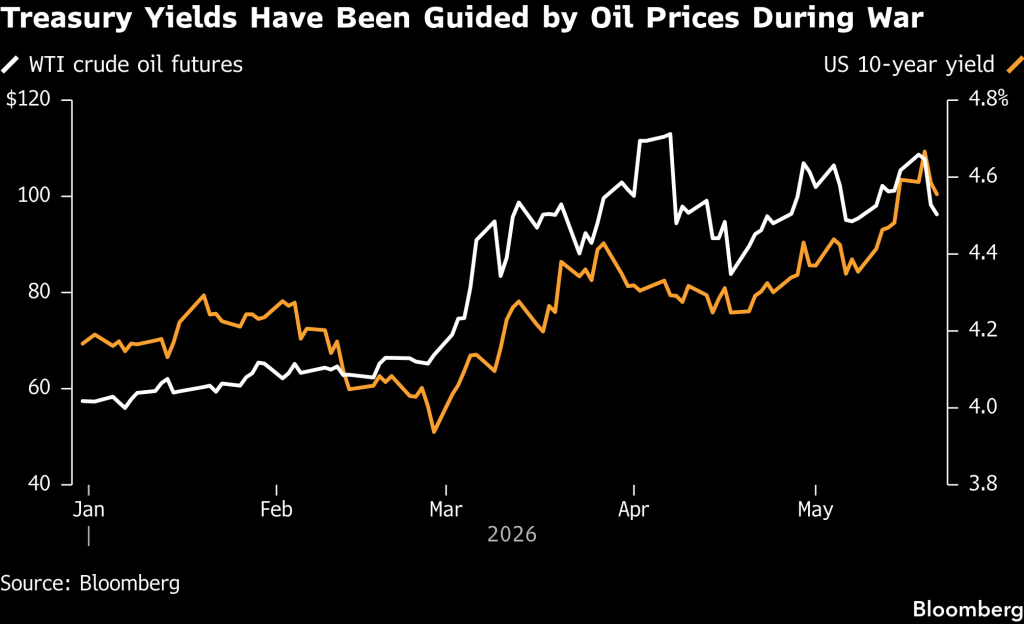
Crude oil, US 10-year yield (Source: Bloomberg)
Treasury yields have been tracking movements in oil in recent months due to its impact on inflation and monetary policy. The recent rally in oil caused by the Middle East war has led to a spike in price pressures in the US. Both the consumer and wholesale inflation numbers released last week beat economist expectations. As a result, market participants lowered bets for a Fed rate cut this year.
Instead the likelihood of a Fed rate hike increased to 35.6%. Furthermore, FOMC meeting minutes released on Wednesday showed a more hawkish tone among policymakers. More officials are more concerned about inflation and are therefore willing to hike borrowing costs.
An increase in Fed rate hike expectations has been bullish for Treasury yields. On the other hand, interest futures have been dropping. On Wednesday, interest futures pivoted as oil fell after Trump said talks with Iran were at the final stages. The news boosted optimism and the chances of peace and the reopening of the Strait of Hormuz.
However, there is still a chance that the two nations will not agree. Reports have shown Iran might not be ready to agree to the US’s conditions on its nuclear program. If the stalemate continues, the strait will remain closed and oil will keep climbing.
“The longer the supply disruption lasts, the more that investors may start to price this in as more than just a very, very short term disruption,” said Bill Merz, head of capital markets research at US Bank Asset Management. “We need to take day to day moves with a grain of salt, but we can see that the relationship between oil prices and long term bond yields has become an increasingly important one for markets.”
Elsewhere, the IEA has warned of a tighter market if the Strait of Hormuz remains closed amid a boost in demand in the US summer driving season. Higher oil prices would weigh on the bonds market.