

- Crude oil markets remain volatile as markets remain perplexed about the US-Iran negotiations.
- Russia’s decline in crude oil production adds more to the supply concerns.
- Continued geopolitical issues in the Middle East could push prices to $150, causing a global recession.
The global crude oil markets remain unstable amid persistent geopolitical tensions and supply disruption. Prices remained volatile in the last session, with Brent crude briefly rising above $101 per barrel before falling back toward $98. The perplexity surrounding negotiations between the US and Iran kept the markets oscillating on both sides.
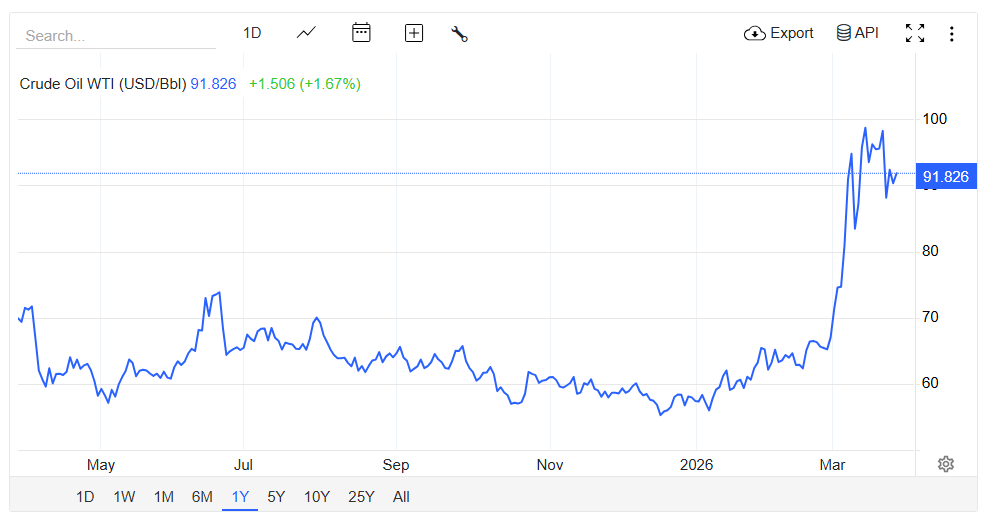
When US President Donald Trump said that a deal to end the Middle East conflict might be possible, investors felt relieved for a short time. But that hope quickly faded when Iranian officials turned down important parts of the US proposal and instead asked for recognition of their sovereign control over the Strait of Hormuz, which is one of the most important energy chokepoints in the world.
The ongoing standoff has caused major disruptions to global energy flows. Iran has effectively limited access to the Strait of Hormuz, which is a route that usually handles about 20% of the world’s oil and liquefied natural gas shipments. The resulting supply shock has made it hard for big Asian importers to find other sources. Countries like the Philippines have declared emergencies because they depend heavily on Gulf oil.
The crisis has also made investors more worried about its impact on the economy as a whole. Larry Fink said that oil prices rising to $150 per barrel could trigger a global recession. Energy companies have also warned that Europe could soon run out of energy if the problems continue.
Russia is also struggling to obtain supplies, which makes the situation worse. Ukrainian drone strikes have knocked out about 40% of Russia’s oil export capacity, which is about 2 million barrels per day. This is one of the worst disruptions in the country’s modern energy history. Important export infrastructure, like the Druzhba pipeline and Baltic ports, has been affected, which makes the world’s supply even tighter.
Even though things were chaotic, global stock markets held up well. Major indexes in the US, Europe, and Asia all closed higher on hopes that tensions would ease soon. Analysts, on the other hand, say oil markets remain highly sensitive to global developments and that prices could remain volatile for years.
In the near term, traders are keeping a close eye on diplomatic signals and changes in supply, such as more shipments coming from other routes like Saudi Arabia’s Red Sea terminals. Crude oil prices are likely to stay high and unpredictable until there is clear progress in resolving the conflict.