


- Tensions in the Middle East heated up this week, sending oil higher.
- Fed’s Christopher Waller said he sees no need for a hike in September.
- Market participants are awaiting the non-farm payrolls report.
Interest futures recovered on Thursday after slightly dovish Fed remarks sent Treasury yields lower. However, underlying fundamentals still point to further downside. Tensions in the Middle East have sent oil prices higher, rekindling inflation worries. As a result, Fed rate hike bets have increased significantly from a week ago.
The recent collapse in the bond market caused some concern, leading to an announcement that the US Treasury would intervene in September. The department said it would increase its bond buybacks to try to support government debt. The news allowed interest futures to recover, but only briefly.
Current fundamentals suggest interest futures could continue sliding. Tensions in the Middle East heated up this week after the US attacked an Iranian island, leaving soldiers dead and wounded. The attack sparked a wave of fighting that has escalated to include other countries like Kuwait.
On Thursday, reports indicated that Iran had attacked Kuwait. The previous day, Trump said the conflict would be brief since Iran could not withstand the US’s heavy attacks. However, it became clear that Iran was not ready to give in. The rising tensions have sent oil prices higher, rekindling inflation concerns.
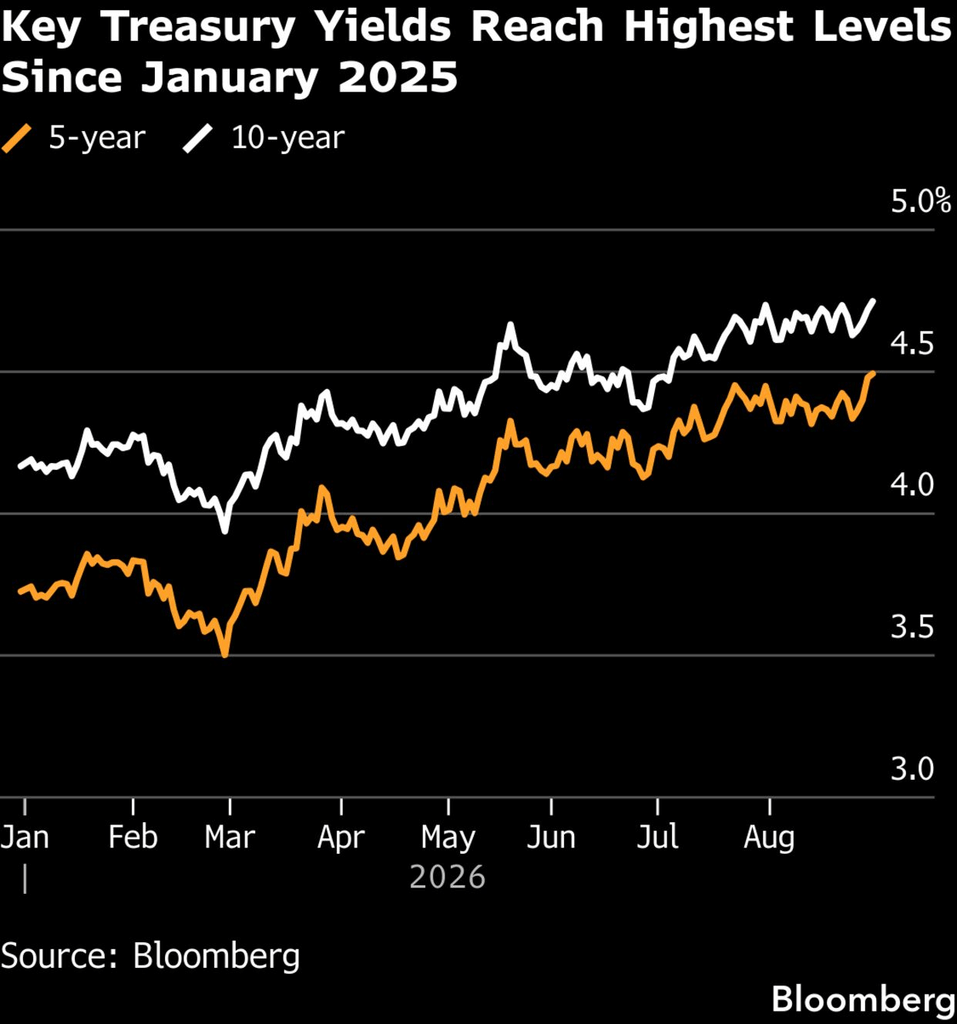
US yields (Source: Bloomberg)
Consequently, Fed rate hike expectations have steadily risen since the week began. Meanwhile, Treasury yields have soared, putting extra pressure on interest futures.
There was a brief respite on Thursday after Fed’s Christopher Waller said he sees no need for a hike in September. According to him, recent data has shown signs of disinflation. Therefore, he is confident inflation will return to the central bank’s target.
“If this continues in the data due over the next two weeks, I would be inclined to support holding the target for the federal funds rate at its current setting,” Waller said.
Market participants are now awaiting the non-farm payrolls report due later in the day. The report will show the state of the labor market, which has started showing weakness. Notably, private employment missed forecasts on Wednesday. A downbeat NFP report would weigh on rate hike expectations, boosting interest futures. On the other hand, if the labor market is strong, it would mean the Fed has room to hike interest rates, and expectations would increase.