


- Fed Chair Kevin Warsh is set to speak later in the day.
- Iran and Oman reached an agreement to jointly manage the Strait of Hormuz.
- Next week, the US nonfarm payrolls report will give a better picture of the labor market.
Interest futures were down on Friday as market participants looked forward to key speeches during the Jackson Hole symposium. Meanwhile, a surge in oil prices on Wednesday and Thursday supported Treasury yields, hurting bonds.
Fed Chair Kevin Warsh is set to speak later in the day, and his speech will contain clues on future policy moves. Traders will assess his take on the state of the economy and inflation. Recent fundamentals have pointed to a slower economy that could stop the Fed from pursuing an aggressive tightening path.
The labor market has shown weakness, growth has slowed, and consumer spending has significantly fallen this month. Higher borrowing costs would only worsen the economic situation and could cause a recession. Therefore, the Fed has to really balance between growth and inflation.
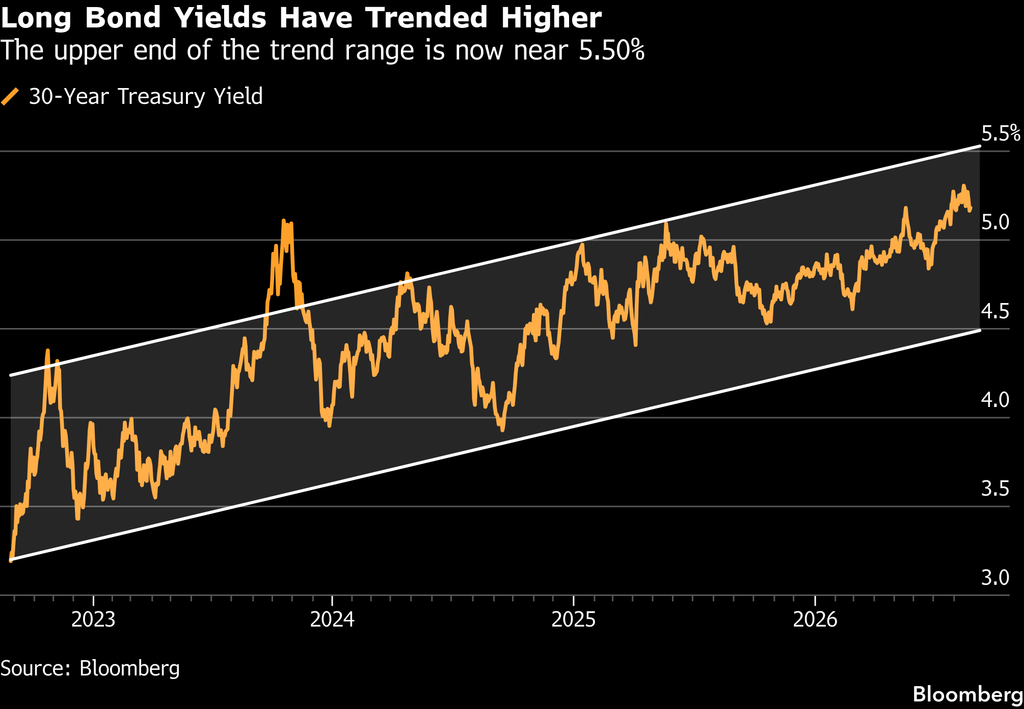
US 30-year yield (Source: Bloomberg)
Inflation figures have come in softer than expected. However, with the tensions in the Middle East, things can change quickly. As long as there is no lasting peace deal between the US and Iran, there will always be the risk of higher oil prices. As oil rises, inflation spikes, sending yields higher. Even the prospects of an intervention in the bond market were not enough to keep yields down.
Recently, Iran and Oman reached an agreement to jointly manage the Strait of Hormuz, briefly lowering oil. Before this, Iran and the US were fighting over who had control over the waterway. Iran said it remained closed, while the US said it was open.
“We take a lot of ships through the strait now. We’re taking them in,” Trump told conservative radio host Glenn Beck.
At the same time, Trump announced plans to sanction Iran and punish its economy. All these point to an uncertain future where the war could restart, sending oil prices and inflation higher. Currently, market participants are pricing an over 60% chance that the Fed will keep interest rates unchanged in September. If Warsh assumes a more hawkish tone, yields will rise, and interest futures will drop. The opposite is also true.
Next week, the US nonfarm payrolls report will give a better picture of the labor market, further shaping the outlook for Fed policy.