


- Trump told Gulf nations to prepare for an intense military campaign in Iran.
- US Vice President JD Vance sent a letter to Iran with the aim of restarting talks.
- Market participants are cautious ahead of the US midterm elections.
Currency futures were range-bound on Monday as market participants remained cautious ahead of the US midterm elections. At the same time, traders are eagerly awaiting the US non-farm payrolls report and major central bank policy meetings.
Last week, traders focused on reports of talks in the Middle East, leaving currency futures mixed. Moreover, major central banks, including the Fed, held their policy meeting. The dollar barely rose as traders avoided betting big ahead of the November elections. Additionally, the Fed kept interest rates unchanged as expected, leaving rate hike expectations relatively unchanged.
Reports during the week indicated that Trump had told Gulf nations to prepare for an intense military campaign in Iran. The news initially sent oil prices higher. However, things changed when US Vice President JD Vance sent a letter to Iran with the aim of restarting talks. The news eased concerns about a looming escalation and inflation worries.
However, there was no reply from Iran, leaving market participants uncertain about the future. Still, before that, all eyes will be on the US midterm elections. Polls have shown poor sentiment about the current administration. However, the outcome is difficult to determine. Any political unrest after the elections could hurt risk appetite and demand for the dollar.
“The challenge we face in analyzing election outcomes is that polling suggests strong anti-incumbent sentiment, but that does not always translate into actual election outcomes, as we have seen in Brazil and now in Israel,” said Eric Robertsen, global head of research and chief strategist at Standard Chartered.
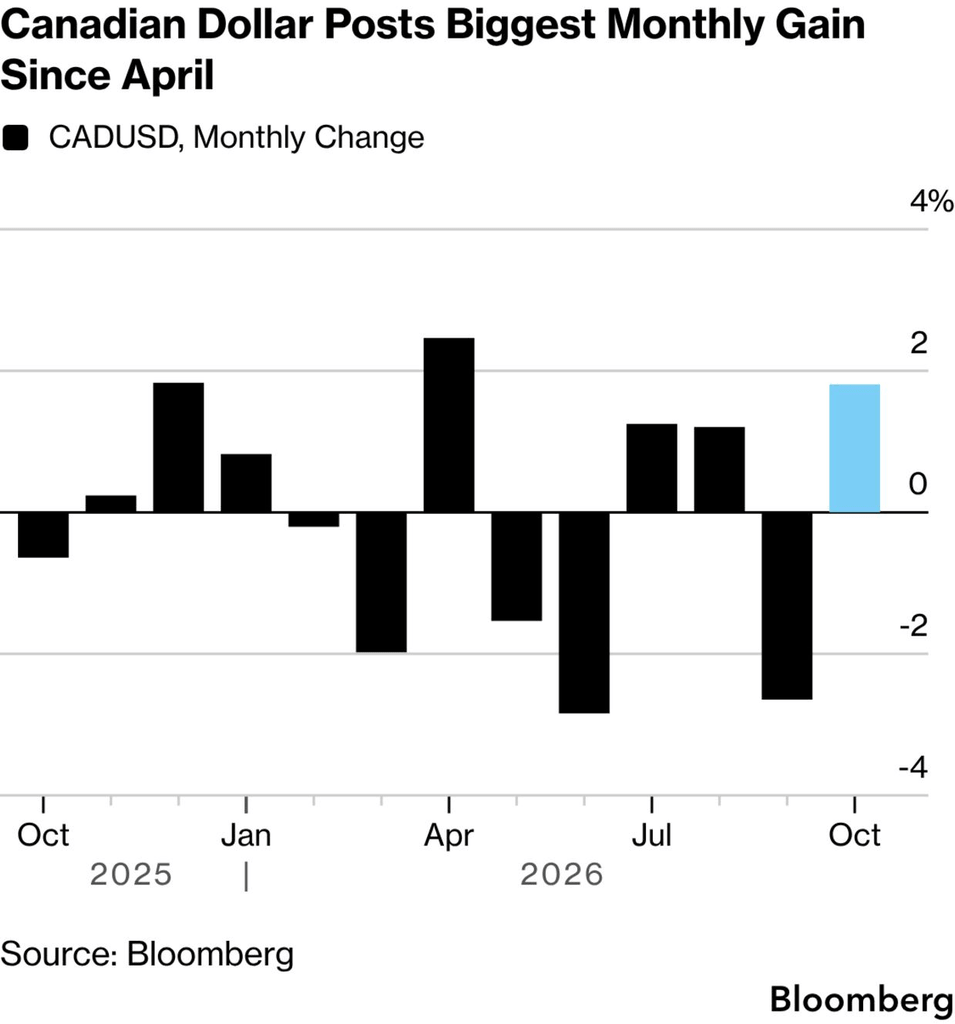
CAD/USD monthly change (Source: Bloomberg)
Traders also paid attention to central bank meetings in Canada, where policymakers hiked interest rates, boosting the local currency. The commodity currency has also benefited greatly from rising fuel prices. Meanwhile, the Bank of Japan and the European Central Bank left interest rates unchanged. The euro ended the week down after policymakers showed concerns about the impact of high yields on growth.
This week, traders will watch the Reserve Bank of Australia and Bank of England policy meetings. Both central banks will likely hike interest rates due to high inflation. Furthermore, the US will release its crucial monthly employment report, which will shape the outlook for future Fed moves.