



- The headline US CPI in September was at 3.7%, beating the forecast of 3.6%.
- The euro was down amid political unrest ahead of the 2027 elections in France.
- BoJ governor Ueda noted on Monday that inflation was nearing the central bank’s 2% target.
Most major currency futures were on solid ground at the start of the new week as the dollar held near last week’s lows. The greenback fell despite upbeat data on inflation and sales as expectations for a Fed pause in October remained steady. Meanwhile, the euro was subdued amid political tensions in France.
Market participants paid attention to several key economic releases from the US last week, including inflation and retail sales. The headline CPI in September was at 3.7%, beating the forecast of 3.6%. At the same time, wholesale inflation accelerated by 1.3%, above estimates of 0.6%.
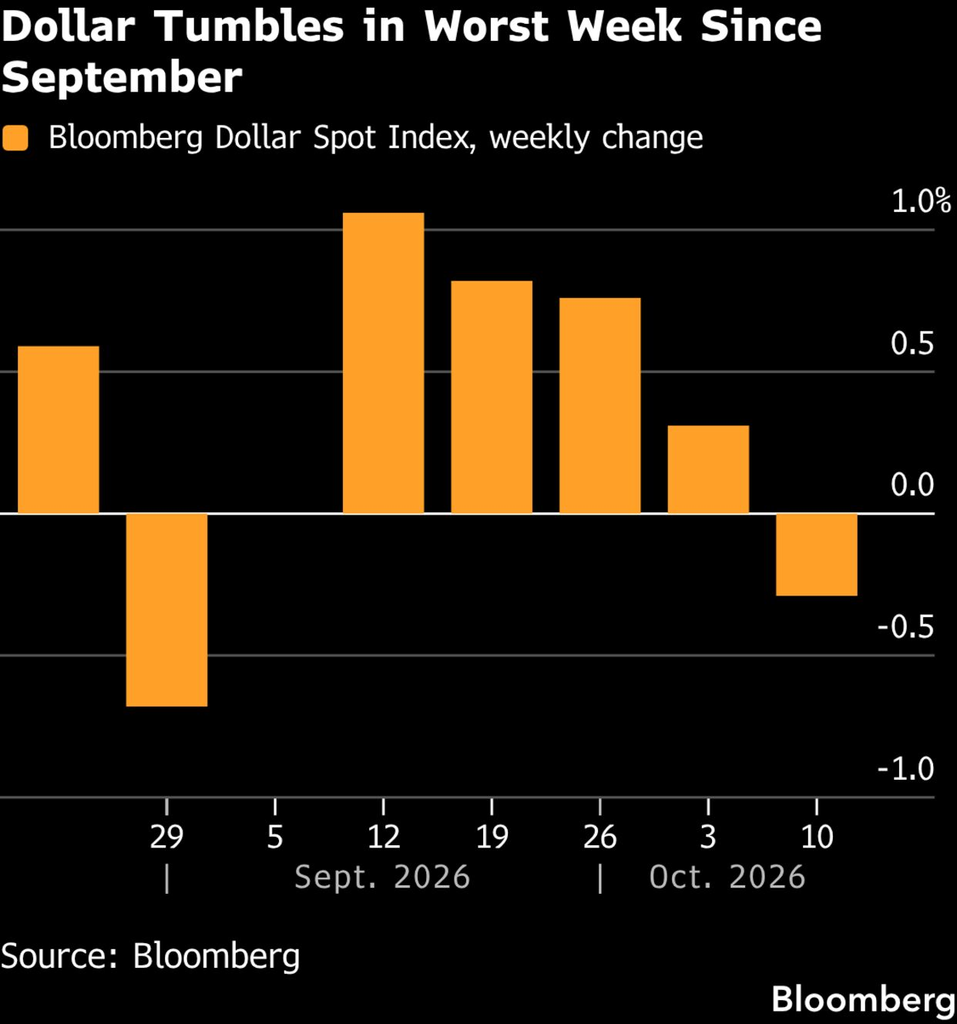
Dollar weekly change (Source: Bloomberg)
The hot inflation numbers should have raised expectations for a Fed rate hike in October. However, this was not the case. The likelihood of a pause at the meeting remained elevated at 84% as policymakers maintained the forecast for one more hike this year. As a result, the dollar pulled back after weeks of rallying on the central bank’s hawkish outlook.
Traders also paid attention to developments in the Middle East, which pointed to higher oil prices in the future. Tensions between the Houthis and Saudi Arabia escalated, causing supply concerns. Moreover, reports revealed attacks on ships passing through the Strait of Hormuz that could disrupt supply. Elsewhere, Iran announced that it plans to start attacking US warships that could trigger another wave of attacks between the two nations.
Nevertheless, the global economy is slowly accepting the likelihood of a prolonged war in the Middle East. Consequently, nations in the G7 and other major producers like Russia have offered to release fuel stocks to ease the supply problem.
The euro remains vulnerable to oil price changes, as the euro zone relies heavily on imported fuel. At the same time, the euro was down amid political unrest ahead of the 2027 elections in France. Protests over the cost of living turned violent over the weekend.
“The weekend unrest matters for the euro mainly through French bonds rather than directly,” said Kieran Williams, head of Asia FX at InTouch Capital Markets in London.
Elsewhere, the yen was flat after the Bank of Japan governor noted on Monday that inflation was nearing the central bank’s 2% target.